


RealClearInvestigations Newsletters: RCI Today
RealClearInvestigations Picks of the Week

RealClearInvestigations'
Picks of the Week
November 30 to December 6
Featured Investigation:
Out of Sight: Following the Money Trail of Missing Child Border Crossers
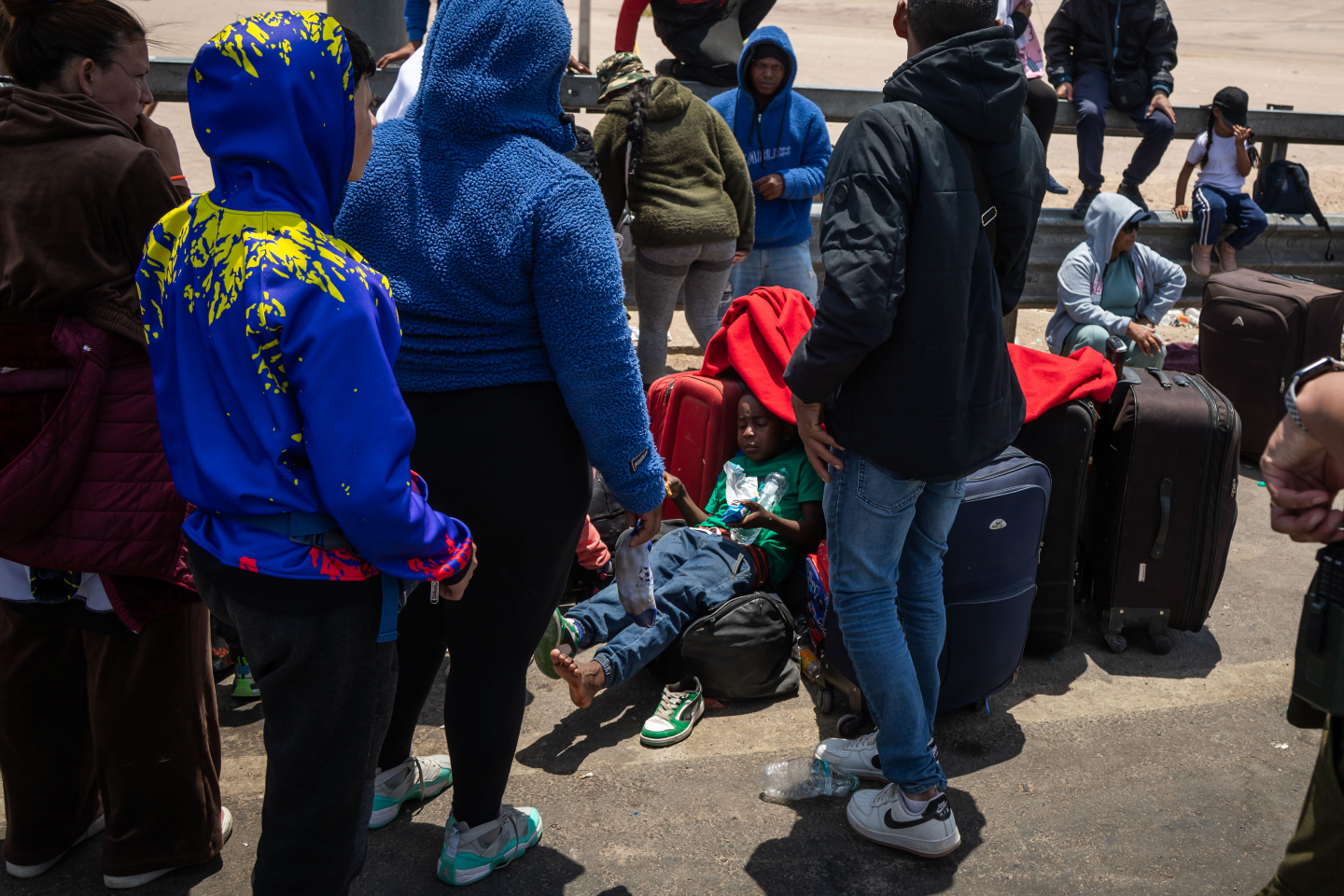
During the 2024 election, J.D. Vance repeatedly chastised the Biden administration for allegedly losing track of some 320,000 minors who had crossed into the United States. One year later, James Varney reports for RealClearInvestigations, their fate remains largely unknown. While the overwhelming majority likely remain hidden to avoid immigration authorities, experts believe some have fallen victim to human traffickers. Varney reports that the government’s inability to track this vulnerable population reveals deeper issues in the country’s expensive immigration system.
- Between 2021 and 2024, almost half a million unaccompanied minors under 18 were apprehended at the border – more than double previous records. Monthly arrivals averaged over 100,000 annually, with more than half aged 16 or younger.
- Taxpayers spent $23 billion on a network of agencies, contractors, and nonprofits tasked with housing minors and connecting them with sponsors. Despite massive spending, no entity maintained adequate tracking of the children's whereabouts.
- The Trump administration has virtually stopped new arrivals of unaccompanied minors, with monthly numbers dropping to approximately 2,244 children in care. Officials credit border enforcement as an effective trafficking prevention measure.
- Federal agencies ignored or dismissed over 65,000 reports of possible illegal activity, including 7,300 cases potentially involving human trafficking. The Biden administration failed to respond to two-thirds of law enforcement subpoenas.
- Major contractors profited enormously. Southwest Key Programs received $2 billion and faces Justice Department lawsuits alleging employees subjected children to sexual abuse. Endeavors collected over $2 billion, while executives saw compensation jump from $300,000 to over $600,000 annually.
- Senator Charles Grassley identified systematic failures: contractors releasing minors to unverified sponsors, suspicious businesses, and inadequate information sharing among federal agencies. One North Carolina facility received $100 million but never housed anyone.
- Pro-immigration groups dismissed concerns as "paperwork problems," but inspector general reports confirmed that 32,000 minors had no address on file, 43,000 failed to appear in court, and 233,000 could not be contacted.
Featured Investigation:
Carrying On: British Jews Face Growing Antisemitism With Resolve
Antisemitism in Britain has surged dramatically since October 7, 2023, leaving many British Jews questioning their future in their homeland, Maggie Phillips reports for RealClearInvestigations. While some have left the country, most are staying to fight back – though they are increasingly fearful about what lies ahead.
- British Jewish perception of antisemitism as a "very big" issue has skyrocketed from 11% in 2012 to 47% today. The UK recorded over 1,500 antisemitic incidents in the first half of 2025 alone, with attacks on Jews accounting for 40% of all anti-religious hate crimes.
- High-profile incidents have shaken the community, including the October Manchester Heaton Park synagogue attack that killed three people. Scandals have emerged involving the BBC's failure to disclose a documentarian's Hamas ties and a soccer match where Israeli fans were barred for "security concerns."
- Despite rising fears, most British Jews are not emigrating. Instead, they're pressing Prime Minister Keir Starmer's government to adopt a comprehensive 20-point antisemitism strategy. The "After Heaton Park" plan calls for strict hate speech prosecution, enforcement of anti-discrimination rules, and confronting "Islamist antisemitism" – though many doubt the government will fully implement these measures.
- Critics point to systemic failures in British policing, including the grooming gangs scandal where authorities avoided identifying perpetrators' ethnicity "for fear of appearing racist." Many British Jews feel the government's response to pro-Palestine marches and antisemitic rhetoric has been inadequate.
- The situation reflects a global crisis, with antisemitic incidents increasing 340% worldwide in 2024 compared to 2022. For British Jews – whose community dates back to Oliver Cromwell's 17th-century invitation – leaving their ancestral home remains deeply painful, even as they question whether Britain can remain theirs.
Waste of the Day
by Jeremy Portnoy, Open the Books
What’s Big, Grey And Costs $350K?, RCI
California’s $450 Million 911 Center Doesn’t Work, RCI
“Trauma-Informed Housing” Will Get $2.5 Million, RCI
Throwback Thursday - Astronomy & Postmodern Dance, RCI
Plan Would Give NYC Officials Raise, RCI
Trump 2.0 and the Beltway
Docs Suggest Jack Smith Violated GOP Leaders' Rights, Federalist
Why Would Trump Pardon Convicted Drug Trafficker?, National Review
Lawmakers Suggest Follow-Up Boat Strike Could Be War Crime, New York Times
Roger Stone Is Now Selling Suits, Washington Post
Other Noteworthy Articles and Series
How Fraud Swamped Minnesota’s Social Service
New York Times
The legacy media may be losing influence, but it still matters. So when the New York Times reports on a story that has long been circulating in conservative circles – the massive fraud engineered mostly by Somali-Americans in Minnesota – the news is news itself. Piggybacking on work in various outlets, including Powerline, City Journal and Country Highway, this article reports that federal prosecutors have charged dozens of people with felonies, accusing them of stealing hundreds of millions of dollars from a government program meant to keep children fed during the Covid-19 pandemic.
Over the last five years, law enforcement officials say, fraud took root in pockets of Minnesota’s Somali diaspora as scores of individuals made small fortunes by setting up companies that billed state agencies for millions of dollars’ worth of social services that were never provided. Federal prosecutors say that 59 people have been convicted in those schemes so far, and that more than $1 billion in taxpayers’ money has been stolen in three plots they are investigating. That is more than Minnesota spends annually to run its Department of Corrections. Minnesota’s fraud scandal stood out even in the context of rampant during the pandemic, when Americans stole tens of billions through unemployment benefits, business loans and other forms of aid, according to federal auditors.
The article reports that while the fraud was not a secret, Democrats who run the state, including Governor Tim Walz, did not act on it for fear of offending an important voting bloc and of being accused of racism. A lawyer defending one of the people charged told the Times that it seemed the authorities were tacitly allowing the theft. “No one was doing anything about the red flags,” he said. “It was like someone was stealing money from the cookie jar and they kept refilling it.”
In a separate article, the Daily Signal reports that Minnesota’s largest teachers union is under fire this week over its “professional development” courses on topics such as “Interrupting Whiteness” and “LGBTQ+ Training.” The union website features similar content across the board, offering materials on “Anti-immigrant rhetoric & deportation,” various “anti-racism” resources, and a “racial and social justice” page claiming “certain politicians” are using police officers against minority students. Meanwhile, more than half of 4th-grade students in the state tested below the national proficiency standard in 2024. About 66% of 8th-grade students tested below proficient in math in the same year, and 72% tested below proficient in reading.
It's Easy to Enroll Fictional People in Obamacare
Reason
In October, RCI reported that an estimated 12 million people enrolled in Obamacare did not submit a single claim in 2024 – raising suspicions that some may have been fraudulently signed-up by brokers and insurance companies that stand to benefit from phantom enrollees. A new report from auditors at the Government Accountability Office has found other fraud concerns in the program. This article reports that GAO auditors tried to enroll 24 fictional people in health insurance plans offered via the Obamacare exchanges, using fake Social Security numbers and income claims that lacked any verification. Only one of those applications was denied. This article reports that GAO auditors found other tip of the iceberg problems:
One of the major red flags in the report is the fact that auditors found more than 66,000 Social Security numbers attached to records showing more than 366 days of health insurance coverage—an indicator that those Social Security numbers may have been used multiple times in the same year. Additionally, GAO found more than 58,000 Social Security numbers matching death records in the Social Security Administration's database. More than $94 million in tax credits were delivered to those accounts. In many of those cases, "matches had different names and dates of birth across Marketplace enrollment data and SSA's death data," GAO noted. "These matches could represent synthetic identity fraud." The lack of a comprehensive plan to prevent such fraud, GAO warns, could allow individuals to qualify for larger health insurance tax credits than their income would allow.
This article reports that Obamacare subsidies are a huge and growing expense for the federal government. In 2024, CMS paid nearly $124 billion to support 19.5 million enrollees.
Europe’s Green Energy Rush Cripples Economy
Wall Street Journal
Europe’s aggressive push toward renewable energy has produced significant reductions in greenhouse gas emissions at the price of mounting economic strain. This article reports that green policies may undermine the continent’s prosperity and its political stability for decades.
Germany now has the highest domestic electricity prices in the developed world, while the U.K. has the highest industrial electricity rates … Italy isn’t far behind. Average electricity prices for heavy industries in the European Union remain roughly twice those in the U.S. and 50% above China. Energy prices have also grown more volatile as the share of renewables increased. It is crippling industry and hobbling Europe’s ability to attract key economic drivers like artificial intelligence, which requires cheap and abundant electricity. … In Ireland, the state grid operator imposed an effective moratorium on new data centers – which underpin cloud computing and AI – until 2028, after existing data centers drained over a fifth of the country’s electricity supply last year. … The shift is also adding to a cost-of-living shock for consumers that is fueling support for antiestablishment parties, which portray the green transition as an elite project that harms workers, most consumers and regions.
This article reports that while sunlight and wind are free, harnessing them entails significant infrastructure investments, including in battery storage for when the sun isn’t shining or the wind blowing, and vast redundant capacity. These additional costs, obscured by subsidies and carbon taxes, mean energy prices in places like Germany and the U.K. are likely to remain higher than other countries for years to come, some economists say.
America’s Colleges Have an Extra-Time-On-Tests Problem.
Atlantic
Administering a college exam once required little more than a class period and a stack of blue books. Now, this article reports, it is highly complex juggling act as professors must accommodate the many students with an official disability designation that may entitle them to extra time, a distraction-free environment, or the use of otherwise-prohibited technology. At institutions like Harvard, Brown, and Amherst, more than 20 percent of undergraduates are registered as disabled, with some schools reporting nearly one-third.
Accommodations in higher education were supposed to help disabled Americans enjoy the same opportunities as everyone else. No one should be kept from taking a class, for example, because they are physically unable to enter the building where it’s taught. Over the past decade and a half, however, the share of students at selective universities who qualify for accommodations—often, extra time on tests—has grown at a breathtaking pace. At the University of Chicago, the number has more than tripled over the past eight years; at UC Berkeley, it has nearly quintupled over the past 15 years.
This article reports that the increase is driven by more young people getting diagnosed with conditions such as ADHD, anxiety, and depression, and by universities making the process of getting accommodations easier. The change has occurred disproportionately at the most prestigious and expensive institutions. While these changes have expanded opportunities, they have also raised concerns about fairness and abuse. Professors note that extra time on tests can provide advantages to students without genuine impairments, and wealthy families are often better positioned to secure diagnoses. Research shows accommodations are far less common at community colleges, suggesting unequal access across socioeconomic lines.
Price Is Often Wrong at Dollar Stores
Guardian
The dollar-store industry, including Family Dollar and its larger rival, Dollar General, promises everyday low prices for household essentials. But an investigation by the Guardian found that the prices listed on the shelves at these two chains often don’t materialize at checkout. As the cost of living soars across America, the customers bearing the burden are those who can least afford it – customers who often don’t even notice they’re overpaying.
Dollar General stores have failed more than 4,300 government price-accuracy inspections in 23 states since January 2022, a Guardian review found. Family Dollar stores have failed more than 2,100 price inspections in 20 states over the same time span, the review found. Among these thousands of failed inspections, some of the biggest flops include a 76% error rate in October 2022 at a Dollar General in Hamilton, Ohio; a 68% error rate in February 2023 at a Family Dollar in Bound Brook, New Jersey; and a 58% error rate three months ago at a Family Dollar in Lorain, Ohio. Many of the stores that failed state or local government checks were repeat violators. A Family Dollar in Provo, Utah, flunked 28 inspections in a row – failures that included a 48% overcharge rate in May 2024 and a 12% overcharge rate in October 2025.
This article reports that many stores fail to fix their pricing because the fines levied are often far less than the profits made. North Carolina law, for example, caps penalties at $5,000 per inspection, offering retailers little incentive to fix the problem. “Sometimes it is cheaper to pay the fines,” said Chad Parker, who runs the agency’s weights-and-measures program.
