


Elon Musk may consider hydrogen “mind-bogglingly stupid” as a power source for cars, but the derision of the world’s most successful electric vehicle manufacturer has not stopped Washington from nursing dreams that hydrogen might become a big part of an envisioned clean new energy future.
That dream came into focus three years ago at a time when the “climate crisis” dominated Washington’s thinking. Praising the role hydrogen could play in a brave new energy world that was “sustainable and equitable,” the United States had a plan and the money in place to set off something more than a mushroom cloud with the world’s most plentiful element.
The National Clean Hydrogen Strategy and Roadmap, released in June 2023, claimed the planned $9.5 billion in spending on various hydrogen projects would result in 100,000 jobs by 2030, while also reducing the economy’s emissions by 10% by 2050.
Now, however, the vision appears dormant in the Trump administration. The national plan may not be a flaming skeleton like the most infamous hydrogen project of the last century, the Hindenburg – a different administration could resurrect it – but its single biggest item, $3 billion to two West Coast “hydrogen hubs,” is halted and in litigation.
Although cheap, abundant hydrogen energy remains an aspiration rather than a reality, experts say debates around it highlight significant issues regarding American energy and national security, including the U.S. competitive position with other big economies – especially China. The contrasting goals of the Biden and Trump administrations highlight the uncertainty states and businesses face as the federal government capriciously offers or withholds support, and raise questions about whether the government should spend billions to create a market the private sector has largely ignored.

Supporters see it as something more than another tool in the anti-global warming chest. “The need for this industry is sound, there is a sense of global competitiveness and a need for action,” said Frank Wolak, the executive director of the Fuel Cell and Hydrogen Energy Association. “As far as the U.S., we need to ask how are we going to use our resources to respond to this global activity?”
Detractors argue most “clean hydrogen” projects are strategies to combat a global warming catastrophe that even the U.N. acknowledged in May is implausible. “It never made sense economically, it only makes sense if you really believe humanity was destroying the earth,” said H. Sterling Burnett of the Heartland Institute, a conservative group opposed to most government funding of green energy.
Pipe Dream or Pipeline?
Thus far, the Trump administration has sided with the detractors, casting a jaundiced eye at most of the proposed hydrogen spending. Their review of the proposed projects showed that many of them involved fledgling enterprises with unproven staying power – or in some cases were projects launched simply to suck up money the Biden administration had promised.
“We want to make sure that we support applications with a pathway to commercial viability,” an Energy Department official told RealClearInvestigations. “There might come a day when the technology changes and the math makes sense; we’re not closing the doors on hydrogen forever.”
Experts told RCI that the tepid hydrogen market can be seen as either the reason federal muscle and wallets will be needed on this frontier, or as exactly why taxpayers should not be trying to move a fringe needle.
One rationale for moving ahead is international and strategic, in that China’s technology on the hydrogen front has raced ahead and the U.S. should remain competitive. While scientists at the National Laboratory of the Rockies, which heads the Energy Department’s HydroGEN Consortium, declined comment, several of their colleagues said hydrogen needs the kind of government support China is providing and that the investment will pay off by giving the U.S. more arrows in its energy quiver.
Thus far, Americans have largely ignored the implications of falling behind in hydrogen production and use, especially in heavy industry and transportation, said Laima Eicke of the Research Institute for Sustainability (RIFS) in Potsdam, Germany. Eicke acknowledged that Trump’s reelection has led to “policy uncertainty surrounding the future of the U.S. hydrogen sector.”

But “the international dimension of the U.S. hydrogen strategy has received much less attention in the U.S. policy debate and is less defined,” Eicke told RCI.
Those arguments have failed to sway Trump’s team.
“They say the same thing about wind and solar, that we’re ‘falling behind China,’” an administration official told RCI. “It’s true China makes a lot of solar panels, but they sell those to other countries while they build new coal plants.”
Hydrogen Falters
Hydrogen has been eyed as a potential fuel at least since 1952 when the U.S. exploded the world’s first full thermonuclear bomb over the South Pacific. While the destructive might of the hydrogen bomb was fearsome, environmentalists saw a potentially abundant and clean source of energy from a common element that emits water vapor rather than carbon when burned.
As with cold fusion, however, the main obstacle has been that it takes more energy to harvest hydrogen – by extracting the molecules from water – than the process produces. It takes about 3.5 tons of fossil fuel to produce 1 ton of usable hydrogen. What’s more, the U.S. infrastructure that delivers energy to users is designed for petroleum and natural gas, and as with wind and solar, new pipeline and grid infrastructure, at staggering cost, would be needed. Ironically, given its environmental appeal, about 90% of the 10-14 million metric tons of hydrogen gas the U.S. uses annually is burned durig the complicated process of refining fossil fuels and the fertilizer industry – which needs hydrogen to make ammonia.
That was the situation Biden officials hoped to change by financing emerging companies that make “green” hydrogen gas with renewable energy or hydroelectric power rather than fossil fuels. But the colossal effort was fanning a small flame, and the hydrogen market is limping.
In its 2025 global hydrogen review, the International Energy Agency noted “that growth has not met all of the expectations raised at the start of the decade and remains uneven. Uncertainties about costs, infrastructure readiness and evolving regulatory frameworks all present barriers to faster deployment.”
While the output of green hydrogen has increased, it has barely made a dent in overall supply, and the increases in demand remain almost exclusively in the refining and fertilizing fields, the IEA concluded.
“Demand from new applications accounted for less than 1% of the total and was almost entirely concentrated in biofuels production,” the report said, while the clean sort of “low-emission hydrogen” the U.S. plan stressed, “still accounts for less than 1 percent of global production.”
The “Hydrogen Shot”
Washington had made some moves on the hydrogen front before Biden unveiled his plan in 2023, but most came with little fanfare. In 2016, the Department of Energy and its laboratories launched an “H2@Scale” project to boost hydrogen production, and in 2020 the department unveiled a “hydrogen program” plan. That was followed by what was called a “Hydrogen Shot” in 2021, thus comparing the creation and acceleration of hydrogen as an energy source with putting a man on the moon. All of these were part of an attempt to transform the U.S. into a “NetZero” economy by 2050.

The White House pitched the “National Clean Hydrogen Strategy and Roadmap” primarily as a move toward a NetZero future that also tracked with the administration’s overall “Bidenomics.”
“The 2020s is a decisive decade for the world to confront climate change and avoid the worst and irreversible impacts of the crisis by keeping the goal of a 1.5-degree Celsius limit on global average temperature rise within reach,” the study said.
The roadmap ticked a lot of liberal political boxes, too. It would boost union jobs and, as the policy stressed repeatedly, would be part of Biden’s “Justice40” initiative, which put race at the center of every federal activity and required 40% of the spending and its presumed benefits to be targeted at disadvantaged communities.
In other words, hydrogen could deliver more than rosier climate computer models.
The policy called on more than a dozen federal departments and agencies to draw up hydrogen plans, keeping in mind the union jobs and DEI requirements. RCI reached out to all of them; most did not respond to requests for comment.
The Environmental Protection Agency said its Office of Transportation and Air Quality has “made hydrogen an eligible option” in its initiatives for clean ports and cleaner heavy-duty vehicles. On the former, the EPA has approved $3 billion in grants, while Biden’s Inflation Reduction Act approved $400 million for the latter, although only a portion involves hydrogen, and the agency noted the awards there “are in the early stages of their work plans.”
Similarly, in its response to RCI, the Department of Transportation said it “is not currently implementing strategies from the 2023 roadmap.”
There’s No Action
There were three additional planks in the hydrogen blueprint unveiled as part of Biden’s $1 trillion in climate spending. One of them, funded by the Infrastructure Investment and Jobs Act, had federal taxpayers contributing $8 billion to regional hydrogen hubs, or H2Hubs. In 2024, the Department of Energy approved two $1.5 billion grants, one to the proposed hydrogen hub in California, which is known as ARCHES, and the other to a hub in the Pacific Northwest.
There does not appear to be any current activity with those hubs, however, and neither the California ARCHES nor the Pacific Northwest hub responded to RCI’s requests for comment. The former’s website notes the state has “paused activities” at ARCHES; the website for the Pacific Northwest reflects the Trump administration’s pause in funding.
As RCI previously reported on other planned spending by the Energy and other departments tied to green energy, Democratic attorneys general in 13 states filed a lawsuit in February, seeking to force the government to spend the money appropriated through the Inflation Reduction Act and the Infrastructure Investment and Jobs Act.
The Pacific Northwest Hydrogen Hub was created with the expectation that the Biden administration would open the federal purse to finance such projects, according to Washington state’s attorney general’s office, a plaintiff in the lawsuit. Now, while the winds of change may have blown through federal corridors with a new Trump administration, the ambitious climate goals some state legislatures enacted remain, and hitting those goals will require huge infusions of federal cash.
“The Pacific Northwest Hydrogen Association was created by the Washington State Legislature to apply for IIJA funding,” said Mike Faulk, deputy communications director for the Washington attorney general. “The loss of federal funding for PNWH2 reduces the tools available to help Washington affordably meet its climate goals.”
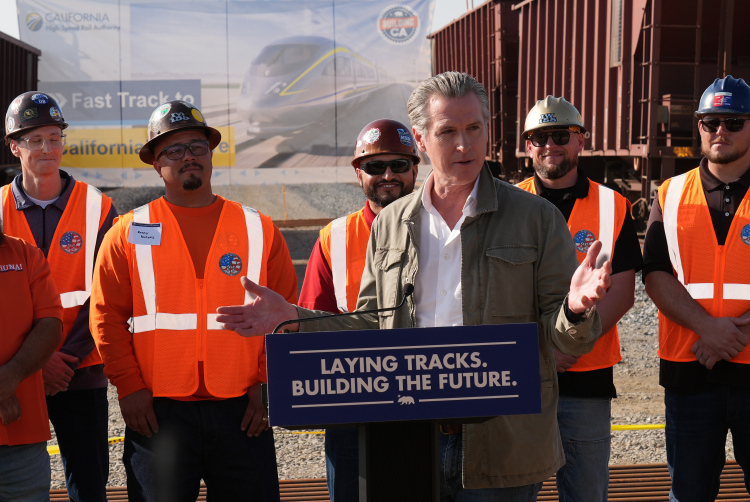
The Trump administration hit a partial pause button on the hubs, with administration officials telling RCI the West Coast hubs smacked of California’s notorious high-speed rail project, which has absorbed ever more billions of dollars without producing a single mile of usable track. Five other hydrogen hubs, from the Gulf Coast/Texas to Mid-Atlantic, have been “retained or modified.”
The other planks in Biden’s hydrogen plan included $1 billion for a “Clean Hydrogen electrolysis” program, to increase the hydrogen supply through processes that don’t use large amounts of fossil fuel, along with money for “hydrogen fuel and cell technologies,” and various hydrogen-linked tax rebates in the Inflation Reduction Act. Like the strategy and hubs, these programs are more inactive than killed, federal officials told RCI.
Stalled Cars
Hydrogen flares have gone up on the private front from time to time over the past decade. Since 2016, when leasing one cost $500 a month, the New York Times has published periodic stories about hydrogen cars in California, where the state had spent millions to build a market. The boom seemed right around the corner each time, but it has yet to arrive. RCI reached out to the world’s biggest makers of hydrogen vehicles – Toyota, Honda, Hyundai – and asked if sales had matched predicted estimates since 2016, but only Hyundai responded.
While Hyundai does not currently offer a hydrogen car on the U.S. market, senior brand manager at Hyundai USA Derek Joyce acknowledged that, “the hydrogen fuel cell fueling infrastructure has not grown as rapidly as the industry would have hoped due to a variety of larger global issues.”
Nor is the boom expected in the near future. The California Air Resources Board in December 2025 noted that “auto manufacturers are looking for market signals and state support to boost sales confidence,” and that the capacity of the state’s “hydrogen fueling stations is expected to exceed demand through the end of the decade.”
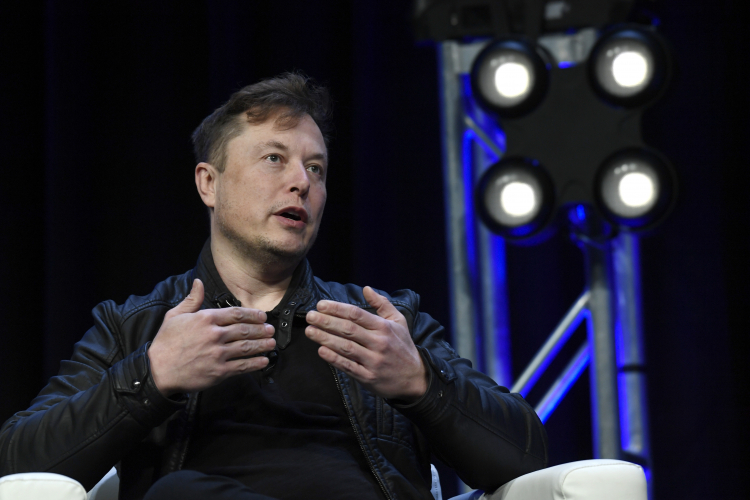
And the idea that hydrogen should play a much bigger part on America’s energy scene doesn’t enjoy widespread support. Musk has repeatedly voiced his thinking that hydrogen as a fuel source for personal vehicles is “a silly idea,” and some scientists see it as more valuable in outer space than on Earth, where a hydrogen-powered needle car recently set a new land speed record in the Utah salt flats.
“It’s great for rockets, but I’m not sure about everyday use,” said Mark Mills, the executive director of the National Center for Energy Analytics.
Here, as with other green initiatives that have been whipsawed by changes in White House policy, the sector should rely on private marketplace tests rather than federal taxpayers.
“If hydrogen has potential, then the market will respond accordingly. Regardless, subsidization, especially major government subsidization, is unreasonable and unjustified,” said Paige Lambermont, a research fellow at the free market-oriented Competitive Enterprise Institute.
“The technology either has the merits to stand on its own or it does not, but as it stands it is destined for the permanent subsidies we’ve seen for other technologies in the past,” Lambermont added.
That lack of merit lies behind hydrogen’s tiny slice of the energy market today, according to Sterling Burnett and other free market champions.
“It’s a big grift,” he said, noting these mammoth proposals often have the support of congress members eager for their state to get a share of the billions. “But the market hasn’t created it. Someone, let’s call him ‘Belon Tush,’ would be making a hydrogen car if everyone was going to drive one. But Belon doesn’t exist. They can’t compete.”
Thinking big may be part of the problem; Biden’s ambitious program suffered because it was suffused with climate hysteria, Wolak told RCI. Rather than trying to supercharge an element that might provide fractional differences in global warming, a smaller hydrogen plan that targets specific industries still makes sense, and he said the Trump administration has sent signals that “it might be willing to listen” to some proposals.
“You can’t just say, ‘I don’t like it,’ we have to find an American way and I think that’s gotten lost,” Wolak said. “The government’s piece is very important, and I think the Trump administration should be looking at ‘what are the best pieces of this?’ and ‘what can we take credit for?’”
