


Waste of the Day: Tax Breaks for Brothels
Prostitution is not a legitimate business under most U.S. laws — except the federal tax code.
The Internal Revenue Service allows legalized brothels in Nevada to qualify for the same standard deductions as any other small business. The brothels frequently write off business expenses such as testing for sexually-transmitted diseases, the “salaries and wages of prostitutes,” and even breast implants, according to the Congressional Research Service.
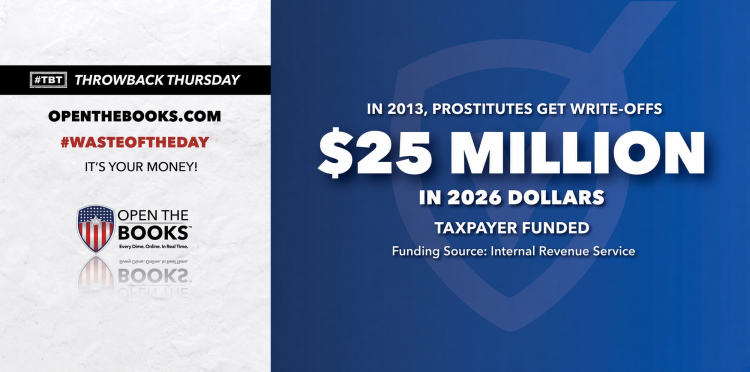
The deductions caused the federal government to miss out on $17.5 million of revenue in 2013, or $25 million in today’s money. The tax write-offs still exist, though a more recent dollar estimate has not been produced.
That’s according to the “Wastebook” reporting published by the late U.S. Senator Dr. Tom Coburn. For years, these reports shined a white-hot spotlight on federal frauds and taxpayer abuses.
Coburn, the legendary U.S. Senator from Oklahoma, earned the nickname "Dr. No" by stopping thousands of pork-barrel projects using the Senate rules. Projects that he couldn't stop, Coburn included in his oversight reports.
Coburn's Wastebook 2013 included 100 examples of outrageous spending worth nearly $30 billion, including the missed revenue from pimping out the tax code.
Key facts: The Mustang Ranch brothel provides one of the clearest examples of how the deductions work. During a tax dispute over the brothel’s finances in the 1970s, the IRS allowed more than $1.2 million per year to be deducted as “salaries and wages — prostitutes.”
Coburn found that in 2013, the Mustang Ranch gave out free promotional passes to its brothel and then claimed them as a business expense.
Workers in the adult entertainment industry can claim their own qualifying business expenses. In one famous 1994 case, exotic dancer Cynthia Hess successfully deducted the cost of breast implants. A federal court found the implants were so unusually large that they were useful only for her work and allowed her to depreciate their cost as a business asset.
Background: Prostitution remains legal today at licensed brothels in 10 rural Nevada counties. Earlier this year, 74 sex workers at Sheri’s Ranch in Pahrump were involved in an effort to form what would have been the nation’s first union of brothel workers.
There is precedent for barring certain types of companies from writing off business expenses. Stores selling cannabis or other controlled substances cannot claim deductions on their federal taxes.
Summary: What happens in Nevada may stay in Nevada, but the tax deductions make it all the way to Washington.
The #WasteOfTheDay is brought to you by the forensic auditors at OpenTheBooks.com.
