


Waste of the Day: Blinged-Out Vending Machines

Topline: The Miami-Dade County school district’s attempt to get students to purchase cheap, healthy school lunches in 2012 needed just a bit more time in the oven.
The district spent $612,808 to replace its cafeteria lines with cashless vending machines, reasoning that students’ love of touchscreens would get them to buy food they might otherwise ignore.
“Students are very tech-savvy and love to text, punch in numbers and get things quickly,” one local official told TechNews Daily at the time, paying triple the cost of an average vending machine.
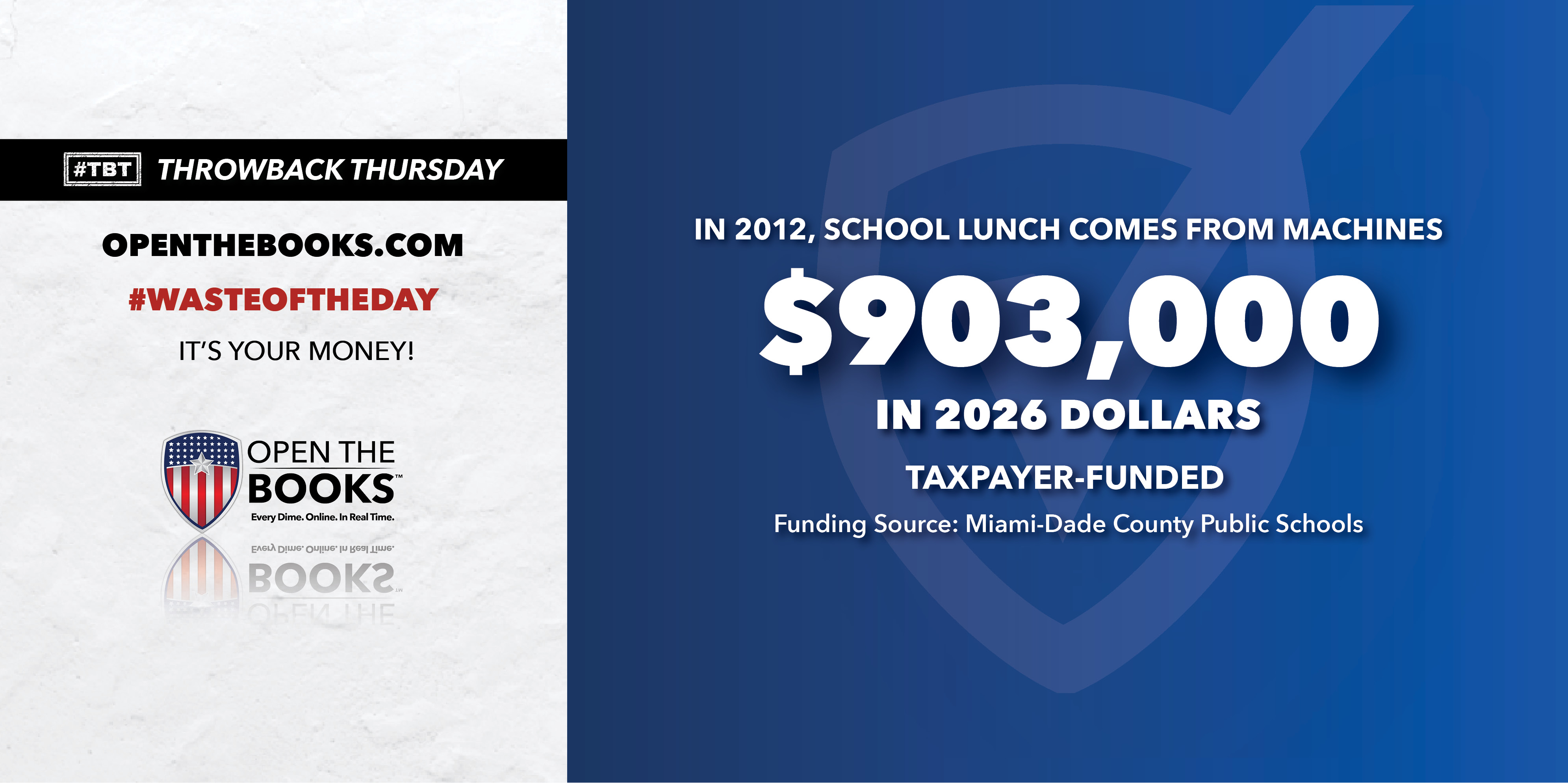
The money would be worth $903,000 today. That’s according to the “Wastebook” reporting published by the late U.S. Senator Dr. Tom Coburn. For years, these reports shined a white-hot spotlight on federal frauds and taxpayer abuses.
Coburn, the legendary U.S. Senator from Oklahoma, earned the nickname "Dr. No" by stopping thousands of pork-barrel projects using the Senate rules. Projects that he couldn't stop, Coburn included in his oversight reports.
Coburn's Wastebook 2012 included 100 examples of outrageous spending worth more than $18 billion, including Miami-Dade’s innovative school lunches.
Search all federal, state and local salaries and vendor spending with the world’s largest government spending database at OpenTheBooks.com.
Key facts: The district installed 56 vending machines at a cost of nearly $16,000 each, adjusted for inflation. The average vending machine purchased by private companies costs less than $5,000.
The machines featured prepackaged meals prepared by staff before each lunch period. Some recipes were crafted by celebrity chefs from the Food Network, making them a bit out-of-place in a school cafeteria, such as a vegetable wrap with carrots, cabbage, and mango chutney.
It’s unclear what the vending machines accomplished. The Miami-Dade County Health Department released a report declaring the program a success, but with few actual data points. It’s unknown whether the vending machines encouraged more children to eat healthy meals than if they had been served from a regular cafeteria line.
The report did conclude that the district was unprepared for the expenses and difficulties associated with the program.
“The logistics of installing and utilizing the software, electricity and meal accountability with the vending machine required a significant amount of man-hours, money and coordination that was not foreseen at the time the grant was written,” officials wrote.
Summary: Data shows Miami-Dade County schools are typically excellent at achieving high student performance efficiently, but luxury vending machines likely did not help them get there.
The #WasteOfTheDay is brought to you by the forensic auditors at OpenTheBooks.com
