


If Johns Hopkins University wanted to signal its seriousness about creating an alternative to the left-leaning orthodoxy that permeates higher education, it couldn’t have done better than the recent hire of economist Peter Arcidiacono.
Arcidiacono, a devout Roman Catholic, faced campus protests and sleepless nights after publication of his empirical findings that affirmative action can be harmful to minority students who aren’t academically prepared. He was in the spotlight again for providing the evidence in the landmark 2023 Supreme Court ruling against Harvard that effectively killed affirmative action in higher education.
Yet few realize that Arcidiacono supports affirmative action if it’s targeted properly, making him the kind of unpredictable conservative thinker, eager to engage contrary views, that appealed to William Howell. The dean of the new School of Government and Policy, Howell was so smitten with the economist that he also made Arcidiacono vice dean over the faculty.
The school, which plans to open in 2027 or 2028 in Washington, D.C., is part of Johns Hopkins’ ambitious and uncharted journey to transform itself into a citadel of ideological pluralism. It’s an experiment based on an untested theory: The hiring of conservative and heterodox thinkers will change the university culture, forcing scholars out of ideological ruts, spurring uncensored intellectual debates on campus and toppling orthodoxies along the way. But a big obstacle to the spread of pluralism is faculty opposition, highlighting the challenge of returning the university to its tradition of open-ended inquiry.
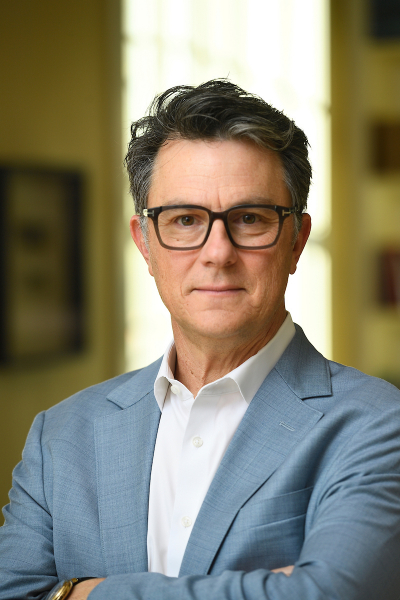
“We are bringing in people like Peter who are really interested in learning from other scholars who think very differently from them,” said Howell, who left a comfortable tenured position at the University of Chicago for the challenge of building a school from the ground up. “This is not a place to huddle with your tribe. When we tell them about the new kind of intellectual community we are building, they light up.”
While many universities have started civics schools that welcome conservative professors, Johns Hopkins has done more to promote ideological pluralism than most, placing it near or at “the top of the leaderboard,” says higher education scholar Neil Gross. No elite university leader has pushed harder for change than Johns Hopkins President Ron Daniels, ensuring a degree of compliance if not buy-in from his administration and faculty. An early mover, Daniels made plans for the first of two schools devoted to viewpoint diversity in 2017. He then wrote a book in 2021 – “What Universities Owe Democracy” – underscoring the need to train students in pluralistic thinking to help close the nation’s dangerous partisan divide.
Like most pluralism advocates, Daniels, a law and economics scholar, fits in the middle of the political spectrum. Beyond creating the two standalone enclaves for heterodox scholars, the president last year pressed his case for campus-wide change, forming a partnership with the conservative American Enterprise Institute to encourage collaboration between its scholars and researchers throughout the university.
Sense of Urgency
Perhaps the proximity of Hopkins’ main Baltimore campus to Washington, D.C. helped Daniels see the political trouble coming before other university presidents. And if his drive to bring conservatives to campus was meant in part to shield Hopkins from Republican attack, it didn’t seem to make much difference. Hopkins lost more than $800 million as part of the second Trump administration’s cuts in federal research and agency funding that hit elite universities hard.
Daniels’ influence within the Hopkins community also has limits. At all major American universities, departments have almost total control over hiring faculty, and they fiercely protect their right to determine the research directions of their fields, which also sets the ideological tilt, in the name of academic freedom. That leaves Daniels with the power of persuasion and the purse, which he has used to start centers like the Agora Institute that operate outside of departmental control.
“I’ve heard from numerous sources that at meetings with top brass, department chairs and program heads are hearing ‘pluralism, pluralism, pluralism,’” said Richard Essam, a postdoctoral teaching fellow and co-chair of the Heterodox Academy at Hopkins.
The leftward tilt of university professors has been shown in many studies, including a 2025 survey of 4,500 research faculty nationwide by Gross and his colleagues. On social issues, about 64% describe their views as extremely liberal to liberal, 30% moderate, and only 6% conservative or extremely conservative. “This makes academia one of the most liberal, if not the most liberal, occupations,” Gross writes in a book to be released in August, “What Happened to College: How Politics Broke Higher Education and What We Can Do To Fix It.”
Despite the imbalance, Hopkins faculty in history, comparative thought and literature, sociology and other departments are pushing back against hiring conservatives. A small faction argues that the call for pluralism is really a thinly veiled and decades-old right-wing plot to replace liberals with conservatives. Others, like history department chair Tobie Meyer-Fong, wonder what the fuss is all about.
“The history department is already distinctive for being both intellectually and methodologically diverse,” Meyer-Fong said. “This pluralism is well-reflected in the rigor, range, and distinction of faculty research and in our course offerings.”
“Fascists” & “White Supremacists”
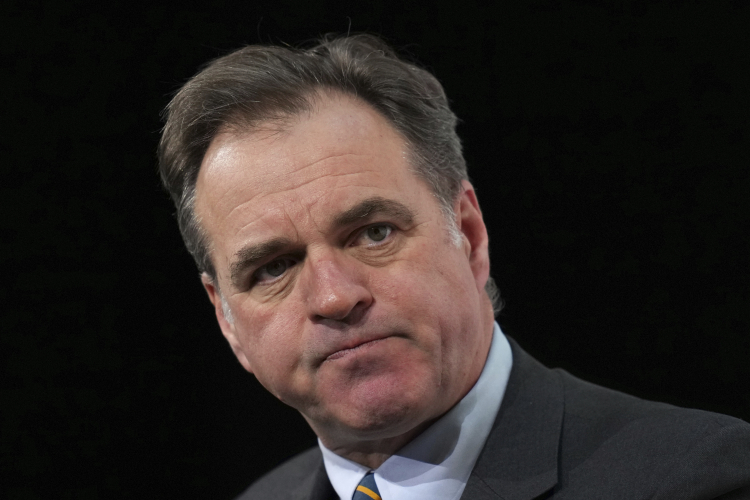
Louis Hyman, a historian at Hopkins, says the resistance stems partly from a misinformed view of conservative academics. At a panel discussion last year, Hyman expressed his gratitude to conservative historian Niall Ferguson, who he said had graciously called him on his sloppy liberal platitudes when he was a graduate student at Harvard. That didn’t convince some in the Hopkins audience.
“People said, ‘We don’t want to hire fascists and white supremacists.’ I’m like, ‘I don’t want to hire fascists either. I want to hire conservatives.’ The problem is they don’t have real-world experience of what conservatives like Niall Ferguson are like to work with. They just have these boogeyman visions, which is ridiculous.”
Most Hopkins faculty are liberals and moderates who raise a more complicated problem with the push for pluralism. Academic departments don’t explicitly say they aim to hire faculty with liberal-oriented research interests and views, though that’s what often happens. They insist hiring is all about finding the most accomplished scholars based on their publication and teacher record, period. This position is now deployed to resist the explicit hiring of conservatives as an unwarranted form of affirmative action based on ideology compared to the preferential hiring of minority faculty at Hopkins during the DEI era.
“There’s no question that many of my colleagues have an objection to hiring people based on either their political views or the orientation of their work,” said Andrew Perrin, who chairs Hopkins’ sociology department. “And I think that's a principled objection, hiring people based on their politics is a bad way to do academic work.”
That’s a widespread view across higher education. In the survey by Gross and his colleagues, research faculty were asked if they agreed that their institution should do more to recruit faculty with conservative views. Only 17% agreed, and 50% said that their universities should reject such an approach.
Nonetheless, Perrin says his department has made strides, hiring half a dozen sociologists whose work challenges or diverges from the orthodoxies in their fields. Ruth Braunstein, for instance, examines the influence of Christian faith on both progressive and conservative politics. But if the university wants to accurately reflect American political life, more corrective action is needed. No one in the sociology department, for instance, would aim to publish in the conservative National Review.
Perrin’s solution would have his department considering the political orientation of a scholar’s research when hiring – but only on a limited basis. This practice would be similar to how departments aim for diversity in subfields of study – U.S. versus international – and methodologies. A conservative sociologist might focus on the influence of culture and family on crime and inequality rather than racism.
But, Perrin insists, the political orientation of research should only be a plus when creating a pool of job applicants. It should not be a factor when making the final decision on who to hire. It’s a hair-splitting approach that Perrin says might find some support among the 20 members of his sociology department.
As Perrin’s tough predicament makes clear, Daniels’ vision will be slow in coming. Jonathan Plucker, a professor in the education department, predicts it will take about a decade. By then, the typical churn of faculty will have opened a significant number of positions to allow advocates to meaningfully rebalance the mix at Hopkins.
“If anyone is a cynic on this topic, it would be me,” said Plucker, a prominent scholar of advanced K-12 education. “I’ve sat through so many speeches on this over 30 years at different universities, and then they hire the most liberal person they can find. But President Daniels is walking the walk. He appears to be serious about Hopkins becoming an institution that encourages a broad range of perspectives.”
Beachhead of Pluralism
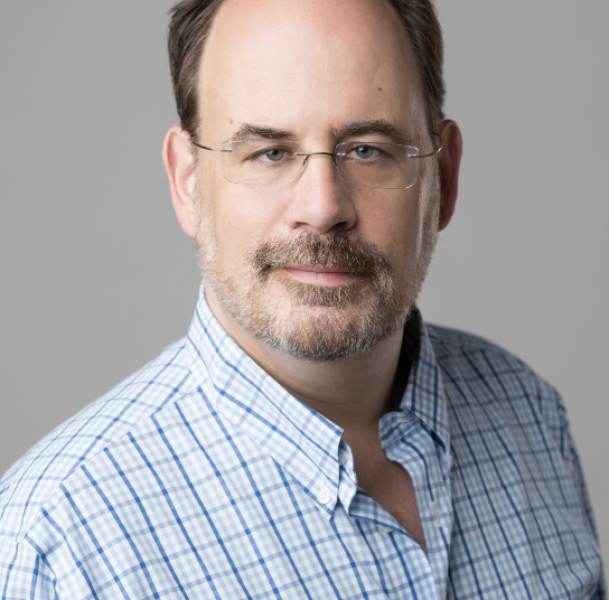
Political science professor Steve Teles, a moderate liberal, became a leader in the push for pluralism at Hopkins years after having an unusual experience with his dissertation – three of his advisors at the University of Virginia were conservatives, including the distinguished Steven Rhoads.
The conservatives pushed him on his assumptions about the effectiveness of government, tempering his view that federal and state programs are a means to achieve social justice. These early influences helped make Teles a wide-ranging scholar, including a book on how the powerful enrich themselves and an upcoming book on Republican opponents to President Trump. He has written for both the Nation and the National Review.
“Unquestionably, the conservatives made me a better scholar,” said Teles, who will be joining the School of Government and Policy. “They pulled me out of my bubble. And at its best, that’s what higher education should do.”
But Teles says it’s very difficult for Hopkins to bring in conservatives partly because there are very few of them in the hiring pipeline. Some conservatives think of elite universities as enemy territory and others would rather make more money in industry or work at think tanks. And the feeder schools that Hopkins hires from – Harvard, Yale, Princeton, Berkeley and Stanford – simply aren’t churning out conservative-minded Ph.Ds.
Step one, then, is to hire professors who prize the presence of oppositional views, thus laying a more friendly foundation for tapping conservatives when they become available. That’s part of the idea behind the Agora Institute, a brainchild of Ron Daniels and designed to be the university’s first beachhead of pluralism.
Operating independently and focusing on the restoration of democracy, Agora has had more freedom to hire heterodox thinkers, who in turn might spread the intellectual diversity gospel to departments throughout the university. For instance, Perrin was first hired by Agora in 2021 before taking over the sociology department two years later and pushing for change.
Hyman, the author and editor of five books on American capitalism and a political moderate, is another Agora professor. Years earlier at Cornell, Hyman says he was “pilloried” by his leftist colleagues for his research that showed the financial benefits of being an Uber or Lyft driver. Although some left-leaning history departments frown on scholars who focus on the rich and powerful, as Hyman sometimes does, he landed a job at Hopkins with the help of Agora, which supplied the funding.
Funding Envy
In six years, Agora has grown to about 25 professors, lecturers, and fellows, and in May it moved into a gleaming new glass building. Hyman says some faculty are resentful that Agora is getting substantial funding, but others are excited that there is now a place where they can put virtue signaling aside and speak freely.
At informal weekly political economy discussions at Agora, free-market conservatives and committed communists go at it. “It’s so interesting,” Hyman says. “We have more and more refugees coming from several departments who say they are thrilled to have open conversations again. They love it. This makes me optimistic about where Hopkins is headed.”
Agora hasn’t escaped the culture wars unscathed. Last year, progressive student activists protested the presence of visiting fellow Rev. Johnnie Moore, an evangelical Christian leader and former Donald Trump faith advisor. They didn’t like his right-wing politics nor his leadership of a humanitarian organization in Gaza that came under international criticism because of the deaths of Palestinians who were in the vicinity of its food distribution centers. Agora’s director has stood behind Moore.
Agora’s Center for Economy and Society, initially led by Teles and now by Hyman, is another bright spot in Daniels’ project. In 2024, Simon Halliday, a left-of-center economist, left a tenured faculty position to join Agora, where he now runs the center’s interdisciplinary major, Moral and Political Economy. In the rigorous program, students read hundreds of pages a week across the ideological spectrum, from Adam Smith to Karl Marx, before writing an honors thesis.
“The idea was to create an open space where students could express all different types of ideas, right, left and center, without fear of shaming,” Halliday said. “It excites them.”
The number of Moral and Political Economy majors has grown quickly from five students in the inaugural class to about 20 in the new one. That may rival, if not surpass, the number of majors in more established social science and humanities departments, providing evidence that students find the wide-ranging debates liberating. One hope is that the growth of the program becomes an incentive for departments to make curricular changes to attract students hungry for divergent views. “Departments know that losing undergraduate majors causes problems,” Halliday said.
Ultimately, the desires of students, as much as the cajoling by presidents, will determine whether a university like Hopkins transforms itself, says Gross, the higher-education scholar. If students clamor for pluralism and it benefits campus culture, faculty will realize the value of getting on board.
Hopkins is pursuing this bottom-up strategy by awarding the Political Union debate club with $10,000 in funding. Student organizer Aneesh Swaminathan says the Political Union, which brings together campus Republicans and Democrats, has hosted six debates so far, with consistent growth in attendance to about 60 students.
“The most memorable moments are conversations after the debate ends, when students who wildly disagree continue talking and, in some cases, become friends,” Swaminathan says. “That’s the kind of campus culture we are trying to build.”
Partnering With AEI
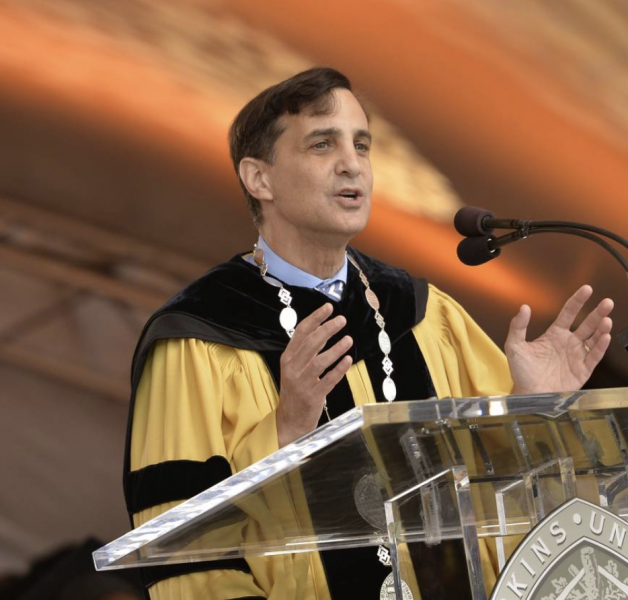
Last year, Daniels took another step, forging a partnership between Hopkins and the American Enterprise Institute, a conservative think tank with a “Never Trump” attitude that moderates appreciate. Jenna Storey, an AEI senior fellow, says she initiated the relationship after hearing Daniels talk about his book. She invited him to make a presentation at AEI, and afterward at dinner, Daniels suggested that AEI and Hopkins talk again about a partnership. It jelled last year with a few novel projects.
Storey and Teles, the political scientist, teamed up to build a mentorship program for conservative-minded students. The duo gathered political scientists from around the country who are eager to provide guidance to potential graduate students. Storey says the hard part has been finding the students who might be willing to enter a Ph.D. program in political science. “They are skeptical that academia will be a place where they can express their views,” said Storey, a conservative and former academic.
Storey expects the program will grow from 10 to a couple dozen students, which would begin to fill the dry pipeline. Faculty in sociology, English and philosophy are also considering developing a similar mentorship program for their disciplines. Teles sees this long-term approach to hiring conservatives as meritocratic, avoiding the taint of affirmative action.
To promote collaboration between scholars of different ideologies, the Hopkins-AEI fellowship program awards up to $50,000 in grants for joint research projects, events and courses. Researchers piled in, with 15 grants awarded so far, including to AEI’s Ben Storey on the right and Hopkins’ Robbie Shilliam on the left. Together, they taught a course at Hopkins on the meaning of a liberal education, with a reading list that seemed jarring, from Western canon heroes Plato and Thomas Jefferson to post-colonial critics Edward Blyden and Edward Said and feminist theorist Audre Lorde.
Shilliam, the chair of the political science department, says once partisanship was put aside, the class engaged in meaningful discourse over what might appear to be irreducibly oppositional positions. “The end-of-course comments I received from some students, which expressed the deep impact of the course on their personal formation, were the most gratifying I have received across my decades of teaching,” Shilliam said.
The Next Project
President Daniels isn’t done yet. He hired Howell, a true believer in ideological pluralism, to lead his next project, the School of Government and Policy. Howell says the 2,500 applications the school received show the keen interest in its aim to build an ideologically diverse team of about 40 heterodox scholars in economics, history, philosophy, political science and sociology. “We have hired right-of-center and left-of-center scholars,” Howell says.
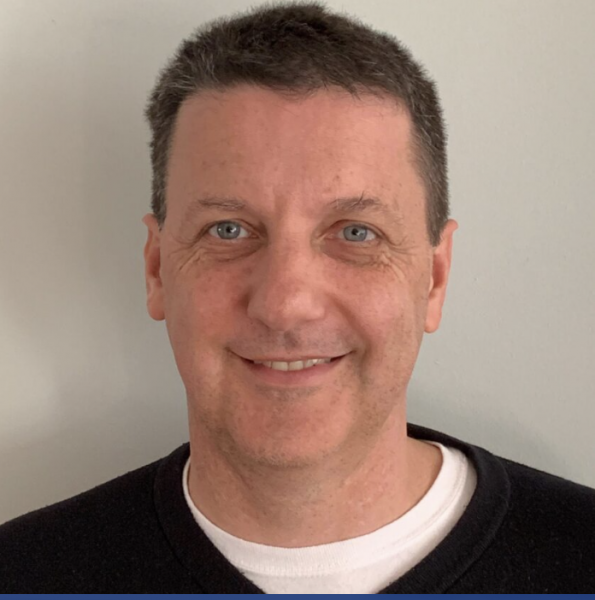
Arcidiacono, who will leave Duke to join the school, typifies the kind of mind Howell admires. He goes to unsafe places and asks provocative questions. In his latest project, he’s looking at why the media rarely reports on police killings of white people while focusing mostly on black victims. The policy implications of the underreporting of white victims, making police reform more difficult to accomplish, are not what one might expect from a conservative scholar.
“Without a doubt researchers need to be fearless,” Arcidiacono said. “If only certain answers are acceptable, then what's the point of doing the research?”
The big question looming over Daniels’ quest is whether it will make Hopkins a better research university. There are examples of academic clashes with ideological undercurrents at a national scale, such as the empirical behavioralists versus the institutionalists in political science, that produced an illuminating body of new research. But Gross says there is no data on whether creating more ideological pluralism on a single campus will lead to better truth seeking among its faculty. It’s too new.
Howell realizes that the experiment at Hopkins could amount to little more than wishful thinking. He sees the need for systems of accountability to make sure his scholars really mix it up rather than retreat into their silos like academics do. But how to measure an idea like pluralism is not clear-cut. Hopkins could look at changes in the number of article citations and in the satisfaction of students. But Howell is aiming higher.
“Will scholars push their disciplines in new directions rather than just extend them? Will students not just deftly navigate our broken institutions but fix them?” he asks. “I want to see evidence of that.”
