


What is human sexuality? In Western societies, the traditional understanding long shared by religious authority, textbook biology, and public opinion is being replaced by the emerging expertocracy of professors, bureaucrats, and lawyers.
Consider a federal lawsuit involving a transgender individual who identifies as a woman, but has fully intact male genitalia. This individual was keen on visiting a women’s-only Korean spa in Washington state where naked girls and women receive full-body scrubs from female staff in communal saunas.
The Olympus Spa had a policy of denying access to someone whose body is anatomically male – regardless of how they identify. For the Washington state Human Rights Commission, a federal district court, and a federal appeals court, the case was a slam dunk: The Korean spa was deemed in violation of Washington state’s anti-discrimination law.
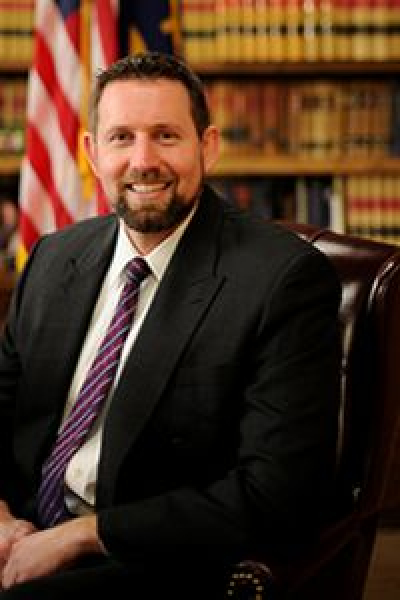
The federal appellate decision might have gone unnoticed this year had not a dissenting judge provocatively described the controversy as “a case about swinging dicks,” arguing that his fellow jurists on the court were making a mockery of social norms protecting women against voyeurism and indecent exposure.
A legal ruling that upends millennia of fundamental assumptions about human sexuality is incomprehensible – and will be experienced as culture shock – without understanding the broad reach of once obscure academic gender theories that have led to revolutionary changes in law and society. Incubated in scholarly journals over decades and disseminated in classroom instruction, these concepts were never debated by the public. Like fish who don’t know they swim in water, much of the Western educated world today operates within a philosophical framework that treats trans and nonbinary identities as objectively real, and is inclined to problematize biological sex as an outdated social construct.
New Queer Paradigm
Two recently published books explore these radical ideas, guiding the perplexed through the mysteries of the new queer paradigm. Authored by Ivy League professors and issued by prestigious publishers, such books lay out the case for rejecting the biological essentialism of two sexes as a cultural norm or political ideology contrary to nature, created by Western imperialists and eugenicists.
While the ideas they espouse will sound foreign to many and even repugnant to some, these books are representative of queer scholarship that emerged from the fringes of academia decades ago, and incrementally – through thousands of academic citations, generous foundation grants, and celebrity endorsements – became adopted as the new paradigm in law, medicine, employment and popular culture, as countless Pride month spectacles attest.
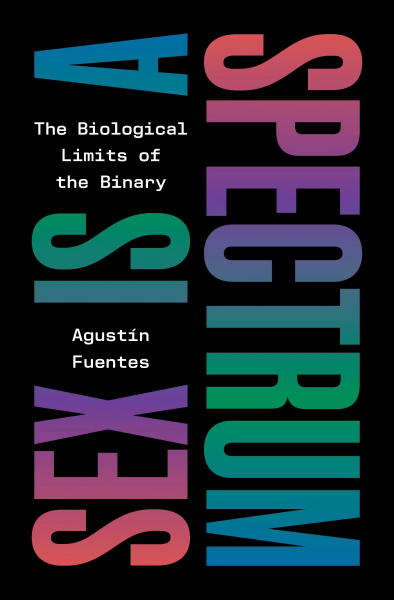
“The binary definition of sex biology is a recent invention,” writes Princeton University anthropologist Agustín Fuentes in his book, “Sex Is a Spectrum: The Biological Limits of the Binary.” “Understanding animal biology is at the heart of understanding human biology.”
In a phone interview, Fuentes said that the biological sciences have been undergoing a paradigm shift for the past several decades, and many scholars reject the sexual binary model that says females are defined solely by large gametes (eggs) and males by small gametes (sperm). Fuentes relies on Queer Theory in his work, and said it “is really an important part of thinking throughout contemporary biology.” Accordingly, Fuentes believes that perceived differences in strength and speed between males and females in sports are to a considerable extent products of culture, not biology. If society held the same expectations, and invested equally in male and female sports, the performance gap between the sexes would narrow significantly.
Fuentes draws on various examples of wildlife – such as male fruit bats that lactate or the bluehead wrasse fish that can change its sex – to argue that binary sex is not universal, and that human “bodies, physiology, and behavior are not so easily classified, and are queer indeed.”
Nature Doesn’t Make Mistakes
Fuentes considers most intersex people, who are born with atypical or hybrid sex characteristics, as natural variations, not aberrations or mistakes of nature. Likewise, he says albinism, colorblindness and deafness are mere variations, and to think of them as defects or mistakes is a cultural assumption and a value judgment.
“In many animal species, including people,” he wrote last year in Scientific American, “there are individuals who are neither male nor female or who are sometimes both.”
Technically speaking, only gametes – sperm and ova – are binary; everything else – chromosomes, genitalia, gonads, height, weight, muscle mass – falls along a spectrum, Fuentes contends, concluding that there are not two distinct types of people, and asserting the biological fact of two human sexes is “a lie” that causes societal harm.
According to Fuentes, many pre-colonial and pre-Christian societies knew this intuitively, and recognized multiple human genders, but their ancient wisdom was lost when Europeans arrived on the scene and imposed their rigid cultural norms.
“Such traditions became repressed or banned with the colonial expansion of Christianity and particular political systems over the past five centuries,” Fuentes writes.
Fuentes cites nonbinary and hermaphroditic examples from the animal kingdom – primates, hyenas, amphibians, worms, etc. – but offers no examples from human cultures, even though he is an anthropologist. He writes that he focused on biology to counter arguments favored by “the current US administration,” and others engaged in “extreme othering to further notions of control and power.”
Beans Velocci, a historian of sex and a gender studies professor at the University of Pennsylvania, amps up these arguments in his polemic, “Sex Isn’t Real: The Invention of an Incoherent Binary.” Whereas Fuentes conservatively asserts that “not all humans fit neatly into the categories of female or male,” Velocci argues that “most people” don’t fit into the binary.
Woke Eugenics?
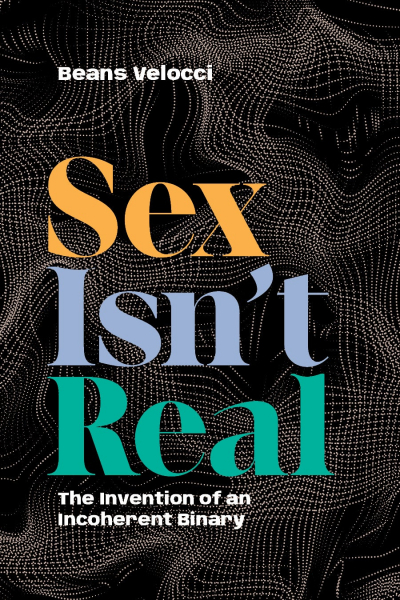
For Velocci, who uses they/them pronouns, the history of science reveals that categories like male and female – and the traditional roles conveyed by the term “cis” – are incoherent cultural inventions; Velocci insists that “cisness is not a natural state,” and asserts “the unnaturalness of cis womanhood.” In contrast to Fuentes’ disarming tone, Velocci revels in the intellectual tradition of shocking the middle class and scandalizing polite society. Velocci’s work reads like a manifesto, denouncing “cisness as a contingent political formation in service of white, colonial, bourgeois brutality,” and advocating for “a government takeover by the communist nonbinary ants.”
Velocci devotes much ink to condemning eugenics, the science of breeding, for its role in perpetuating white supremacy and binary gender. In what may be one of the underappreciated ironies of modern history, Velocci describes how early 20th-century eugenics laid the experimental foundations that would eventually lead to the development of transgender hormonal interventions and surgical modifications.
“This vitally important sex research and vision of sex as something one could edit with the right expertise would unlock the power of science to sculpt humanity,” Velocci writes.
This is probably not what Velocci has in mind, but some skeptical readers will likely wonder if sex-change medicine today is a continuation of eugenics. After all, gender medicine can now perform a phallus-preserving vaginoplasty – a procedure offered by a number of gender clinics that sculpts male and female genitals on the same person – which appears more like medical experimentation than a necessary life-saving procedure.
Indeed, the specter of eugenics hovered over the Korean spa case.
“Sometimes, it feels like the supposed adults in the room have collectively lost their minds,” Judge Lawrence VanDyke wrote in his dissent in the Washington state Spa case. “Woke regulators and complicit judges seem entirely willing, even eager, to ignore the consequences that their Frankenstein social experiments impose on real women and young girls.”
