


At the onset of the COVID-19 pandemic in 2020 – with face masks, gloves, and other basic protections in high demand – Chinese leaders threatened to plunge America into the “mighty sea of coronavirus” by withholding essential medical supplies in retaliation for measures such as the U.S. travel ban on visitors from China.
The threat, issued through a Chinese Communist Party organ, brought into stark relief China’s strategy to subdue would-be foes by rendering them reliant on its exports for life’s necessities – prompting a pledge from U.S. policymakers to address supply chain issues that made the country vulnerable to a hostile power.
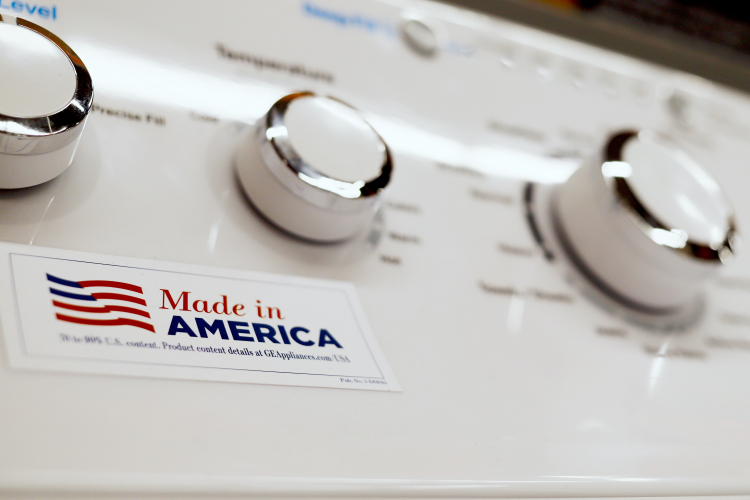
Six years later, despite a raft of initiatives – including tariffs, made-in-America requirements, and the makings of a responsive U.S. industrial policy embraced by the Biden and Trump administrations – America’s effort to reduce dependence on China in pivotal sectors has been slow and faces a slew of challenges.
Headlines heralding the decline in U.S. imports from China to levels not seen since the depths of the pandemic mask the fact that America’s chief rival continues to control chokepoints in supply chains that provide urgent military assets, key technologies, and important medicines.
The Chinese government recently demonstrated its ability to weaponize critical sectors when it responded to U.S. tariffs by restricting exports of rare earth materials and magnets that are critical to American defense systems and weapons. War-gamers have indicated that the control over those supply chains may become paramount should China invade Taiwan or engage in other hostilities that might draw an American military response. Some estimates have indicated that such a struggle could wipe out 10% of global GDP – albeit damaging China and the U.S. alike.
Some experts say the major stumbling block is the private sector, which remains at odds with policymakers in tilting away from China, and has long relished its large market and cheap labor pool. Isaac Stone Fish, the CEO of Strategy Risks, a China-focused business risk analysis firm, told RealClearInvestigations that “Despite all the tough talk,” and economic and geopolitical tensions, his firm’s analysis shows that dozens of major U.S. companies have increased their engagement with China during 2026.
To treat supply chain threats as an economic problem and leave it to be addressed by free enterprise – rather than as a national security challenge requiring whole-of-society mobilization – is a fatal error, according to Leland Miller, a U.S.-China Economic and Security Review Commission member.
“[A]s long as you allow market dynamics to dictate what the U.S. is doing…you’re going to lose,” Miller said.
China’s Commanding Position

The Trump and Biden administrations have both highlighted the significance of the supply chain challenge to our national security, economic security, and public health. These include China’s commanding positions in:
- Global rare earth materials, where China controls more than 60% of production and nearly 90% of refining capacity, giving it a chokehold on inputs vital to the manufacturing of everything from automobiles and medical equipment to defense products and spacecrafts;
- Components or materials key to U.S. military hardware, ranging from U.S. aircraft carriers to missile defense systems and tanks, which are produced in or sourced from China;
- Foundational semiconductors, used in practically all applications that include advanced chips from vehicles to medical devices and military systems, where China is the global production leader;
- Printed circuit board fabrication, a core component in modern electronics, from telecommunications satellites to ventilators and smartphones, where Chinese firms control more than two-thirds of the global market;
- Medicine, a field in which China controls approximately 90% of the global supply of key starting materials in active pharmaceutical ingredients in generic drugs, with over 60% of U.S. drugs containing key inputs from China and India.
To attain these positions, the U.S.-China Economic and Security Review Commission wrote in its 2025 annual report, “China has deliberately pursued a strategy of expanding production and deepening global dependence on Chinese exports while reducing its own reliance on imports. This strategy builds on decades of industrial policy that led to a concentration of supply chains in China and undercut competitors by flooding global markets with subsidized, underpriced goods.”
China’s tactics in pursuit of this strategy have ranged from government subsidies and currency manipulation to intellectual property theft and industrial espionage, forced labor, and product “dumping at artificially low prices – and, as it has increasingly been met with resistance, export controls.”
Tariffs and Stockpiles
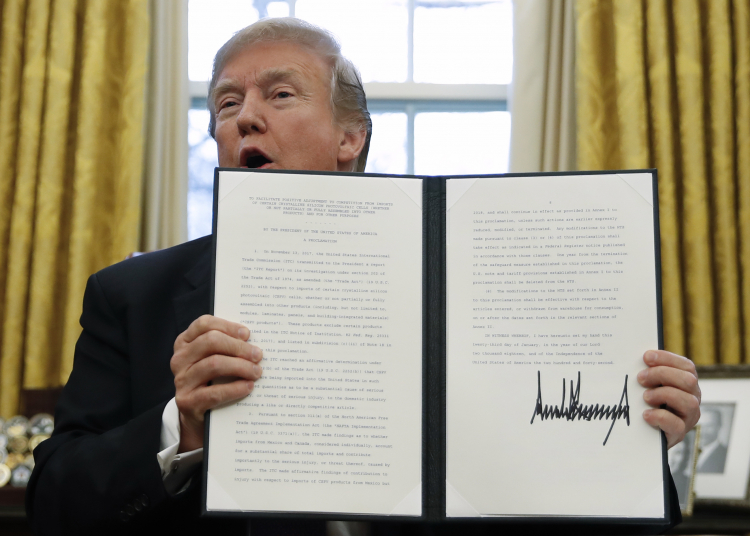
The tariff regime, enacted during the first Trump administration and mostly continued under the Biden administration, is one key tactic the U.S. government has used to counter China’s playbook. Other policies have included directly stockpiling critical resources; securing strategic sectors through fostering international alliances and public-private partnerships; permitting reform; trade enforcement actions; incentives for re-shoring; and export controls.
“This is a whole-of-government effort across key industry sectors including critical minerals, pharmaceuticals, semiconductors, autos, steel, aluminum, and copper,” White House spokesman Kush Desai told RCI. “Hundreds of billions of dollars in private investment commitments across these sectors reflects how the administration’s long-term agenda continues to bear fruit.”
Still, experts remain concerned that the U.S. is ill-equipped to solve the complex problem.
Ideally, experts say, the U.S. government would comprehensively map the supply chain risks and work with all relevant stakeholders to mitigate them. The Trump administration has focused in particular on rare earth minerals and artificial intelligence technologies. Similarly, the Biden administration laid out a number of areas of concern from batteries to biotech as detailed in its Quadrennial Supply Chain Review. And, to varying degrees, both administrations attempted to coordinate their risk-mitigation efforts with foreign governments and the private sector.
Yet experts lamented that the government lacks the information necessary to comprehensively identify and attack supply chain vulnerabilities – rendering policies to date “ad hoc,” according to Meg Reiss, a former national security staffer on Capitol Hill and founder of SolidIntel, which uses AI to identify supply chain risks.
Leland Miller, who was appointed to the USCC by Republican House Speaker Mike Johnson, told RCI that the U.S. still has to do a lot of foundational work to to "map the [various] supply chains" and to identify "the vulnerabilities."
Miller pins the slow progress to the lack of data from an often resistant private sector.
USCC Vice Chair Mike Kukien, an appointee of Senate Democratic Leader Chuck Schumer, concurred, asserting that “anytime Congress has attempted to wade into this space of…pulling information out of the supply chain, the first people to come and bang on your door and say, ‘Don’t do it,’ is industry.”
Pushback From Business
Companies argue that identifying areas where they are reliant on China and transitioning operations elsewhere would threaten their business models. They also claim it is costly and onerous to collect information on the multiple tiers of suppliers on whom they rely, and in some cases, they lack the wherewithal to do so. For its part, China has sought to impose costs – including ending market access – on companies that cooperate with supply chain transparency efforts.

Miles Yu, who served as principal China policy planner on strategy at the State Department during the first Trump administration, identified "Wall Street and Silicon Valley globalists" as influential opponents of Washington’s efforts to combat China’s supply chain chokepoints more broadly.
The task is further complicated by China’s efforts to avoid Trump’s tariffs by routing their products through more U.S.-friendly countries as a workaround.
“China’s ability to sort of hide its hand from a manufacturing perspective, unless there’s a real attempt to do country of origin work, is pretty strong,” Joshua Hodges, a former senior director at the National Security Council, told RCI. “And you’re seeing that in the defense industrial complex. You’re seeing it in cell phones. You’re seeing it really in any place where there are parts of a supply chain that have become commodities.”
Miles Yu concurs. “[T]oo many opportunistic allies and partners in EU and Asia [are] not in sync with Washington,” as well, making grappling with the global nature of the problem even harder, he said.
On the U.S. side, basic problems of coordination within the government threaten even the most comprehensive effort to take on the supply chain challenge. The National Defense Authorization Act is perhaps the seminal bill aligning the executive and legislative branches on China policy. Reiss notes that “the way…the legislative cycle works,” when it comes to mitigating supply chain risk, “everything’s based on NDAA timing.”
Should one NDAA cycle pass in which vulnerabilities go unaddressed, then remedies will not be included for the next “year and a half for beginning implementation, much less being fully implemented. So the timelines start becoming significant if we don’t have movement.”
Bright Spots
Despite their bearish conclusions, experts did note some bright spots. Stone Fish called tariffs “the biggest forcing mechanism yet – high enough costs might finally do what politics couldn’t. But China controls critical minerals that American factories can’t do without, so escalation cuts both ways.”
Miller noted that tariffs may be an effective defensive tool for protecting industries under attack from a China that often floods the market with goods to undercut foreign competitors. Tariffs, he says, should be used to ringfence critical sectors as their participants shift to alternative suppliers and rebuild their domestic production capacities. “But you can’t just throw around a tariff wall and expect industry to miraculously develop domestically as a result of that,” he says.
Miles Yu has a more sanguine view. He said that in the areas of defense, automobiles, and telecommunications services, the U.S. has been making progress on mitigating supply chain risk from China. And he believes that prohibitive tariffs on Chinese steel and aluminum, automobiles, including electronic vehicles, green products, and “enhanced SEC scrutiny” on publicly traded Chinese companies in the U.S. have borne fruit. Conversely, he argued that pharma and bio product restrictions remain wanting.
While concerned about the lack of strategic coherence in America’s risk mitigation efforts to date, Reiss hopes that efforts from the Defense Department reflect increasing strategic discipline. She cites, for example, initiatives out of the Office of Strategic Capital – which has backed domestic processing of rare earth minerals – as positives.
In the long term, Miller says, the U.S. only has to modify, not reinvent, the supply chain. “It’s not that we have to go back and figure out where every single input to every single supply chain is,” he says. “We have to make sure that enough of it comes from outside of China… so that China doesn’t have a stranglehold over any particular supply chain no matter what happens.”
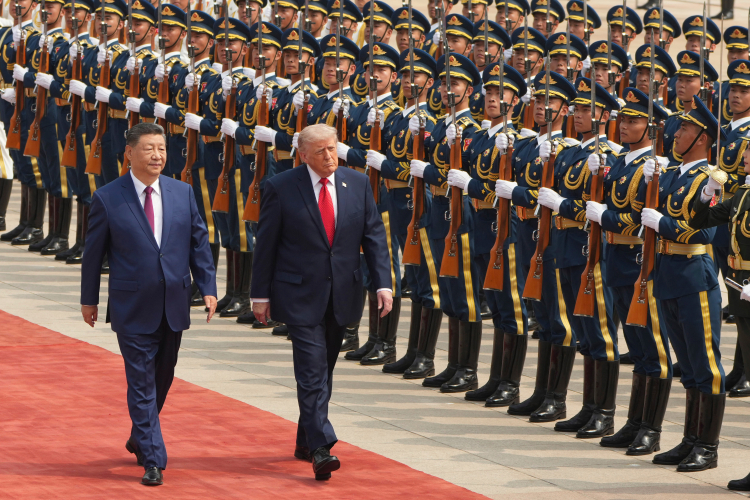
In the interim, in the wake of the May 2026 summit between President Trump and Chinese leader Xi Jinping, the American side touted China’s stated commitment to “address U.S. concerns regarding supply chain shortages related to rare earths and other critical minerals,” as well as “prohibitions or restrictions on the sale of rare earth production and processing equipment and technologies.”
Still, the conflict between the two nations continues. Earlier this month, the Department of War added nearly two dozen Chinese companies to its blacklist. In apparent response, Chinese authorities imposed trade restrictions on dozens of U.S. defense companies, including barring exports to two American rare earth producers.
