


Waste of the Day: Medicaid for Tax-Dodging Docs

Topline: Tax delinquency among recipients of federal subsidies is an under-investigated source of fiscal waste, but the Government Accountability Office published a landmark study on the issue back in 2012.
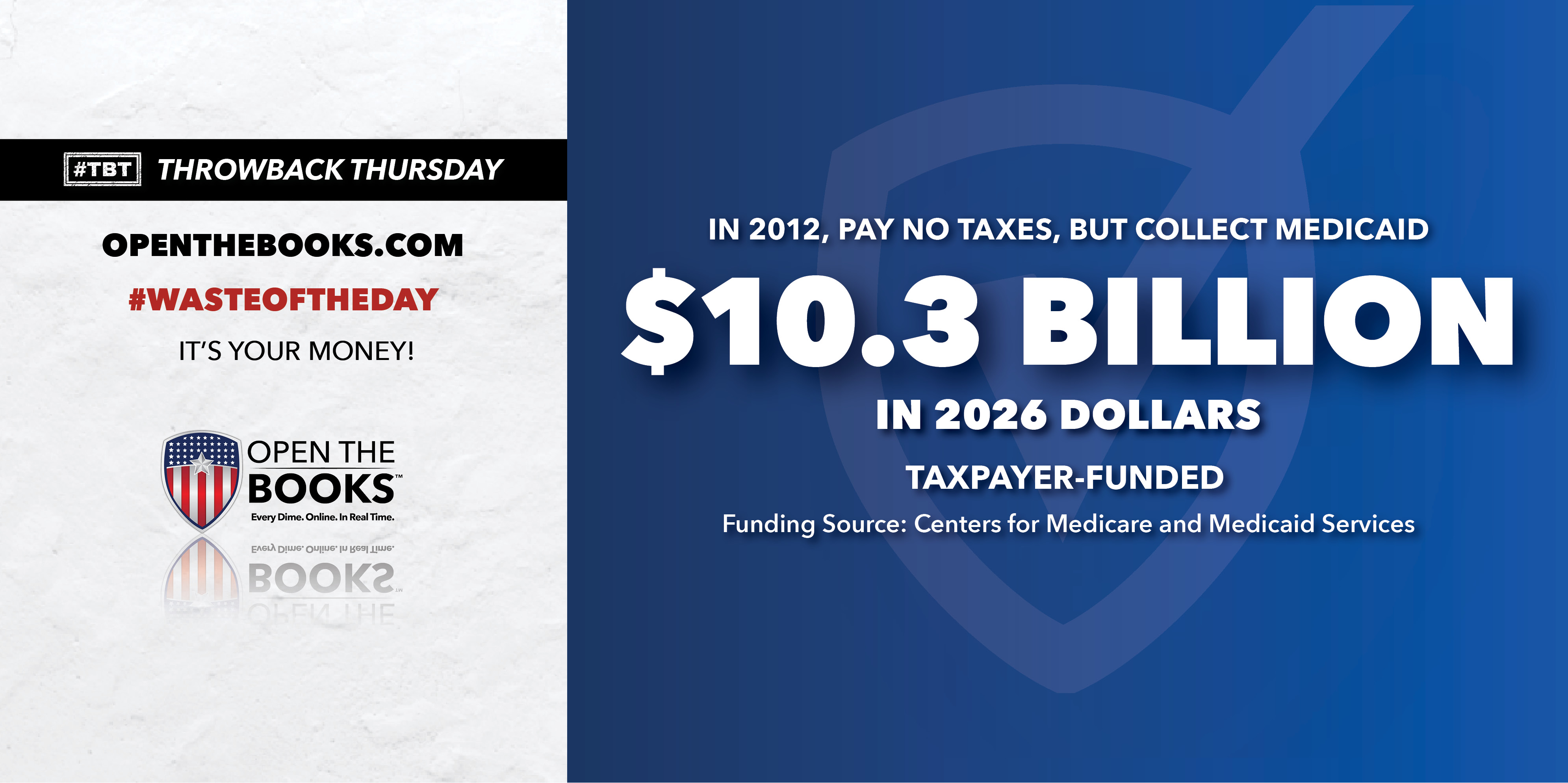
Medical providers in Florida, New York and Texas with unpaid taxes were found to have received $6.6 billion in Medicaid reimbursements during fiscal year 2009, or $10.3 billion in today’s money.
One couple that owned a nursing business was even able to buy a new home while their company owed $3 million in taxes.
That’s according to the “Wastebook” reporting published by the late U.S. Senator Dr. Tom Coburn. For years, these reports shined a white-hot spotlight on federal frauds and taxpayer abuses.
Coburn, the legendary U.S. Senator from Oklahoma, earned the nickname "Dr. No" by stopping thousands of pork-barrel projects using the Senate rules. Projects that he couldn't stop, Coburn included in his oversight reports.
Coburn's Wastebook 2012 included 100 examples of outrageous spending worth more than $18 billion, including the frustrating Medicaid reimbursements.
Key facts: There were 7,000 Medicaid providers with $850 million worth of unpaid federal taxes, representing almost 6% of all doctors that received Medicaid reimbursements in the three states. Most of the late payments were for payroll taxes and income taxes, which are meant to help fund Medicaid.
The GAO found many instances of “abusive or potentially criminal activity related to the federal tax system.” Some Medicaid providers did not file tax returns. Others sent bad checks to the IRS or never followed through on agreements to pay their delinquent taxes by a certain date.
One dentist had $400,000 in unpaid income taxes from the 1990s but still received $400,000 worth of Medicaid reimbursements. He had previously been suspended for improperly prescribing controlled drugs.
An ambulance company had $6 million in unpaid taxes but still got $1 million from Medicaid. Internal Revenue Service employees described the business’ legal team as “uncooperative, interruptive, and insulting toward IRS.”
A nursing business owned by a married couple had $3 million in unpaid taxes, but the couple was borrowing money from the business to buy a new house and fund other personal expenses. They received $200,000 from Medicaid.
The obvious solution would be for the IRS to seize Medicaid reimbursements to settle unpaid tax debts. But because Medicaid is managed by states, the IRS has limited legal authority in that regard. And federal law prohibits doctors from being permanently kicked off Medicaid just because they have delinquent taxes. Even when the IRS did manage to seize payments, doctors often continued receiving Medicaid reimbursements before their full debts were settled.
There does not appear to be a comprehensive federal report examining Medicaid payments to tax-dodgers since the 2012 GAO study. The GAO tried to include California in its report, but the state’s data was found to be unreliable.
Search all federal, state and local salaries and vendor spending with the world’s largest government spending database at OpenTheBooks.com.
Summary: The sheer size of the Medicaid program requires consistent audits and review to ensure that benefits are being paid only to those who should be receiving them.
The #WasteOfTheDay is brought to you by the forensic auditors at OpenTheBooks.com
