


Topline: Most bus stops consist of a bench and some plexiglass but, in 2012, the City of Grants Pass, OR ,decided that wasn’t good enough. The mayor used federal funds on expertly designed bus shelters “with public art to make them an interesting and attractive place — something that was truly unique to the City of Grants Pass.”
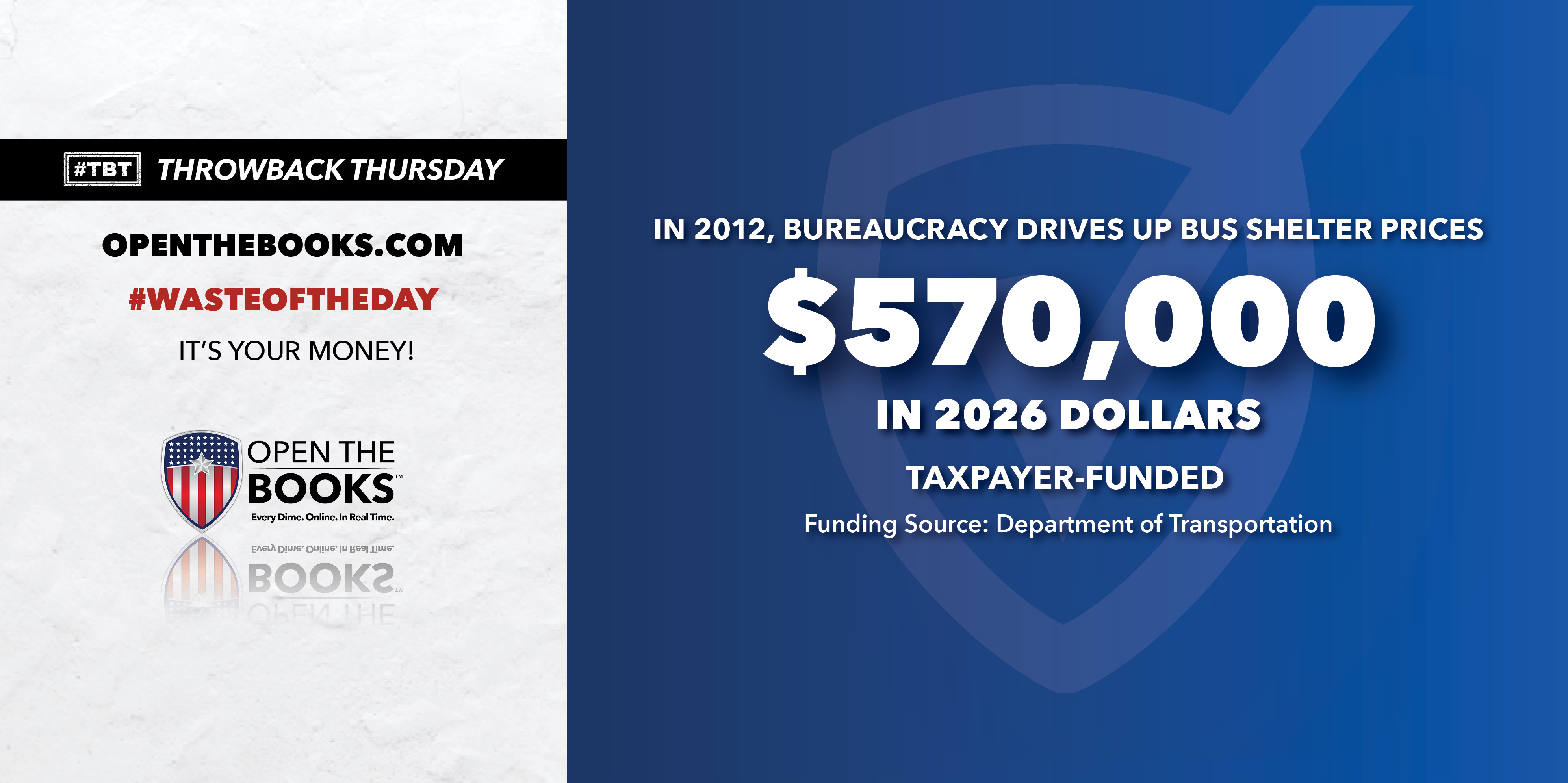
The city quickly had buyers’ remorse after realizing that burdensome federal grant regulations would drive up the cost, but it was too late. Five bus stops were built at a cost of $388,000, or $570,000 in today’s money.
That’s according to the “Wastebook” reporting published by the late U.S. Senator Dr. Tom Coburn. For years, these reports shined a white-hot spotlight on federal frauds and taxpayer abuses.
Coburn, the legendary U.S. Senator from Oklahoma, earned the nickname "Dr. No" by stopping thousands of pork-barrel projects using the Senate rules. Projects that he couldn't stop, Coburn included in his oversight reports.
Coburn's Wastebook 2012 included 100 examples of outrageous spending worth more than $18 billion, including Oregon’s ritzy bus stops.
Search all federal, state and local salaries and vendor spending with the world’s largest government spending database at OpenTheBooks.com.
Key facts: Grants Pass originally planned the bus stops in 2009 at a projected cost of $32,000 each, but the cost more than doubled because of the Department of Transportation’s bureaucratic processes.
Local leaders were not allowed to design the bus stops themselves. They needed to hire outside artists. They also could not hire a construction company on their own; they needed to hire a private consultant to run the competitive bidding process.
The expensive bus stops drew backlash at city council meetings throughout 2012 as residents and officials argued the federal funds could be put to better use.
“Around here, that’s enough money to build a three-bedroom house,” then-Councilman Dan de Young said of the price tag. “What we should do is build a house at each station, and if you miss your last bus, you can stay there overnight.”
Most city council members agreed the project should be halted, but Grants Pass would have had to repay the $81,000 of federal funds that had already been spent on engineering consultants. Even the project’s opponents eventually voted to complete it to avoid that fee.
Summary: Grants Pass wanted its bus stops to be “truly unique,” but its waste of taxpayer money is sadly not uncommon for federal grant funds.
The #WasteOfTheDay is brought to you by the forensic auditors at OpenTheBooks.com
