


There’s hardly a ruler in the world who would identify as fascist, but if you trust the mainstream media, you will assume fascism is on the march. Mentions of the term have skyrocketed ever since Donald Trump emerged from the land of chandeliers; fascist mentions on cable reached unprecedented levels in the run-up to the 2024 election. Now, almost anything Trump does – from cracking down on illegal immigration to proposing construction of a victory arch – is seen by the Washington Post and others as fascist.
Tellingly, the term has not just been applied to Trump. It has, for decades, been slapped on almost everyone progressives don’t like. George W. Bush, John McCain, and even meek Mitt Romney have all been called the F-word. Same goes for the former reality TV star Spencer Pratt, who is running for mayor in Los Angeles.
The net has been widened by using the term to describe the millions of people who support such figures. One Canadian economist claims to have identified 1,000 words – including rebirth, liberalism, ethnic, and Jewry – he says are indicative of “fascist jargon.”
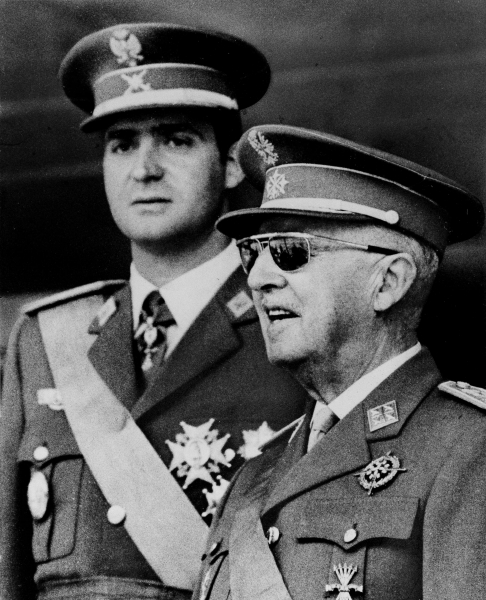
Given that fascism’s heyday was from the early 1920s until the end of World War II and that the last fascist leader of a major country, Spanish dictator Francisco Franco, died in 1975, the endurance of this term may seem surprising. This is especially true in the American context, given that fascism – unlike socialism –never gained a foothold here, largely remaining a European and Latin American phenomenon. This pattern is also seen in the developing world, particularly in the Middle East, while China may be the world’s largest power that follows a script that Mussolini would follow.
Still, fascism is invoked so often, and with such force, the question arises: Is it or anything like it already here or on the near horizon? To begin to answer this question, this reporter traveled to the birthplace of fascism, Italy, to explore what the ideology actually was before examining whether its key features remain forceful drivers of contemporary politics. It reveals both that leftists who issue the loudest warnings about rising fascism increasingly exhibit many of its characteristics more than those they accuse – and that the larger fascist threat may not be coming from people but machines.
What Was Fascism?
Historians agree that Italian dictator Benito Mussolini was the first major fascist to rise to power, taking control of his country in the aftermath of World War I. The son of a socialist blacksmith, Mussolini viewed himself as a “revolutionary” who would transform a ravaged nation. While fascism is often identified with the political right, it was a call to collective action: The word itself comes from the Latin fasces, which suggests how a bundle of rods is far stronger than a single stick. The earliest modern use was from socialist radicals in Sicily. Historians would also note that it was marked by ultra-nationalism, state control of thought and economic life, adulation of an all-powerful, and totalizing ideology covering every aspect of human existence.
Except for the ultra-nationalism, it was similar to the communism of Lenin and even more so of Stalin.
Mussolini later described fascism as an ”organized, concentrated, authoritarian democracy.”
In today’s Italy, some outlets like The Guardian label the present government of Giorgia Meloni as the doyenne of what it describes as “neo-fascism.” They see in her politics a savvy, gradualist way to restore the Mussolini-era patriarchy and strong, controlling state.
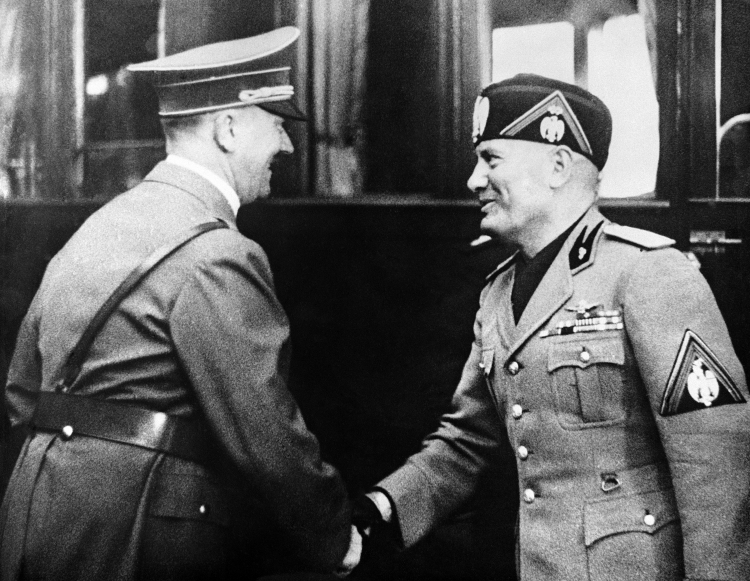
Although her party has its roots in a political descendant of the fascist regime, there is little evidence of what historian Simonetta Falasca-Zamboni has described as “fascist spectacle.” There are few Meloni posters, much less statues in Rome or elsewhere. She does not hold the kind of massive show-of-strength rallies that Mussolini and Hitler specialized in. Unlike Mussolini, she has no cadre of violent “Blackshirts” to impose the party’s will.
Meloni’s governing philosophy, instead, is traditionalist and conservative. Like others in the European “far right,” she is protective of the vast Italian welfare state and not willing to rock the boat of what is, whatever its political coloration, a profoundly conservative country. Leftists do not fear criticism of her will land them in jail. Actually, the rising censorship in Britain and the EU is applied to those who challenge progressive assumptions. When Meloni’s proposed judicial reform was voted down, Meloni dutifully accepted the results. “She’s basically a Christian Democrat,” Rome-based economist Veronica De Romanis told me. “Stability is her main goal.”
Other populist movements in France, Germany, and Italy are also often described as neo-fascist. And some have direct links to the fascism of the 1930s. Marine Le Pen, the leader of the National Rally, now France’s largest party, inherited a movement founded by her father Jean-Marie, a former soldier with clearly fascist, as well as antisemitic opinions. Germany’s AFD may have started as an economic movement to save the now deceased-deutschmark, but it has been plagued by association with people who consistently minimize the horrors committed by Hitler’s NSDAP.
But is the European “far right” fascist as Mussolini would have understood it? Even Hungary’s Victor Orban, widely castigated as a fascist, may have abused government power – nothing unprecedented (or unique to the right) in that. But this spring, he obligingly accepted the voters’ disapproval and left office peacefully. Mainstream media similarly warned of authoritarians holding office in Poland, but there too the voters tossed them out, and the supposed autocrats surrendered power. If this is fascism, where is its sting?
Indeed, it is almost exclusively on the left – in Nicaragua, Venezuela, Cuba, as well as in neo-Stalinist Russia – where autocrats most egregiously rig elections and refuse to surrender power despite election losses.
Is MAGA Fascist?
Nothing has stirred notions of a perceived fascist threat more than the rise of Donald Trump. But here the central issue is not whether his sometimes overwrought exercise of power makes him an authoritarian – in which case every leader can be accused of fascism – but whether it approaches the totalitarian heart of true fascism. By analogy, a cough can signal a mild summer cold – or lung cancer.
Like Mussolini, Trump is a blustery figure who rose to power by tapping a rising populist belief that the governing elites had betrayed the nation and its people.
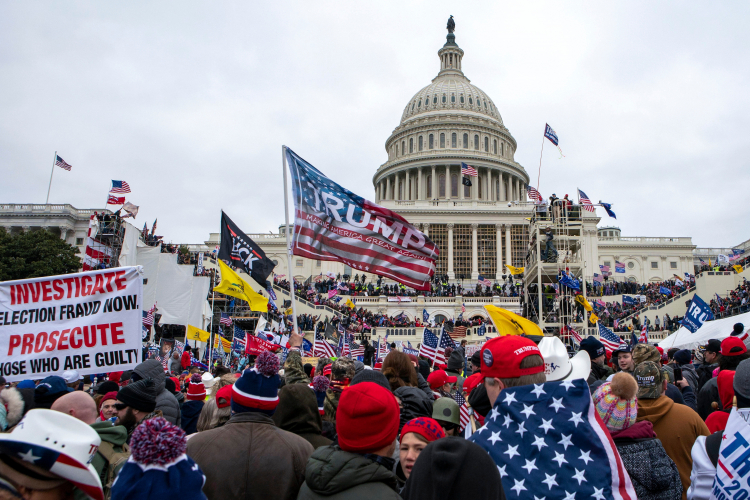
Trumpism, like fascism, is a rebellion against widely perceived excesses of the dominant liberal consensus. Certainly, Trump has a taste for gaudy spectacle, with his dream of a new White House ballroom, proposed Arch of Triumph, and fetish for naming things after himself.
But like its modern European counterparts, MAGA is more reactionary than revolutionary. Its very name, ending with the word “again,” evokes a yearning not for a bold future but a return to an iconic (if mythologized) past. MAGA aspirations are more Andy of Mayberry than Third Reich. Trump may target his enemies, but they are mostly specific individuals he feels have done him wrong. The fascists, by contrast, like the communists, went after wholesale groups of people.
Mussolini and Hitler accumulated more power over time, but Trump is a captive to the temporal nature of authority in a constitutional democracy. He is already losing sway among his congressional minions, who are more concerned with their own political futures than with genuflecting to their supposed leader. His demise is likely to accelerate with the coming elections. Trump can harrumph all he wants, but the U.S. Constitution has proven stronger than his egomaniacal instincts. European establishmentarians who suggest that Trump is a fascist, but he can’t even control his own appointees on a constitutionalist Supreme Court.
Likewise, his unhinged assaults on the media, such as his demands that late-night TV critics be fired, have proven mostly counterproductive. And though his various libel suits have reaped millions of dollars, he has not followed the fascist practice of shutting down, often with violence, opposition media, which still remains vehemently against him. As one observer put it succinctly: “If you’re free to complain about fascism, you don’t live in a fascist country.”
Critically, like Meloni and other “fascist” leaders, Trump relies on a mostly older middle- and working-class base. In contrast, both fascism and National socialism promoted “a cult of youth”; fascism was popular in the universities and among people under 30. The National Fascist Party anthem Giovinezza meant “youth”:
Youth, Youth,
Spring of beauty,
In the hardship of life
Your song rings and goes!
And for Benito Mussolini,
Hip, hip hooray!
And for our beautiful Fatherland,
Hip, hip hooray!
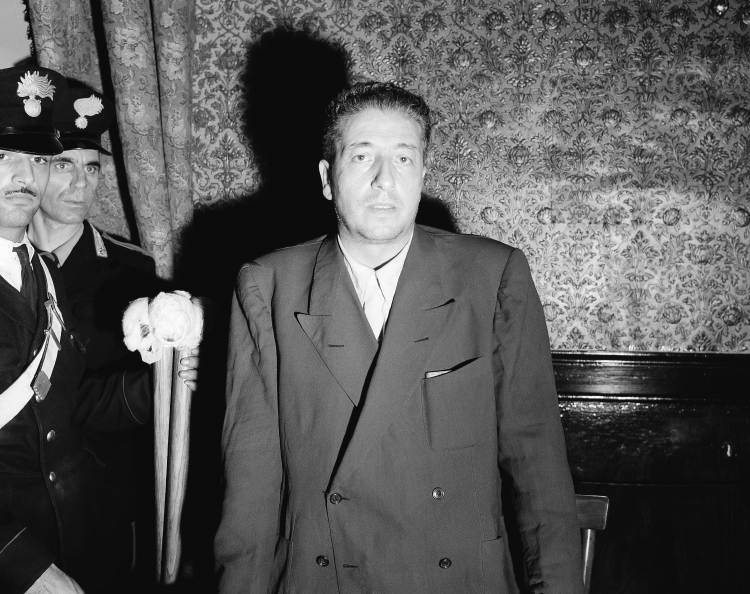
Most important of all, MAGA lacks the discipline and singleness of purpose that drove fascism. “It was not a nihilistic movement,” art historian Martina Caruso told me at a roadside café in Rome. She is writing a book about her grandfather, Pietro Caruso, executed for crimes committed as Rome’s chief of police under Mussolini. “When I read [his] letters,” she added, “I see how confident they were, they were happier about dying for an idea.”
Such sense of purpose eludes MAGA. Rather than a disciplined force, it consists of a weird agglomeration – held together uniquely by the soon-to-be octogenarian Trump – of populist radicals and religious zealots, traditional conservatives, and ultra-nationalists. Some are clearly bad players, but MAGA is not responsible for the most recent political violence. Even the disgraceful January 6 riots were more a carnival of reactionary crackpots than the lethal and disciplined paramilitaries of fascist Italy and Nazi Germany. MAGA is simply too old, too unorganized, too ideologically vague to make good fascists.
Racism & Violence
Fascism’s most dangerous aspect lies in its embrace of racial violence. Mussolini’s ideology embraced the fantasy of an Italian imperial renaissance, but did not adopt antisemitism as a core belief for most of its long reign. In pursuit of this goal, they handed out brutal treatment of African subjects, most notably in Ethiopia, as well as its occupation in the Balkans. This they justified with crude notions of racial superiority. Hitler, of course, took these ugly ideas much further, and in the late 1930s, when Mussolini became the German leader’s wingman, Italy adopted antisemitism as a core belief.
We see some of this at the fringes of MAGA, notably with the emergence of resurgent antisemitism. Like the Nazis from the inception and Italy by the late 1930s, they embrace the notion that the Jews seek to undermine Western society. This Jew hatred is fanned by former Trump allies like Tucker Carlson and Candace Owens, along with openly racist – and erstwhile Republican Nick Fuentes.
Within MAGA, right-wing racism is often seen by its critics through their concern that immigration is slowly “replacing” whites who settled and largely built the nation. Like fascism, the term white supremacy has been cited in massively greater instances this decade. Nativism is clearly ascendant on the right, but while some of this is racially driven, much rests on a defense of traditional culture and has only rarely been implicated in organized race-centric violence.
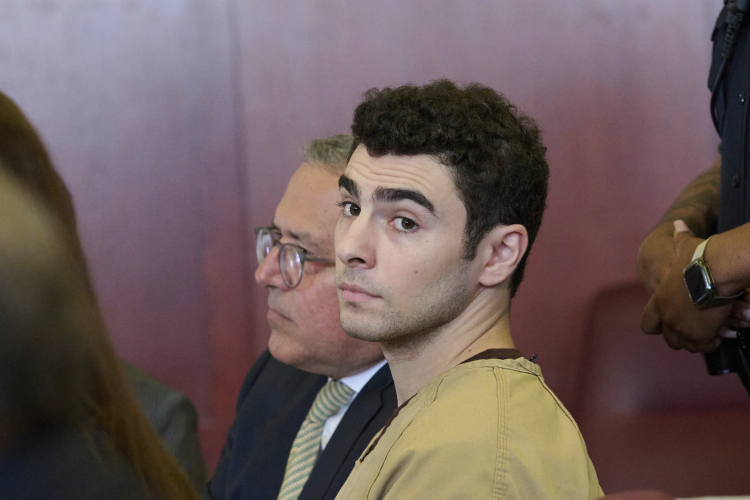
By contrast, the identity politics embraced by progressives in the U.S., Britain, and the EU hinges on pigeonholing individuals as members of specific groups to whom favors are dispensed or withheld. And when it comes to violence, those acting most like the fascists tend to be Trump’s bitterest opponents. The call for political violence is now stronger on the left than the right, and particularly among their young, college-educated base, where it is rising far more rapidly, notes one recent study. Witness, for example, the support and even admiration for Luigi Mangione, who murdered a healthcare executive in cold blood. And it’s a sign of the times that anti-Jewish rhetoric, as well as “anti-Zionist” violence, comes increasingly from the left. Nick Fuentes, who is virulently anti-Israel, is now telling his acolytes to vote for Democrats in November.
The idea that Trump must be eliminated “by any means necessary” certainly does not focus on democratic procedures but reflects attitudes reminiscent of Mussolini’s enforcers – and almost every left-wing dictatorship. A combination of radical politics and personal delusion marks the rhetoric of would-be Trump assassins, as is evident in their digital imprint. Indeed, outside the Washington, D.C., hotel where one recent attempt took place, demonstrators carried “death to the dictator” signs.
Another parallel lies with the embrace of criminal behavior that was typical among Mussolini’s and Hitler’s thuggish enforcers. Today, progressive media figures such as Hasan Piker, as well as writers at the New Yorker magazine, openly embrace theft as a kind of social protest, something practiced on a large scale in the 2020 Black Lives Matter riots. Antifa, the self-appointed center of “resistance” to fascism, most resemble Mussolini’s Blackshirts shirts – and even wear the appropriate color.
Progressive Fascism
Perhaps fascism’s most dangerous legacy is the belief that the state’s mission is to reshape the very character of people. Early on, Mussolini recognized that modern Italians were not exactly replicas of the conquering armies of the Roman Republic. They were far too wedded to tradition, family, and la dolce vita.
Italians frustrated Mussolini. He disliked their penchant for gabbing over coffee; he requested that cafés make their habitues stand so they would go back fully caffeinated and ready to build his fantastical empire. He even took aim at pasta, urging them to use rice as it was grown in Italy. This has echoed today in the progressive push to improve humanity by having people live in small, densely packed cities without automobiles, to reject consumer culture and, if possible, meat.
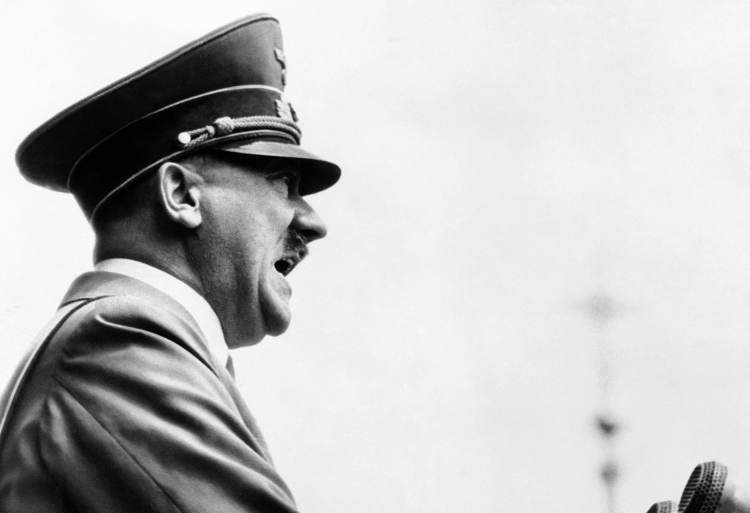
Just as progressive ideology is most widely embraced by the upper reaches of society, the fascist reshaping project gained many adherents among the highly educated. As historian Benjamin Spotts observed in “Hitler and the Power of Aesthetics,” the removal of “undesirables” like Jews and homosexuals also created new opportunities for racially approved architects, painters, movie directors, authors, and even clothing makers like Hugo Boss. In this sense, Hitler, the failed artist, fulfilled, at least for some, the artiste dream of “a culture state” in which their input was considered essential.
But if you look at mass totalizing movements today, it is largely on the left, which hurls fascist charges at anyone with whom it disagrees. The left increasingly adopts an authoritarian and even violent ideology. Surveys taken by the Atlantic show that the most intolerant people in America tend to be on the left, notably in cities and leafy academic suburbs as opposed to rough towns in the Heartland. Progressive women, for example, are far more adamant about not dating conservatives than their less choosy conservative counterparts.
The desire to reshape humanity to a certain set of values has no greater exemplar than the European Union. A self-proclaimed bulwark of liberal values is far more assertive in the drive to control dissent, even to the point of arresting civilians for posting comments that seemed disrespectful of Islam, minorities, or even elected officials. Today, in these precincts of progressive intolerance, traditional Christians can be seen as a greater threat than someone espousing mass terror. It is liberal authorities, not rabble-rousing populists, who are widely suspected of manipulating elections, and even annulled results, notably in Romania, when the outcomes were not to their liking.
Nazi propaganda chief Josef Goebbels would have appreciated the ways the Democrats colluded with the intelligence community by de-platforming the New York Post to squash reporting on the Hunter Biden laptop. Meanwhile, Twitter and Facebook felt empowered to curb President Trump and his administration for their inaccuracies, but rarely censored often equally absurd anti-Trump conspiracies.
Rise of Techno-Fascism
The biggest threat of fascistic central control going forward lies less in political movements than in technology itself. Control in the modern era does not require armed thuggery or concentration camps; it can be managed through algorithms and artificial intelligence. It will look less like Mussolini’s Italy, George Orwell’s 1984, or Stalin’s Russia and more like the benign drug-laced state imagined in Aldous Huxley’s “Brave New World.”
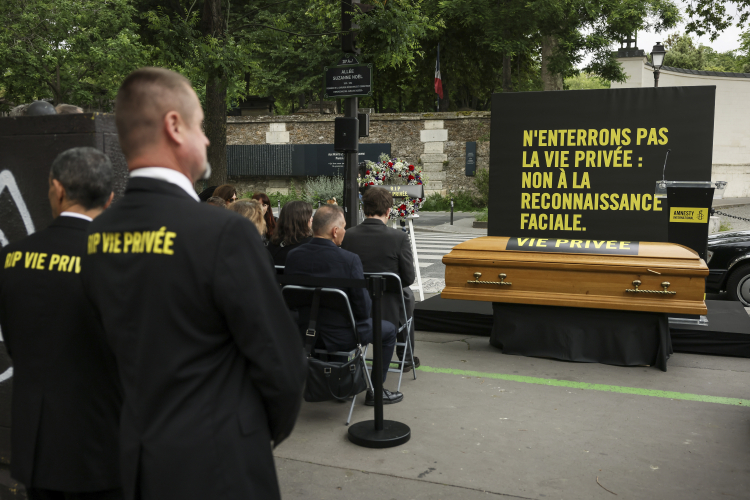
We may be on the cusp of creating an autocracy empowered by levels of surveillance and monitoring far beyond anything seen before. Korean theorist Byung-Chol Han points out that the current state of media, where privacy fades, is a direct threat to “representative democracy.” Rather than public debate, he adds, “Surveillance and control represent inherent feature of digital communication.” It gives the ruling power – whether the Chinese Communist Party, the tech oligarchy, or the nation-state – with powerful instruments unimaginable in the times of Il Duce.
What haunts us today is not so much fascism as it was once practiced, or traditional politics, but the persistence of the mentality of fascism – the notion of control of even private space from the top. The notion that mankind needs to be remade, with the assistance of technology, represents a 21st-century fulfillment of 20th-century fascist (and communist) ambitions of re-shaping human behavior.
Such thinking is rife at the top of the digital world. Masayoshi Son, founder of the influential Softbank venture fund, openly embraces the idea of using artificial intelligence to lay the foundation for the creation of the “superhuman.”
This view transcends conventional politics. Ray Kurzweil, longtime head of engineering at uber-progressive Google, advocates creating a “posthuman” future, humans merging with machines. Sam Altman, also generally a supporter of Democrats, wants AI bots to serve as a “super assistant” for every part of life, supplanting the roles once played by parents, friends, teachers, ministers, and neighbors. Mark Zuckerberg, a longtime donor to Democrats, thinks human contact can be supplanted by the properly customized bots in his Metaverse.
Similar thoughts about automating – and controlling – humanity are shared by Trump-leaning oligarchs like Elon Musk, who uses genetic screening before impregnating women with the right stuff in order to create his “kid’s legion” of superior babies. Peter Thiel, an influential figure on the tech right, warns darkly of “a deadly race between politics and technology,” with technology deemed superior to democracy. Thiel has found common cause with many on the techno-right, including some like Curtis Yarvin, whom he describes as the “house political philosopher” for a network of technologists called “the Thielverse.” Yarvin boasts that Thiel is “fully enlightened.”
In the world being imagined by tech moguls, we won’t need our brains, or the bother of work, in their future non-worker’s paradise. As in the 1930s, democratic and egalitarian thinking is being replaced with a vision of a world based on the superiority of some over others. If fully implemented, the new technological regime could achieve the dreams of a modern fascist order, one that may not even need the expense of human enforcers. Already, two in five young voters under 40 endorse the idea of handing key government decisions to AI.
Ultimately, the techno-elite’s vision – whatever their political orientation – constitutes a modern version of fascist thinking, with the goal of creating a tech-enhanced race of Übermenschen to rule over the rest of us. Yuval Noah Harari warns of a future where “a small and privileged elite of upgraded humans” gain control of society and use genetic engineering to cement the superior status of their offspring. These new eugenicists, he has argued, are not going to “wait patiently for natural selection to work its magic.” Instead, bioengineers will rewrite its genetic code, rewire its brain circuits, alter our biochemical balance, and even grow entirely new limbs. He concludes: “They will thereby create new godlings, who might be different from us Sapiens as we are different from Homo erectus. “
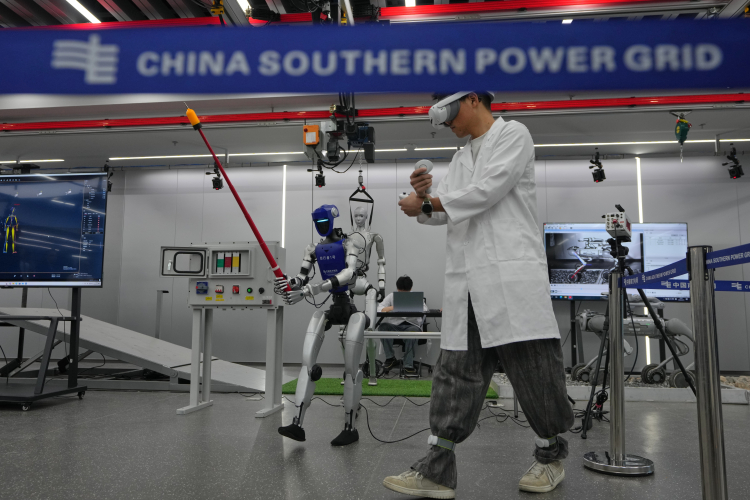
This is not science fiction. China has already shown how technology can monitor personal posts and opinions that stray from orthodoxy, often with the help of American companies. Of course, the denizens of the digital elite do not possess a coherent view of control similar to that embraced by the Chinese Communist Party. Yet the goal – the recreation of the individual along autocratic lines – fits broadly into the very goal of fascism.
This notion of remaking humanity through technology is intrinsically “dehumanizing,” observed the late British rabbi Jonathan Sacks. As in the 1930s, democratic and egalitarian thinking is being replaced with a vision of a world based on the superiority of some over others, and the right of elites to determine what we think and how we live, much as was the ultimately failed aspiration of Mussolini. But whereas the Italian and German fascist regimes were indeed overthrown, their savvier descendants will be more capable of preserving themselves. As Huxley warned, “A thoroughly scientific dictatorship will never be overthrown.”
We may live at a time when few openly embrace fascism, but its spiritual descendants are becoming ascendant. Fascism’s face may no longer feature a posturing Mussolini or raging Hitler, but its spirit festers, in different guises but with more perfect weapons, all to the detriment of what is left of liberal civilization.
