


In what they hope will become a hot-button election issue in the November midterms, congressional Republicans unnerved by the spread of Islam are holding hearings and proposing legislation to prevent immigrants who adhere to “Sharia law” from entering or staying in the U.S.
The lawmakers, who have the backing of President Trump and House Speaker Mike Johnson, warn that unless mass immigration from nations like Afghanistan and Somalia is curbed, America will soon look like Europe, where critics say waves of Muslim migrants have formed “parallel societies” that undermine local authority and create conditions for jihadi and other criminal activity.
One controversial proposal by GOP Sen. Tommy Tuberville of Alabama would deport any recent Muslim immigrant and deny entry for any new immigrant “who advocates for the imposition of Sharia law in a manner that would violate the Constitution or any federal or state law.”
In practice, the proposed legislation would require the departments of State and Homeland Security to screen immigrants from Muslim nations, including refugees seeking asylum, based on a battery of questions that would seek to suss out radical Islamic beliefs. Entrants subsequently found to have made false statements during the enhanced vetting process would have their visas revoked and be deported. It goes beyond continuing efforts to identify immigrants who might support violence against the U.S. to address wider concerns about belief systems many see as being at odds with American culture.
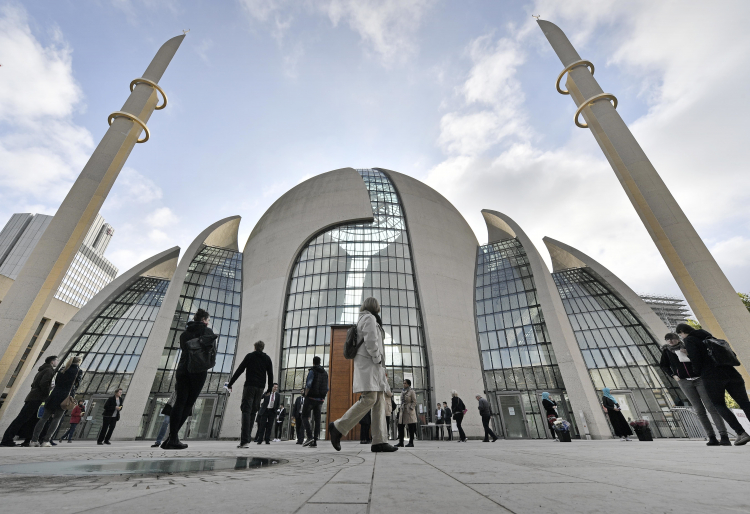
Noting reports of Iran’s successful efforts to recruit sympathetic Muslims in Europe who have perpetrated a string of arson attacks against Jewish sites, proponents say the increased number of immigrants from countries hostile to America makes such moves necessary.
The Council on American-Islamic Relations and other Muslim-rights groups are slamming the bill as an unconstitutional “religious litmus test.” They argue that Sharia doctrine is based on Islamic holy text, chiefly the Quran and Hadith, and is a total way of life for observant Muslims, no different, they say, than the role that corollary religious texts play in the lives of pious Christians or orthodox Jews.
“Sharia is not a foreign legal system to be banned. It is a moral and spiritual path that calls on American Muslims to pray, give charity, treat others honestly, and stand up for what is right,” CAIR said in a statement. “Trying to ban Sharia would be no different than banning Jewish halacha or Catholic canon law. It is a direct assault on religious freedom itself.”
Unlike mainstream Christianity or Judaism, however, Islamism often sanctions practices at odds with not only American culture but also the U.S. legal system – including domestic violence, female circumcision, child marriage, and honor killings. Sharia also calls for eventual conquest over coexistence, says Ayaan Hirsi Ali, a Hoover Institution research fellow who was born a Muslim in Somalia and now advocates for an Islamic reformation.
“It’s the duty of the believer to spread [Sharia] by any means necessary. It’s a political doctrine. There is no separation of politics from religion,” Ali said in a recent exchange with Sen. John Cornyn (R-Texas), chairman of the Senate Judiciary subcommittee on border security and immigration. “And that’s radically different from Christianity. Christ never said overthrow the [Roman] empire. In fact, he said quite the opposite (including 'Give unto Caesar what is Caesar’s,' according to the Bible).”
At a time when the United States is experiencing a period of immigration turmoil involving national identity, culture, and the once powerful demands of assimilation – as well as fierce partisan fights over Trump administration deportation policies – Republicans have seized on Islam as a symbol of the fracturing of the American project.
While the country has long accommodated religious and ethnic communities with practices in conflict with mainstream culture – including the Amish, Orthodox Jews, as well as countless smaller sects and even cults – many conservatives see the surging Muslim population and ambitions of many Islamic leaders as a wider threat to national unity. They liken their efforts to the pressure put on Mormons more than a century ago to forsake their practice of polygamy.
In a mirror reflection of such concerns, many progressives have been warning about the rise of so-called “Christian nationalism,” while pooh-poohing the threat from Islamism. In 2023, a series of controversial FBI memos relying in part on reporting from the leftist Southern Poverty Law Center categorized “radical-traditionalist Catholics” as potential domestic terrorists.
Parallel Society
The broader issue is that the American political zeitgeist seems incapable of converting immigrants to its own values, which will allow Muslims to erect parallel societies. Others see this as a great strength of a nation long defined by its tolerance for diversity and multiculturalism.
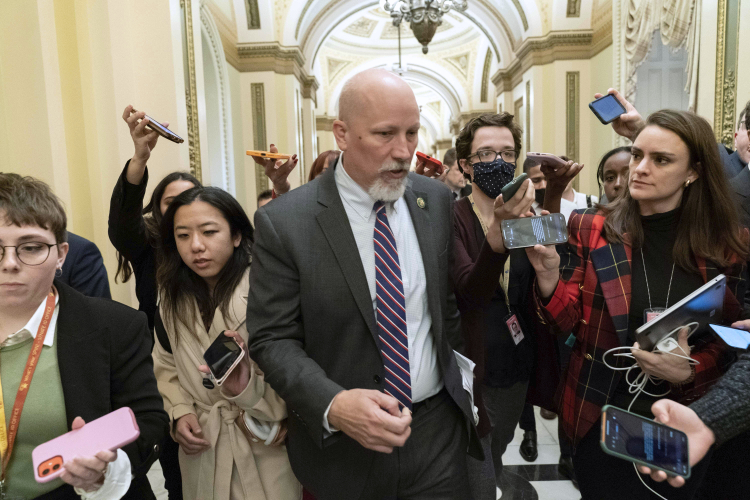
Republican Rep. Chip Roy of Texas, who is the author of a companion anti-Sharia bill in the House, is so alarmed by what he calls the “Islamization” of the Lone Star State that he’s started a Sharia-Free America Caucus to draft additional measures to stop Islamic law from taking root in America. Its membership has more than doubled to 63 representatives from two dozen states in just the past few months.
The effort is not confined to customs and practices but also to broader concerns about potential Islamic “no-go zones” that invoke rights to religious liberty and free association. In Texas, a protest movement has risen up against the East Plano Islamic Center, a planned Sharia-compliant “city” just outside Dallas, where the Muslim population has surged to an estimated 110,000 and now makes up about 8% of the total population. The Dallas area now boasts more than 60 mosques. (See sidebar on Sharia's growing influence on U.S. finance).
Documents reveal that the Islamic leaders behind the project have already sold more than 340 residential lots. They say they are building the enclave, anchored by a massive mosque, to serve “the Muslim community” and to one day become the “epicenter of Islam in North America.”
Ret. Plano (Texas) Police Lt. Doug Deaton and other local police worry that EPIC city (as it is known locally), built on 402 acres of unincorporated land, may operate as an Islamic compound unaccountable to authorities. It’s now the subject of both state and federal investigations. If it’s allowed to go forward, protestors fear, other exclusionary Muslim enclaves based on Sharia law could crop up around other cities.
“Sharia is entrenched and operating across the state,” warned Krista Shields, who worked as an American Airlines flight attendant on 9/11 and is now organizing local resistance to EPIC and the overall “Islamic threat.” “This is the construction of a parallel society on Texas soil.”
EPIC’s organizers insist it is not a separatist movement with its own government. They also say the development – which will include Islamic schools, halal grocery stores, and Sharia-compliant banks – will be open to non-Muslims, although it originally was marketed as an exclusively Muslim community.
Supporters of Sharia bans say that while many Muslims living in America are fully assimilated and are either non-observant or practice their faith in a way entirely compatible with Western life, an estimated 65% recently emigrated from Islamic nations where Sharia is practiced and enforced – and are importing those values to these shores.
Different Values
That’s a major concern, they say, because Sharia law makes crimes of behaviors that are legal in the U.S. – such as blasphemy, apostasy, adultery, and homosexuality – and makes legal many acts that are crimes here, including polygamy, domestic violence, female circumcision, forced child marriage, and even so-called “honor” killings and violent jihad.
These practices are widespread in many of the native countries of Islamic immigrants, and a large share of American Muslims – according to polls – are sympathetic to many of them.
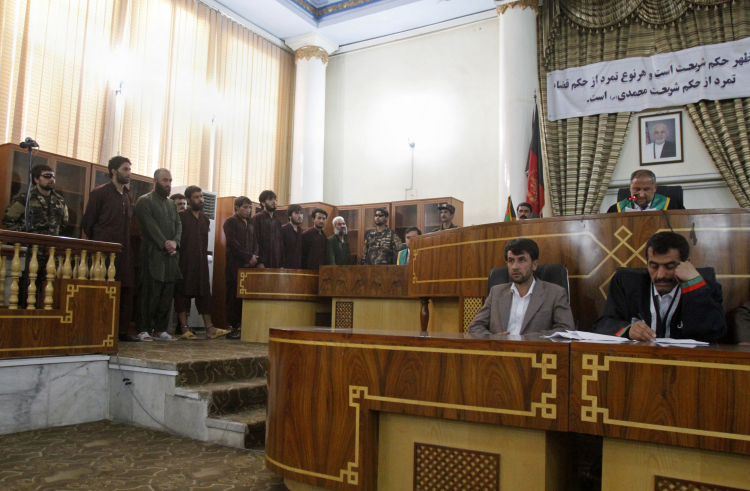
Four in 10 Muslims support the implementation of Sharia rule in the U.S., according to a recent survey conducted by J.L. Partners, a respected New York-based polling firm. American Muslims are far more likely to support legalizing polygamy and outlawing gay marriage and homosexuality altogether than the general population.
Sharia watchdogs are concerned that as the Muslim population grows from immigration and higher birth rates, the democratic process will allow Muslim voters to gain control of city halls, police, and courts – as they’ve already done in the suburbs of Detroit, Minneapolis, and other cities – and eventually mainstream Sharia practices.
There is some evidence that state and local judges are accommodating some Sharia practices in America, something that has become a major concern in Britain. Republicans say their bills would draw a line in the sand and make it clear this is not a viable option.
U.S. law has been slow to catch up with Sharia-related practices that subject women and girls to discrimination and violence.
The U.S. Centers for Disease Control estimates that more than half a million young women a year are now at risk of “female genital mutilation” in America, a threefold increase since 1990.
The government says the surge in the now-illegal circumcision procedure – which has been carried out with relative impunity by some Muslim doctors in Detroit, for example – is a result of rapid growth in the number of immigrants from Islamic countries such as Somalia, where the practice is common.
It wasn’t until 2021 that Congress outlawed all forms of the disfiguring ritual, which the CDC says “has no known health benefits” for women, but Muslim communities “believe the procedure will help ensure a woman remains a virgin until marriage.”
Forced child marriage is another growing problem tied to heavy Muslim immigration. Although 10 U.S. states have passed laws against it, there is no federal law criminalizing it.
The Washington D.C.-based Tahirih Justice Center, which protects immigrant women and girls fleeing violence, found that many of the ceremonies for the child brides were held inside mosques. It also found a link to so-called honor violence – almost half the forced marriage victims were subjected to physical violence, including “serious bodily injury,” and even murder attempts. It’s likely that daughters were abused after refusing to enter into a marriage their parents arranged with an older man.
The Department of Justice reports that the U.S. is the “top destination” for immigrants from Islamic nations with “a high prevalence of honor-based violence,” including Afghanistan, Iraq, and Iran. The DOJ estimates that as many as 5.2 million Muslim immigrants could potentially be involved either as victims or abusers and facilitators.
“A majority or plurality of the individuals living in regions that practice honor-based violence are Muslim,” the DOJ said in its study. “Some people have used passages from the Quran to justify certain behaviors related to honor violence.” It acknowledged that “some passages in the Quran define gender roles in ways that subjugate women.”
Statistical crime-reporting on such cases is thin because the U.S. has no federal or state laws addressing such “honor-based” acts as a crime distinct from other types of assault, abuse, or murder.
Reluctance To Stigmatize
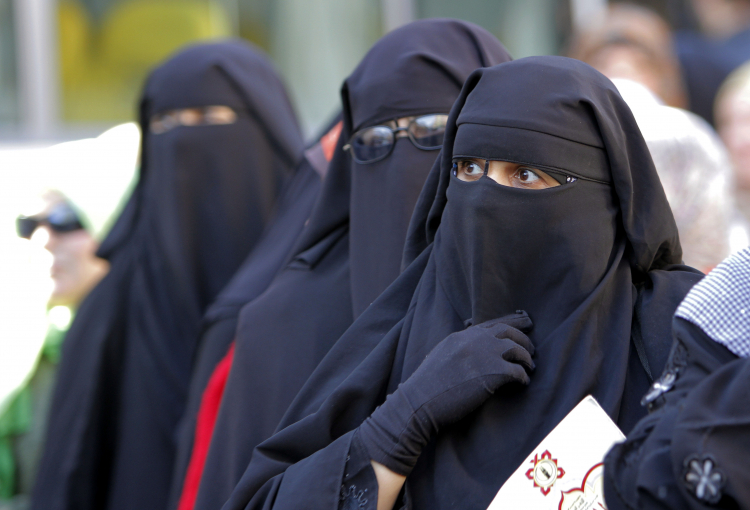
Multiculturalists say it is important to understand that while such practices may seem abhorrent to most Westerners, many Muslims believe they are essential to maintaining a well-functioning (if patriarchal) society. Islamic women, for example, often continue wearing hijabs, niqabs, burkas after they migrate – clothing that Westerners tend to see as signs of oppression. Although such choices are protected by the Constitution, critics say they reflect a failure of assimilation that may also represent an embrace of other practices more sharply at odds with American customs.
There is also a reluctance to stigmatize Islam. At least one prosecutor in Michigan, which has a large Muslim population, reportedly refused to categorize a local Islamic father’s murder of his daughter as an “honor killing,” arguing, “This has nothing to do with Arabic culture.” He also said the family of the victim didn’t want her death to be “used by the media to promote a continued [anti-]Arab bias.”
In 2021, prosecutors in Houston dropped charges against a Muslim woman for transporting a minor girl to another country to have female circumcision performed on her. A Detroit judge even threw out federal criminal charges against Muslim doctors for performing the procedure on as many as 70 minor girls after the doctors argued they were merely practicing their religion and had the constitutionally protected freedom to do so.
“Most Americans think this is stuff that happens in faraway countries,” Ali said. “But when President Biden was in office, we had literally open borders. So now we’ve had a huge demographic shift and that is why you’re seeing changes in places like Texas.”
There were 4.5 million Muslim Americans living in the U.S. in 2020, according to the most recent figure from the U.S. Religion Census. That number is expected to increase to more than 8 million by 2050, the Pew Research Center projects, making Islam the nation’s second-largest religion. The number of U.S. mosques, now totaling more than 3,500, has exploded alongside the Muslim population.
Like immigrant groups before them, Muslims tend to live close to each other – more than half of American Muslims live in six states: Michigan, New Jersey, New York, California, Illinois, and Texas. (The highest concentrations, as a percentage of total population, are in Minnesota, Michigan, New Jersey, New York, Illinois, and the Washington, D.C., area.)
President Biden’s abrupt military withdrawal from Afghanistan in 2021 brought a new wave of Muslim immigrants to the U.S. The country has struggled to absorb the more than 200,000 Afghan refugees – a population the size of Little Rock, Ark. – who have resettled in U.S. cities with little evidence of successful assimilation.
Critics of Sharia law who are concerned about the country’s ability to assimilate Muslim migrants point to cases like that of Mohammad Imaad. He was among 12,500 refugees airlifted from Afghanistan to Fort McCoy, Wisconsin. When Imaad was arrested in 2021 for beating and choking his wife at the base, he told police he didn’t know he was violating American law because what he did was legal in Afghanistan.
What’s more, staff overseeing the admission of refugees at the base reported multiple cases of female children who presented as “married” to adult Afghan men, as well as a number of polygamous families, reinforcing concerns that America is importing a foreign legal system with the Muslims it resettles here.
“That [Wisconsin case] is a microcosm of the dangers of bringing over Sharia-adherent Muslims,” said Robert Spencer, a senior fellow with the David Horowitz Freedom Center. “They are adherents of a legal system and cultural mores that are radically different from American law. And if we allow [Sharia], they will strip protections from all kinds of people who will be their victims.”
Another Afghan refugee who was resettled in Washington state eventually traveled to D.C. to carry out violent jihad against two National Guard soldiers. Rahmanullah Lakanwal awaits trial on charges that he killed one and seriously injured the other after opening fire on them last Thanksgiving.
“We will almost certainly be seeing similar incidents in the near future in the U.S., as the Muslim population grows, and with it, the influence of Sharia,” Spencer warned.
Wide Embrace
Every community has bad apples, and defenders of Islam dismiss these as isolated, cherry-picked cases highlighted to attack their faith.
“The vast majority of immigrant adherents of Sharia law – a category that includes all or most Muslims – pose no threat,” argued George Mason University law professor Ilya Somin. “And there is no good reason to bar them from the United States.”
Sharia critics counter that they reflect a wider embrace of Sharia by many Muslims.
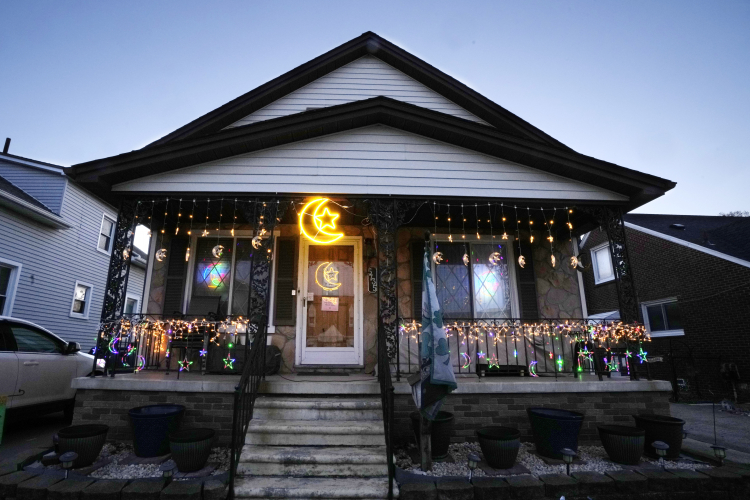
A major survey of Muslims focusing on domestic violence published in 2017 by the Dearborn, Mich.-based Institute for Social Policy and Understanding found reluctance to call police in such cases. It confirmed that American Muslims are more likely to involve religious leaders in spousal abuse cases than any other faith community surveyed.
Spencer explained that when observant Muslims beat their wives in America, they don’t think they are doing anything wrong because their behavior is based on a religious belief that Sharia authorities in America have ruled scriptural.
These decrees, often written in Arabic, are handed down to Islamic councils and tribunals that have quietly formed in towns and cities across America as a quasi-legal system. They are made up of imams, scholars, and clerics trained in Islamic jurisprudence primarily at radical Muslim Brotherhood-controlled institutions overseas. Surveys show two-thirds of American imams are foreign-born. They, in turn, adjudicate disputes among Muslims at U.S. mosques, which are largely owned by a trust controlled by the Egyptian-based Brotherhood.
Many of these councils also work closely with American police and courts to soften enforcement of laws against illegal Sharia practices such as spousal abuse, forced child marriage, honor-related violence, and female genital mutilation.
More troubling, critics say, is a U.S. body of elite Islamic jurists widely revered by the American Muslim community that has condoned such behavior in a series of legal opinions known as fatwas, which clerics at the country’s estimated 3,500 mosques and Islamic centers rely on to counsel their flocks.
This Islamic high bench consists of the Fiqh Council of North America (FCNA) and its sister ruling arm, the Assembly of Muslim Jurists of America (AMJA).
FCNA says its mission is “to provide guidance to the Muslims of North America in all matters related to Sharia.” The most respected Sharia authority in the U.S., FCNA, issued a controversial fatwa in 2022 advising Muslims to follow only U.S. laws that do not conflict with Sharia laws: “American law should be honored as long as it does not forbid a required Islamic practice.”
Based in Plainfield, Ind., FCNA was created from the Islamic Society of North America, which the Justice Department has identified as “a member of the U.S. Muslim Brotherhood,” which DOJ says has a secret long-term plan to Islamize America, according to internal Brotherhood documents the FBI introduced in court as part of a major counterterrorism case involving Brotherhood front groups in America. The Fiqh council appears in the Brotherhood manifesto in a list of “our organizations.”
Its top justice, Saudi-educated FCNA Chairman Yasir Qadhi, is one of the Islamic leaders promoting the development of the Islamic mini-city on the outskirts of Dallas where he serves as a resident scholar at the so-called EPIC Mosque that will be expanded and relocated to anchor the sprawling Muslim enclave.
Another member of FCNA’s Executive Committee is Muzammil Siddiqi. He supports the death penalty for homosexuals, according to the San Francisco Chronicle. And after 9/11, he remarked, “Once more people accept Islam, this will lead to the implementation of Sharia in all areas.”
He also stated: “As Muslims, we should participate in the [U.S.] system to safeguard our interests and try to bring gradual change for the right causes. We must not forget that Allah’s rules have to be established in all lands, and all our efforts should lead to that direction.”
One of those rules to be established is the permissibility of wife-beating. In a 2004 fatwa, Siddiqi advised that under Sharia law, Muslim-American men are allowed to administer “light disciplinary action to correct the moral infraction of his wife.”
In a concurring opinion, another respected member of FCNA’s high court, Jamal Badawi, counseled that this corporal punishment for wives who persist “in bad habits” or show “contempt” for their husbands should be confined to “a gentle tap on the body, but never on the face.” He cited a passage from the Quran to support his edict.
Special Muslim Rights
Badawi also promulgates the idea that Muslims living in America have a “right to their personal law that Islam gives [them],” separate from American law, and that under such “Islamic Sharia,” even polygamy should be permissible in America. He argues it is a “quite legitimate” practice and “permitted” by the Sharia. The Quran allows men to marry up to four wives.
Both Siddiqi and Badawi have also ruled that Muslim women must refrain from traveling alone, and when they go outside the home, they should be chaperoned by a male family member.
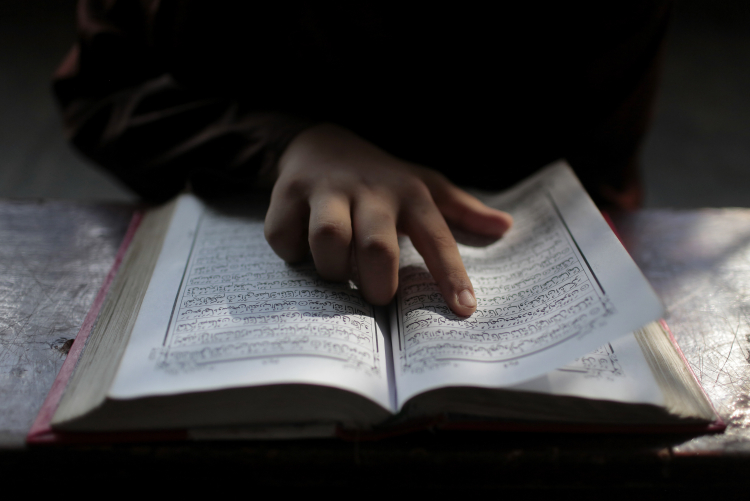
Born and raised in Egypt, Badawi has been a strong supporter of the establishment of “Sharia courts” in America. He advises that it is the duty of all Muslims in America to work toward an Islamic state, arguing the Muslim holy book mandates it: “The establishment of the Islamic order is a requirement on Muslims whenever possible.”
Badawi is actively making these rulings despite showing up on a Justice Department list of unindicted co-conspirators in the largest terrorist-financing case in U.S. history, in which more than $12 million was funneled to Hamas.
For its part, AMJA has made rulings calling for the death penalty for Muslims who leave their faith in Muslim countries, and prohibiting Muslim-Americans from doing business or charity with the U.S. military.
A senior member of AMJA’s Permanent Fatwa Committee, moreover, has ruled that cutting the clitoris of girls is not only beneficial for them but also a preservation of their “honor.”
“A very small portion of the clitoris may be removed in the procedure,” wrote Dr. Hatam Elhagaly, aka Hatem Al-Hag, in a Sharia opinion for AMJA. He quoted the words of the Muslim prophet Muhammad describing it as “better for her husband.”
Certified in pediatrics by the American Board of Pediatrics, the Cairo-born doctor and Sharia professor acknowledged the practice is controversial, but advised American Muslims to ignore criticism: “We, however, should never doubt anything in our religion because of the bad publicity the media creates about it.”
When the Mayo Clinic fired Elhagaly from its practice after his fatwa was publicly exposed outside the Muslim community, he issued a statement clarifying his position by arguing he was referring to a “ritual nick” and not a full “clitorectomy.” He rationalized that a slight cut is “harmless” to the girl.
Federal statute still outlaws FGM, no matter how small the cut, including even a “nick.”
Deferring to Sharia Tribunals
While there is scant evidence that American judges are using Sharia law in lieu of U.S. laws, more and more are referring cases touching on Islamic law, including divorce and child custody disputes, to so-called Sharia councils or tribunals for settlement through arbitration – without any court review to see if what these all-male panels decide is in the best interest of the wife or the child.
Many U.S. judges are also granting requests by Muslim-Americans to defer rulings to foreign courts in the Middle East, including Saudi Arabia, in effect relying on foreign interpretations of custody and marriage law under Sharia doctrine.
“The most prominent category of foreign law that has been increasingly intruding upon American courts is Islamic Sharia law,” said Louisiana attorney Stephen Gele, who specializes in such interaction between foreign law and American law and is helping several states draft their own anti-Sharia bills, including Louisiana and Florida.
“In hundreds of reported cases throughout the U.S., litigants have attempted to apply Sharia, often succeeding,” he added, citing the enforcement of foreign child custody judgments, marriage contracts, divorce decrees, inheritance, and other matters. “There’s been numerous cases in which child custody judgments from Islamic countries that had Sharia courts [have been upheld in U.S. courts].”
In a Maryland case, a state circuit court enforced a Pakistani child custody order issued under Pakistani Sharia law that granted sole custody to the father. It’s one of the more egregious examples of U.S. courts bowing to the order of a foreign Islamic court, Gele said.
Gele noted that Islamic arbitration tribunals increasingly are “applying Sharia law within the U.S.” with the blessing of state judges, which increases the risk of women and children losing due process protections in U.S. family courts.
In 2021, for example, a Texas judge ordered a woman seeking a divorce from a Muslim man to appear in a Sharia tribunal. Collin County District Judge Andrea Thompson denied Mariam Ayad normal divorce proceedings and instead had her submit to mediation under a panel governed by Islamic legal scholars. Ayad has appealed the decision, arguing that such arbitration violated her rights, because under Sharia law, “a woman's testimony is worth half that of a man’s.”
Demand for Sharia arbitration is so strong in the high-Muslim-growth Dallas area that imams have established an “Islamic Tribunal” to handle the flood of cases. Texas Gov. Greg Abbott has investigated the panel for “masquerading” as a legal court. The tribunal denies it is overriding Texas or U.S. law.
Two of its four imams acting as jurists were trained at Al-Azhar University in Cairo, which has long been connected to the radical Muslim Brotherhood.
One of them, Mohamed AlGebaly, says in a mosque bio that he was “sent by the Egyptian government to the United States.” He also works the “Fatwa Hotline” for AMJA. Another Egypt-trained judge works with the local sheriff's office.
To address U.S. courts deferring judgments to foreign Sharia courts, Tommy Tuberville, who’s giving up his Senate seat to run for Alabama governor, has co-sponsored another anti-Sharia bill with Republican Sen. John Cornyn, who lost his primary run-off in Texas on Tuesday. Their measure would bar judges from enforcing Islamic court judgments, decrees, or contracts related to marriage, divorce, custody, adoption, or inheritance if they are inconsistent with U.S. law.
The U.K. Experience
As Pakistani and other Muslim migrants have flocked to Great Britain, the clash of cultures has become a cautionary tale for what could happen in America. Sharia councils are now rampant on the other side of the pond, and as they’ve spread throughout Britain, Sharia-related “honor” crimes and other abuses have gone unprosecuted, say critics.
“Europe should be a wake-up call to America,” Rep. Roy said, “showing what the spread of Sharia law looks like.”
Newly released British government figures reveal that less than 3% of violent honor crimes were successfully prosecuted last year, as police and prosecutors turned a blind eye and let the country's more than 85 Sharia councils handle offenses in the Muslim community.
U.K. investigations have found imams facilitating forced child marriages and polygamy, and also encouraging wives to return to physically abusive relationships.
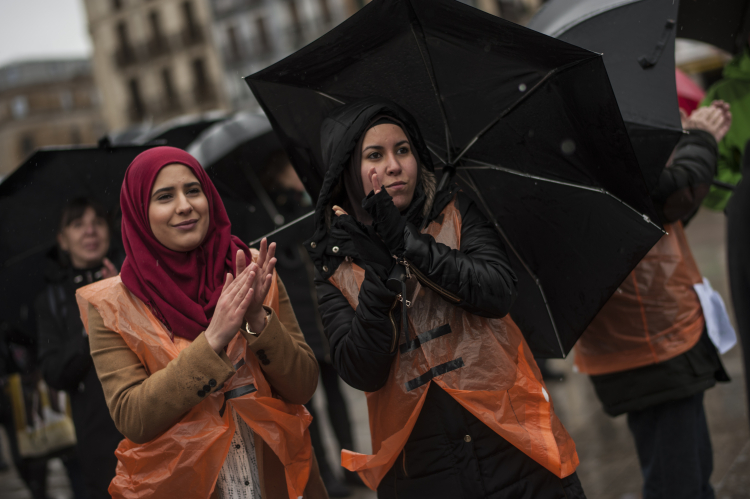
Spencer noted that Britain began recognizing Sharia “courts” several years ago, with the understanding that any criminal cases that came under the purview of British criminal code would be referred to the British courts. Instead, he said the Muslim Arbitration Tribunal urged the Crown Prosecution Service to “reconsider” bringing criminal charges against Muslim men who had been accused of domestic violence.
Spencer warned America is on the same “slippery slope” with increasing acceptance of Sharia councils. It is not known how many operate here. They are not officially tracked and figures are not available.
The conflict between Sharia law and American law “will only grow,” Spencer said, “as the Muslim population in the U.S. grows, for among that population will always be some Muslims who take these imperatives with the utmost seriousness.”
Cato Institute Senior Fellow Mustafa Akyol, a moderate Muslim, dismisses such concerns as “paranoia,” arguing Sharia poses no serious threat to America, and by saying it does, Republicans are only demonizing all Muslims.
He says the share of the Muslim population in America is “tiny” compared to Britain and doesn’t have the size or clout to make deep inroads into its government or even its culture.
“I agree that Sharia should never be the law of the land,” Akyol said. “But I worry that this new wave of alarmism about Sharia law may threaten liberty by targeting innocent communities and legitimate Muslim practices,” such as wearing headscarves, fasting, and cooking halal foods.
This is the first of a two-part series on Islamism and America. The next part will examine how Muslim immigration has changed not just the cultural complexion but the laws of several U.S. cities.
