


Update (May 22, 2026): Sociologist Melissa Wilde, the reform candidate for president of the American Sociological Association, lost her bid to lead the group.
Universities across the country are facing unprecedented government scrutiny of everything from the rise of antisemitism to the lack of viewpoint diversity in the left-leaning social sciences. Nowhere is the ideological battle over higher education more contentious and consequential than in Florida, home to the second-largest university system in the country.
Florida’s crusade against progressivism has been more methodical and aggressive than anywhere else. Beyond setting up a civics program focusing on Western traditions, a trend in many other Republican-dominated states, Florida has launched what critics consider a frontal assault on another tradition – academic freedom – the idea that professors are the experts who determine course content.
Over the last year, state officials, armed with a content ban passed by the legislature, have purged hundreds, if not a thousand, general education courses on topics like gender, women, and race at Florida’s 40 public universities and colleges. And they are planning to target the field of history next.
The ban includes a highly unusual post-tenure performance review, putting veteran faculty on notice that they can be sanctioned, and even terminated, for violating the sweeping ban. Last year, for instance, a professor was suspended simply for talking about gender in class.
Florida’s move against the discipline of sociology has stirred the most ideological acrimony and dissent, with hot rhetoric flying both ways. A former education commissioner posted on X that sociology has been “hijacked by left-wing activists.” Sociologists, who aren’t going down without a fight, counter that the state is censoring their core concepts, such as the prevalence of systemic racism, that challenge the rosy view of America that conservatives embrace. “This maneuver to control what is allowed to be said is fascist,” University of Florida Sociologist Evan Lauteria told RealClearInvestigations.
What’s hard to find in all the discord is any attempt to find common ground, a place where thinkers on the left, right, and center engage each other’s viewpoints, and even learn from each other. In principle, academics and state officials would agree that clashing opinions on campus are essential in the search for knowledge – the main purpose of a research university.
But in Florida, nobody’s talking about ways to create more viewpoint diversity on its campuses, despite such efforts at schools like Yale. Instead, conservative leaders are replacing one type of politics with their own, while the faculty tries to preserve what it can of their crumbling academic disciplines.
Other Republican states are following Florida’s lead, reflecting the deep partisan divisions throughout the nation. In Texas, a new law last year prompted university boards to review thousands of general education classes and cancel those that focused on gender and race. Two years ago, Tennessee banned the teaching of a long list of “divisive concepts,” including that the U.S. is racist. Indiana hasn’t gone that far in requiring faculty to practice intellectual diversity.
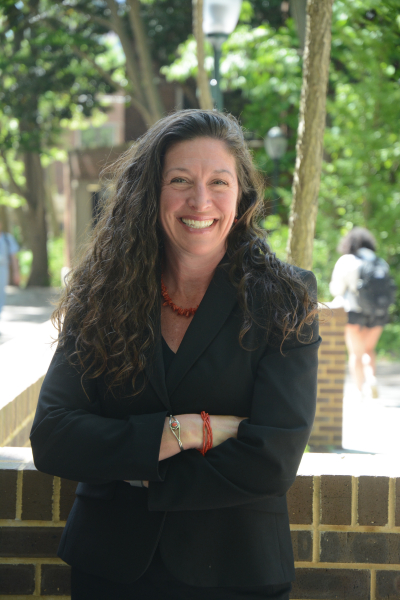
University of Pennsylvania’s Melissa Wilde, who is running for president of the American Sociological Association, is one of a growing number of academics trying to find that common ground. Wilde is no fan of the heavy-handed government crackdown in Florida. But she also says her field of sociology, with its well-documented progressive bent, has to change to save itself by returning to its traditional role of open-minded and high-quality research.
“If our job is to explain the social world, we need to engage all potential explanations including those deemed conservative. That’s just good social science,” Wilde said. “This might be able to happen naturally if the discipline can be less political.”
‘Positively Dystopian’
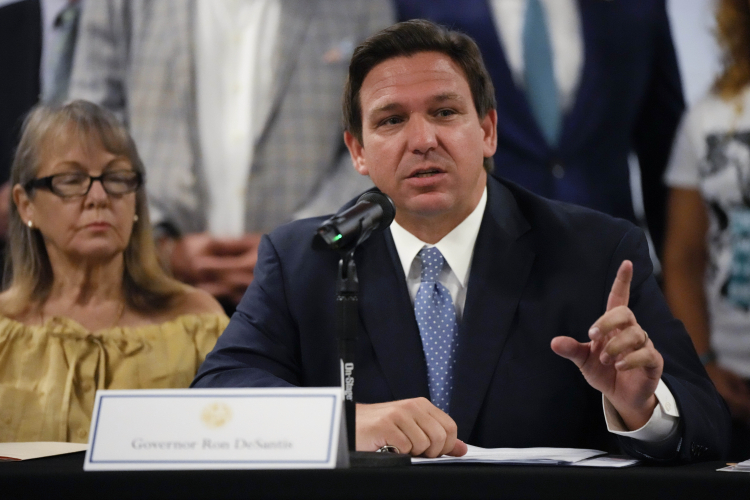
Florida Gov. Ron DeSantis’ upheaval of higher education began with the passage of SB 266. It was introduced by Florida state Sen. Erin Grall, one of several conservative Christians involved in the crackdown on academic content they believe is at odds with their religious beliefs. The 2023 law prohibits general education courses from focusing on identity politics and theories that say systemic racism, sexism, oppression, and privilege are inherent in institutions that aim to maintain inequities.
The law’s narrow focus on the general education courses students are required to take was a strategic move to avoid the legal roadblocks that derailed the earlier Stop Woke Act. That act’s scope was much broader, banning faculty from endorsing ideas the state deemed “woke” in all classes, including electives, and was rejected by a federal judge as “positively dystopian” and unconstitutional. But Florida believes it has the right to decide the content of general education classes based on state standards, and doing so doesn't infringe on free speech because professors can express their views in elective courses.
A group of Florida faculty challenged that view in a lawsuit, but have been stymied so far by a failure to show they have been harmed by the ban – a problem that a subsequent lawsuit will address, according to Robert Cassanello, president of United Faculty of Florida and a plaintiff in the earlier Stop Woke Act case.
“I teach history and I'm the person who determines the curriculum because I'm the content expert,” said Cassanello. “So now the lawmakers say this is how I should teach history even though they are not professional historians. This is absurd.”
To refocus general education within conservative lines, DeSantis tapped Scott Yenor at the Claremont Institute, a think tank that seeks to “undermine the Left’s hold over America’s institutions.” Yenor said he assisted officials in scratching hundreds of general education courses on campuses across the state. Students can no longer earn required general education credits by taking courses on Native and African Americans, black women, feminism, the sociology of gender, race, LGBTQ history, and more – classes that raise questions of oppression and justice. Enrollment in them as electives will likely plummet. The remaining general education classes in Western civilization and literature, U.S. history, philosophy, economics, religion, and the Bible provide a more harmonious, if idealized, view of the American experience.
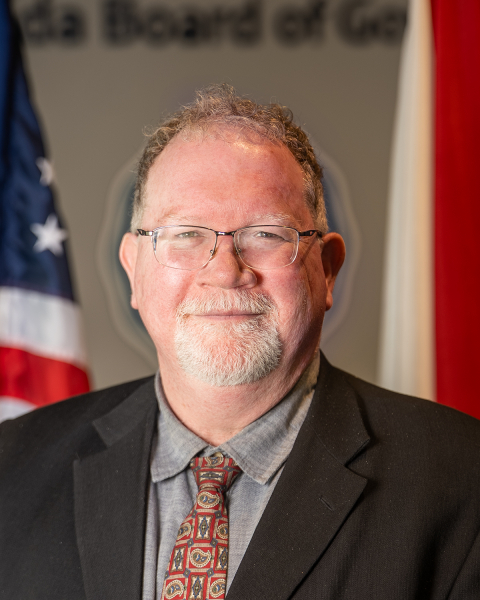
In early 2025, the Florida Board of Governors added more conservative firepower, appointing Jason Jewell, a former humanities chair at a small private religious college and a devout Christian, as its first chief academic officer. Jewell has written that conservatives have mistakenly ceded the humanities to the left, allowing it to “shape society’s moral vision.”
“We're going to avoid teaching students that everything in society is based on conflict and oppression,” Jewell said in an interview. “This critical theory immersed pedagogy is rejected by a super majority of Floridians. I think that will help to alleviate some of the mistrust in our institutions.”
Targeting Sociology
The board, with Jewell’s help, has taken a particular interest in sociology, perhaps the most politically activist discipline. The state crackdown laid bare sociology’s longstanding internal divide between the vocal activist wing and the quieter empirical wing – a few hundred of whom gather at the Heterodox Academy to promote viewpoint diversity and publish criticism of their field in the journal Theory and Society.
The split in sociology goes back a century to Max Weber, a founding father, who warned his peers of the dangers of activism, urging academics not to imprint upon students their own political views. That admonition has been carried forward by prominent sociologists like Christian Smith. He noted in 2014 that most of his colleagues are too dedicated to ending inequality and oppression to consider critical voices and honest debate over the worthiness of what Smith called their “sacred project.”
Today, empiricists are taking aim at sociology’s body of research. Oxford Ph.D. student James Manzi used AI to examine 600,000 social science papers and found that 90% “leaned left,” with sociology among the most tilted of disciplines and economics the least of all.
An example of that tilt is the near sociological consensus that systemic racism continues to be the prominent cause of racial disparities in society. Evidence gathered over decades suggesting other causal factors of inequality, such as attitudes toward education and single parenthood, is downplayed or dismissed as blaming the victim, wrote Sociologist John Iceland at Penn State.
“Sociologists shy away from engaging in that discussion,” Iceland said. “It’s so contentious, and when it has been raised in the past, often it's been met with hostility.”
Sociologist Jukka Savolainen at Wayne State University in Detroit argues that the “left-wing skew” in his field is connected to a low level of research integrity compared with political science and economics. Sociologists are much less likely to share their data and computer code so other scholars can replicate their findings, and they also fall short in using robust research techniques, such as randomized field experiments, to add credibility to their causal claims, according to Savolainen’s paper.
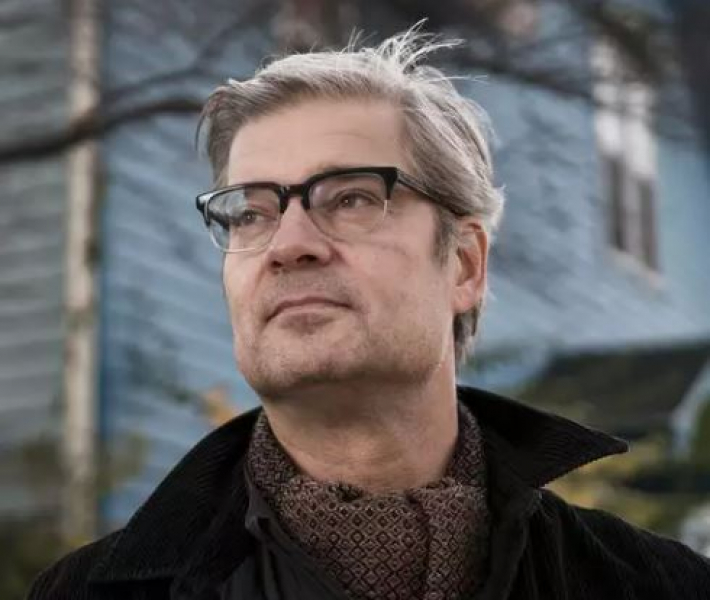
“Sociology has so much potential to improve our understanding of crime, families and society, but the research has been narrowed into grievance advocacy,” said Savolainen, who calls himself a lifelong Democrat.
Lauteria at the University of Florida defends the practice of sociology today. If there is a slant in the discipline, he says, it’s because objective research findings support a left-leaning agenda. The existence of systemic racism is one such finding, supported by research on the differences in callbacks between white and black job applicants and other studies. Conservatives are attacking sociology, he says, because it undercuts their ideology that everyone is free to choose their own path.
“Sociology feels like a threat to the folks in power in Florida because their myopic, individualistic worldview is quite counter to the belief that a society even exists in the first place,” he said.
Some sociologists, like Florida International University’s Matthew Marr, get directly involved in advocacy work. Marr, who believes that social forces rather than personal choices are the primary cause of today’s homeless crisis, co-founded the advocacy group Miami Coalition to Advance Racial Equity. His recent study, funded by the National Alliance to End Homelessness, concludes with a call for more government spending on subsidized permanent housing rather than temporary shelters – a policy supported by the funder. He based his policy recommendation on interviews with an unrepresentative sample of only 20 homeless people, a non-rigorous approach that Marr defends as valid.
“That policy recommendation is also rooted in decades of research across populations that have found a similar finding, Marr said in an interview. “Nobody can be completely objective but you do try to hold your biases aside and look for counter evidence to your arguments.”
Textbook Struggle
Florida’s squeeze on sociology gained steam last year when a Board of Governors review determined that all the textbooks used in the state for the introductory course violated the content ban. In an attempt to find common ground, a work group was set up with four state officials and four Florida sociologists to produce a textbook and curriculum framework acceptable to both sides. Never before had a state taken such a direct role in producing teaching materials in higher education.
The sociologists began with an open-source textbook that contained a progressive slant and cut out more than half the pages, including five entire chapters. The edited book needed the stamp of approval of the state officials in the group, including Jewell and Jose Arevalo, also a former academic with a conservative Christian pedigree from Hillsdale College.
“The faculty came up with all the content and we just went over it and said, ‘Yeah, we think this might be a problem, this is fine,’” said Jewell.
The radically different treatment of racism in the two textbooks is indicative of the ideological shift in the content covering gender, sex, and other banned topics.
In the original textbook, the word “racism” appears 115 times. Students learn that racism is “prevalent,” embedded in institutions such as law enforcement and schools, and is the main driver of inequality. There’s no mention of the economic progress of black Americans over the decades. It’s a story of unending oppression.
In the edited version, racism in America essentially doesn’t exist anymore. The word is mentioned five times in connection with historical wrongs, the elderly, and environmental damage to communities.
Work group sociologist Dawn Carr, who has expressed concern about her field’s activist bent, called the attempt to thread the needle between the warring ideological camps “the most unpleasant task I’ve ever had to take on in my entire career.”
The effort at compromise eventually blew up. Faculty protests were loudest at Florida International University, whose president, Jeanette Nunez, a Christian conservative and DeSantis appointee, required sociologists to use the textbook and framework. In January, FIU sociologists voted unanimously to denounce the state-approved materials for omitting core concepts in the field, like systemic racism, and violating academic freedom.
Across the state, however, most faculty have kept quiet, hoping the conflict would blow over rather than risk retaliation by pushing back. But officials said they heard enough dissent to conclude that many sociologists would never comply with the ban. So a few months ago, they eliminated introductory sociology as a general education course across all 12 universities and 28 colleges.
“My position is that they are trying to get rid of the discipline altogether, so why give in to the state,” said FIU sociologist Zachary Levenson. “We have no reason to believe that this is the only thing that they want.”
This is bad news for sociology, a discipline that’s already declining faster – 20% in the last decade – than other social sciences, according to federal data on bachelor’s degrees. Without the benefit of receiving general education credits, students will be less likely to take the introductory course, which is the primary way they discover the discipline. “The concern is that we are expecting to see a drop in majors and minors,” Lauteria said.
Appetite for Reform?
In an attempt to rescue sociology, the empirical faction is calling for reform, urging their peers to open the field to more conservative voices. Levenson, an award-winning ethnographer who focuses on race and class in postcolonial democracies, says he would like to see more conservatives in the discipline, where the ratio of Democrats to Republicans is 44 to one. There are no conservative sociologists at FIU, Levenson says, because they don’t apply for low-paying academic jobs at public universities.
Whether there’s a real appetite for reform in sociology will be revealed later this week in the election for president of the American Sociological Association. Wilde of Penn, the reform candidate, has been on a nationwide “listening tour” of sociologists and found many professors who are frustrated with the field’s activism, underscored by ASA’s long history of issuing political pronouncements. The issue boiled over when the “Sociologists for Palestine” won a vote forcing ASA to issue a statement in 2024 condemning the war in Gaza and the evidence of genocide, contributing to the resignation of 500 members. ASA did reject the group’s campaign this year to boycott Israeli academic institutions.
If Wilde wins the presidency, she aims to put an end to ASA’s political activism as a first step in revamping the field. “This needs to stop,” she said. “We are hurting ourselves. Our job is to gather data to show trends, and if that’s useful for certain causes, great. But we are not activists. We are social scientists.”
