


Waste of the Day: Drought Money Lacks Details

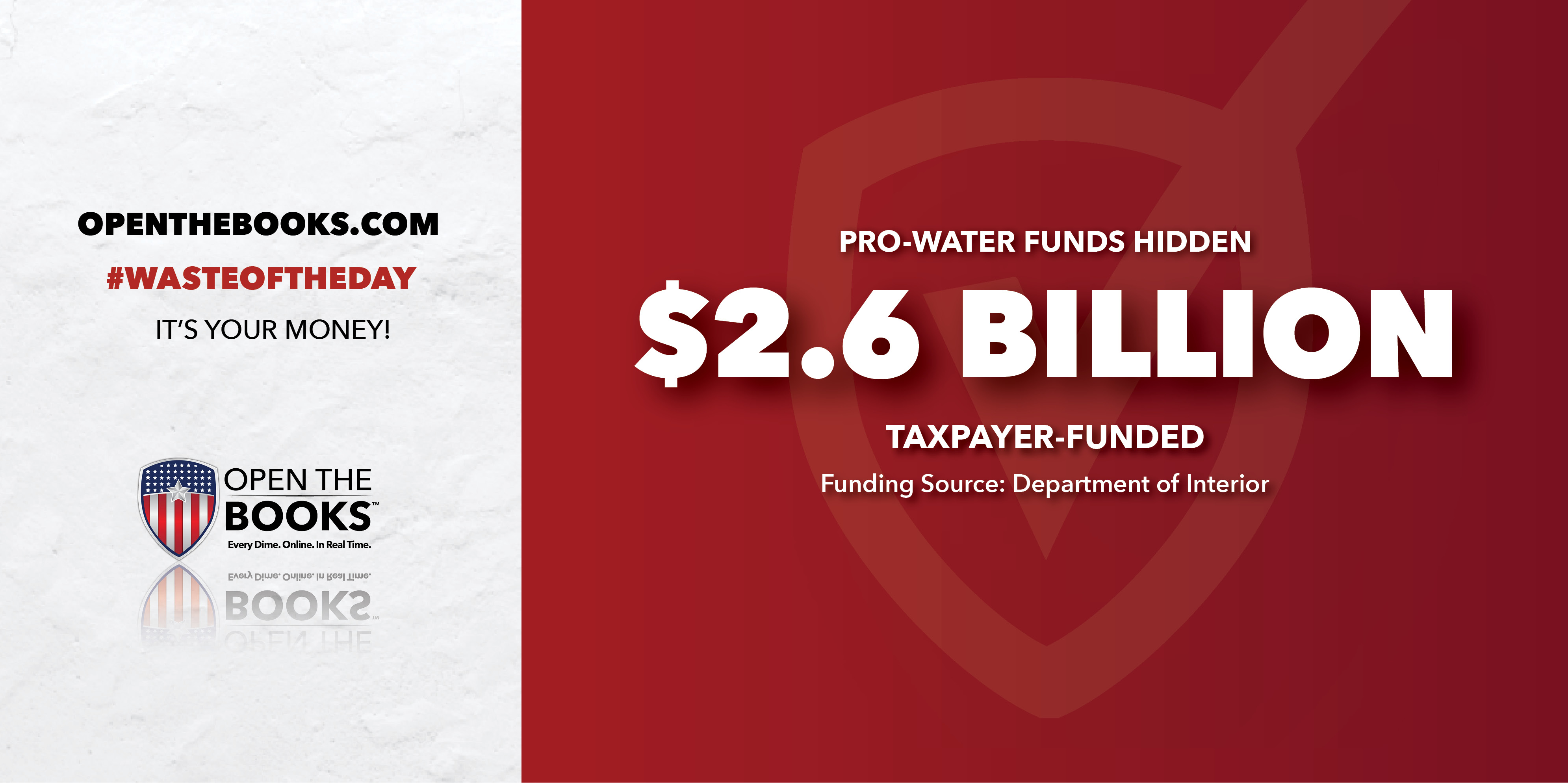
Topline: The Department of the Interior spent $2.6 billion to help state and local governments and nonprofits manage drought conditions in the Colorado River Basin, but it’s almost impossible for taxpayers to track where the money went. Federal officials classified the spending as “miscellaneous obligations” to avoid the requirement that all grants be posted online at USAspending.gov, according to an April inspector general report.
Public oversight would have been vital. The Department of the Interior never checked if the recipients were barred from doing business with the government because of past fraud or poor performance, according to the report.
Key facts: The Federal Funding Accountability and Transparency Act of 2006 requires all government grants and contracts to be posted online, but miscellaneous obligations are one of the few spending categories not included. The category is usually for minor expenses like travel and employee training.
The Department of the Interior made a dashboard with weekly updates about its drought spending, but it was not publicly accessible as of March 31, 2025, the audit says. That appears to still be the case. Open the Books was unable to locate the dashboard, and the agency did not return an inquiry about its status.
Classifying the money as a miscellaneous obligation also allowed officials to avoid laws related to background checks. All spending typically goes through the “suspension and debarment process” before it is awarded, which makes sure the recipient does not have a history of misusing federal funds. The Department of the Interior skipped this process.
The money came from the Inflation Reduction Act of 2022. Some of it went to short-term solutions like paying local governments to reduce their water usage, and some is paying for infrastructure upgrades to boost water efficiency. There was $1.4 billion remaining as of March 2025, according to the report.
The Colorado River Basin is currently at its lowest level since the 1960s. About 40 million people in the southwest U.S. rely on it for drinking water, and it is needed for electricity generation at the Hoover Dam.
Search all federal, state and local salaries and vendor spending with the world’s largest government spending database at OpenTheBooks.com.
Background: Even when federal spending is disclosed online, it is often too late for taxpayers to raise meaningful objections to questionable purchases. Most federal agencies take 30 days to upload data to USAspending.gov, and the Pentagon takes 90 days.
A bipartisan group led by Rep. Josh Brecheen (R-OK) introduced the Expedited Transparency Act bill this March, which would shorten the deadline to three days.
Summary: All federal spending deserves public scrutiny, “miscellaneous” or otherwise.
The #WasteOfTheDay is brought to you by the forensic auditors at OpenTheBooks.com
