


Waste of the Day: TBT — Golf With Imagination

Topline: In 2012, researchers at Purdue University used optical illusions to show that making a golf hole appear larger helps golfers improve their performance.
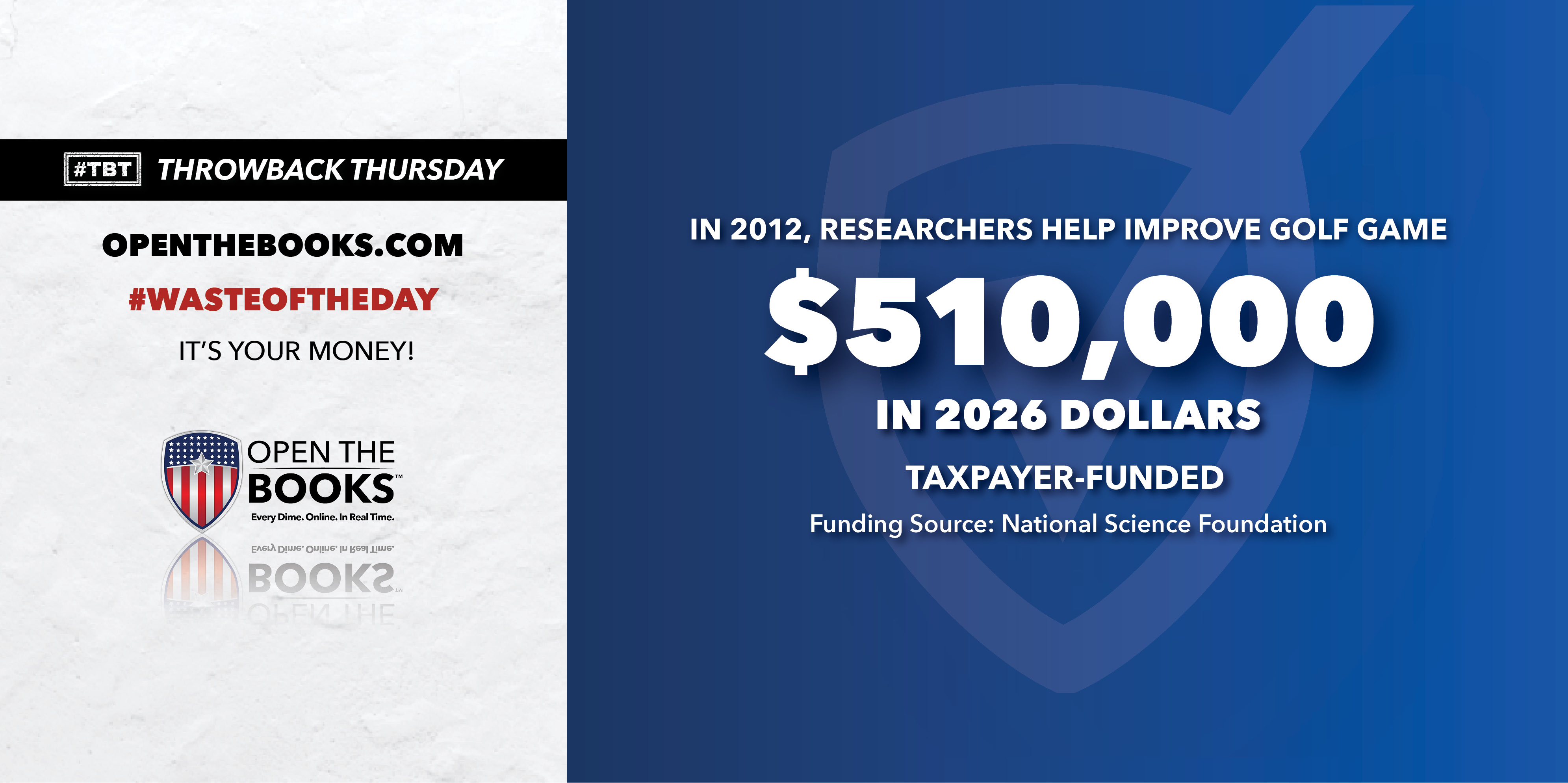
The $350,000 hole in the federal budget was sadly no magic trick. The National Science Foundation funded the project with a grant that would be worth $510,000 today, even after the National Institutes of Health funded a similar Purdue study in 2008.
That’s according to the “Wastebook” reporting published by the late U.S. Senator Dr. Tom Coburn. For years, these reports shined a white-hot spotlight on federal frauds and taxpayer abuses.
Coburn, the legendary U.S. Senator from Oklahoma, earned the nickname "Dr. No" by stopping thousands of pork-barrel projects using the Senate rules. Projects that he couldn't stop, Coburn included in his oversight reports.
Coburn's Wastebook 2012 included 100 examples of outrageous spending worth more than $18 billion, including the cash lost on the golf course.
Search all federal, state and local salaries and vendor spending with the world’s largest government spending database at OpenTheBooks.com.
Key facts: The Purdue study tested the theory that imagination can help athletes break out of a slump. If a golfer convinces themself that the hole is a large target, they’ll have an easier time sinking their shots.
Scientists used special lighting to make holes on a golf course appear larger. Golfers that putted towards those holes were 10% more successful than golfers who played the same course without the optical illusion.
"More work is needed to better understand this effect, but we think the perceived increase in target size will boost confidence in one's abilities,” co-author Jessica Witt said in a press release at the time.
It was odd for the federal government to fund golf research, but the expense was especially questionable because taxpayers had already paid for Witt and her colleagues to reach a very similar conclusion four years earlier.
Summary: If imagination can influence outcomes, maybe federal bureaucrats can reduce wasteful spending by simply pretending their budget is lower than it actually is.
The #WasteOfTheDay is brought to you by the forensic auditors at OpenTheBooks.com
