


In March 2020, a couple of months after the Centers for Disease Control and Prevention reported the first confirmed case of COVID-19 in the United States, editors at the journal Nature Medicine appended a note to a coronavirus study it had published five years prior. “We are aware that this article is being used as the basis for unverified theories that the novel coronavirus causing COVID-19 was engineered,” the journal editors wrote. “There is no evidence that this is true; scientists believe that an animal is the most likely source of the coronavirus.”
The prestigious journal appears to have taken this extraordinary action for two reasons. First, the study described cutting-edge gain-of-function research that mixed different viruses together to create a man-made chimera, or hybrid of both viruses – experiments some suspected were the origin of the SARS-CoV-2 virus that caused the pandemic. Second, the study’s authors were Shi Zengli of the Wuhan Institute of Virology – a research lab in the city that was ground zero for the pandemic – and Ralph Baric, the world's leading expert on coronaviruses, of the University of North Carolina.
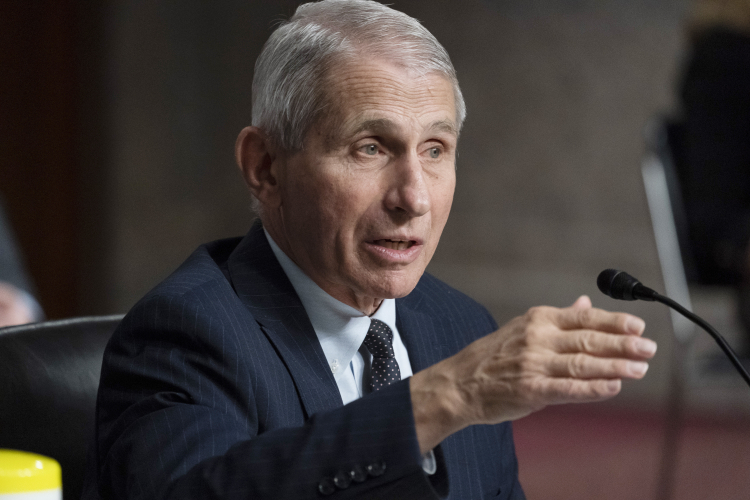
The renowned virologist Simon Wain-Hobson said that note was an early sign of the years-long effort by the scientific establishment to distract the public and obscure the link between lab studies to create dangerous viruses and the COVID pandemic that wrecked the global economy and killed millions across the planet. During a March talk at the National Institutes of Health, Wain-Hobson blasted former NIH leaders Francis Collins and Anthony Fauci for funding these lab studies and then misleading the public about their dangers.
“Sorry to be blunt,” Wain-Hobson told NIH researchers. “I know these are former colleagues.”
Since the pandemic’s outbreak six years ago, a slew of emails and documents released by Congress and through public records requests cast a dark shadow on the NIH and the virologists it funded, with nearly two-thirds of Americans now believing the virus came from a laboratory in China. Although the question of whether the virus that causes COVID-19 originated in a lab or in the wild is still a subject of debate, there is no doubt that scientists at the highest level worked to dismiss the lab-leak theory and shut down their connections to the work in Wuhan. Efforts by Collins and Fauci to delegitimize dissenting voices have been reported, but the central role played by Baric has been obscured. The UNC researcher’s work on coronaviruses and his connection to the Wuhan lab are now receiving renewed attention after RealClearInvestigations learned that the federal government has quietly removed Baric from all his NIH grants. RCI has also learned that UNC placed Baric on leave. UNC has also refused to cooperate with NIH officials as they have attempted to gather more facts and emails about Baric’s coronavirus research, which evidence leads them to believe led to the coronavirus pandemic.
Baric did not respond to multiple, detailed requests for comment and clarification about these matters and other issues reported by RCI. UNC Chancellor Lee H. Roberts did not respond to multiple requests for comment about actions taken against Baric nor UNC’s lack of cooperation with the federal government.
RCI’s months-long review of hundreds of pages of emails and interviews with more than a dozen current and former congressional staffers and administration officials shows that Baric’s public proclamations about his work, which has been connected to tens of millions of dollars in federal research grants, have not always reflected his own private reservations about risky experiments. Baric has also participated in campaigns to cast doubt on the dangers of virus research, while politicians and the FBI have sought to protect him. In addition, the University of North Carolina has blocked both private individuals and federal agencies demanding more transparency.
“He’s got good PR people at the University of North Carolina helping him, but nobody has strung together his entire history,” said Gary Ruskin, executive director of U.S. Right to Know. Ruskin has been suing Baric’s university since 2020 to obtain access to his communications, and his nonprofit has published thousands of emails spotlighting Baric’s work and ties to research in Wuhan, China. “Six years later, we still know so little,” he said. “That’s just amazing to me. The public deserves to know what happened.”
“The investigations have been terrible,” said a senior congressional staffer who has followed the Senate and House probes of the COVID pandemic. “And Ralph Baric’s fingerprints are everywhere.”
A researcher whose security clearance allowed him to view still-classified documents told RCI there is no doubt the virus came from a lab in Wuhan. “This is a good view of what happened to virology,” he said. “They started willy nilly mutating viruses, and then got upset when this led to 20 million deaths.”
Controversial History
Baric’s virus research has long been controversial as he pioneered “gain-of-function” studies, which design viruses with unique genetic features that make them either more deadly to humans or more likely to cause an infection. This line of research posits that generating deadly viruses in labs allows scientists to create treatments before a similar pathogen evolves in the wild and begins killing humans.
Federal funding for studies to enhance viruses hit a snag in 2011 when Ron Fouchier of Erasmus Medical Center and Yoshihiro Kawaoka at the University of Wisconsin created a new and deadly flu virus that could spread through the air.
Fearing the virus could be used as a bioweapon, the U.S. National Science Advisory Board for Biosecurity asked two scientific journals to delete details of the scientific methods and specific mutations in the Fouchier and Kawaoka studies on the lab-engineered bird flu. Public outcries then prompted the Obama administration to call for new rules on gain-of-function studies.
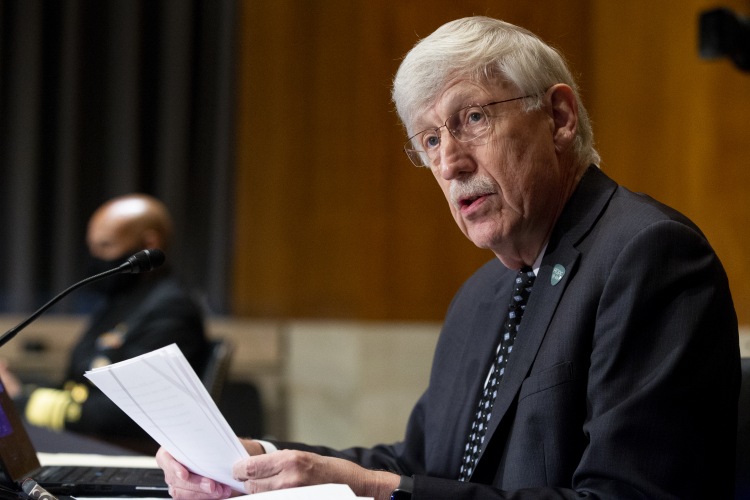
In 2014, the federal government released guidelines which NIH director Francis Collins said would help “preserve the benefits of life-science research while minimizing the risk of misuse.” But these rules did little to slow dangerous studies.
Within weeks, the virology community was hit with a bracing setback. Following poor safety procedures, dozens of CDC workers were potentially exposed to anthrax, and vials of smallpox virus were found unsecured in an NIH storeroom. In response, the Obama White House announced a pause on all gain-of-function virus research so the risks and benefits could be better assessed.
The researcher most affected by the pause was Ralph Baric, who was described as America’s “foremost coronavirus biologist” in an NPR report headlined, “How A Tilt Toward Safety Stopped A Scientist’s Virus Research.” Referring to gain-of-function research, David Relman, a microbiologist at Stanford University, told NPR, “I don’t think it’s wise or appropriate for us to create large risks that don’t already exist.”
Baric, however, countered that his animal experiments on the SARS and MERS viruses posed no threat to people. “No. 1, mice don’t sneeze,” he told NPR.
Baric also told NPR that he would accede to the ban. “The NIH has asked me to stop those experiments,” Baric said, “and so we have stopped those experiments.”
But in the waning days of the Obama administration, the government sought to draft new guidelines that would lift this pause on dangerous studies. Newly disclosed emails acquired by RCI show that NIH officials under Anthony Fauci and Baric’s former employee, virologist Matt Frieman, began a secret lobbying campaign to influence the Obama White House to ensure recommendations would not inhibit scientific funding.
These emails have never been reported and were provided by a researcher familiar with this effort.
Secret Lobbying
A few weeks after Donald Trump won the 2016 presidential election – but before he was inaugurated – White House employees in the Office of Science Technology Policy (OSTP) began to finalize a new government-wide guidance for gain-of-function research. Suggesting the importance of this effort both to science and national security, senior officials from multiple agencies were working with OSTP to finalize the new advice, including HHS, FDA, USDA, FBI, CDC, DOD, State Department, DNI, CIA, and branches of the military, according to leaked emails.
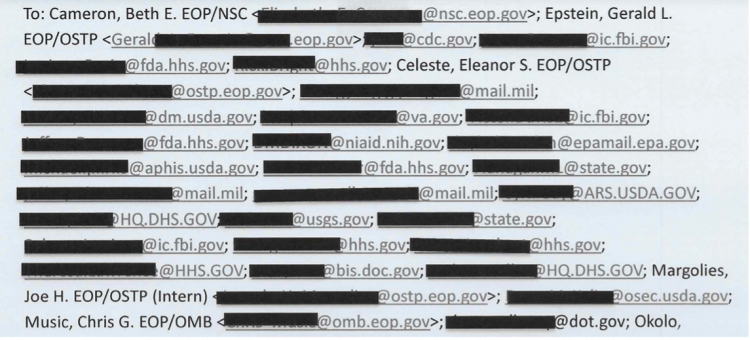
But while senior officials at agencies across the government fought for the ear of the White House, OSTP invitedFrieman for a personal visit from the nearby University of Maryland, and he appears to have acted as a lobbyist for his fellow gain-of-function researchers.
While waiting for a train, Frieman dashed off a group email, urging coronavirus researchers for examples of gain-of-function studies that had been halted by White House policies. The first person listed on the group email was Frieman’s former boss, Ralph Baric.
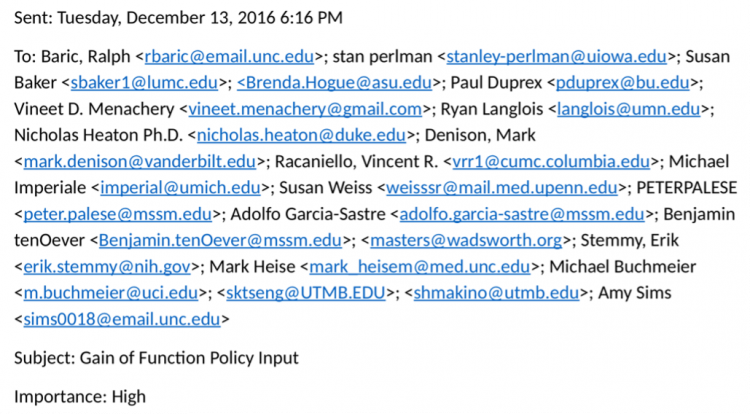
“We all know that our work has been impacted in grants but also in projects that were stalled, or didn’t pursue because of the moratorium,” Frieman wrote. He then asked the scientists for examples of gain-of-function studies that had been stopped for safety reasons. “Specifically, I need examples of people that have been impacted and a brief description of the experiment(s).”
Working with Frieman, researchers then compiled a five-page list of virus studies – which included constructing new SARS chimeric viruses – that had been stopped by the Obama White House.
According to the emails, Frieman reported back to NIH officials working for Tony Fauci that he met with OSTP associate director Jo Handelsman. He was joined at the meeting by Stacy Schultz-Cherry, an NIH-funded infectious disease researcher at St. Jude Children’s Research Hospital in Memphis, Tennessee.
Schultz-Cherry remains a strong proponent of gain-of-function research. In 2023, she and two of the virologists Frieman contacted to lobby Handelsman led a report by the American Society of Microbiologists arguing for “a balanced scientific discussion” that emphasized the benefits to society of gain-of-function virus research. Handelsman, who is now a professor at the University of Wisconsin, served as a participant for the American Society of Microbiologists’ report.
The White House OSTP released the recommendations weeks before Trump was sworn into office in 2017. While calling for more rigorous review of research involving enhanced potential pandemic pathogens, it also stated that, “Projects that have been paused under the existing moratorium will now be reviewed utilizing a process consistent with the recommended policy guidance. Any projects that are determined suitable to proceed will do so with appropriate risk mitigation measures in place.”
In Wain-Hobson’s telling, the American Society of Microbiology reports on gain-of-function virus research put self-interest and continued taxpayer funding ahead of the public good. “This is to defend the boys and keep the money coming in for microbiology,” he said. “They see themselves as the defenders of the faith; they are the self-anointed priests.”
COVID Blueprint
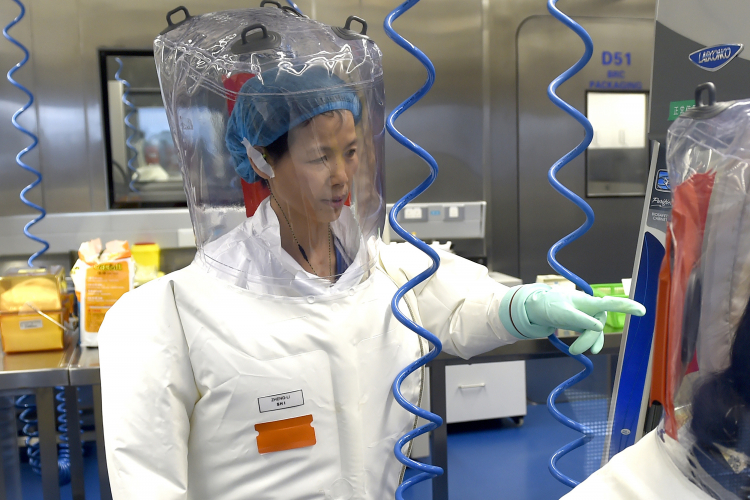
About a year after the White House passed new guidance for safer gain-of-function studies, Baric, his Wuhan colleague Shi Zhengli, and a slew of other researchers presented one of the first major tests of the guidelines. In 2018, they submitted a grant to DARPA, the Defense Advanced Research Projects Agency.
DARPA is a research agency housed within the Department of War, known for funding high-risk, high-reward projects. The existence of this proposal – which many see as a blueprint for the COVID virus – remained hidden until late 2021 when a military officer leaked it to a group of online investigators called DRASTIC.
“Lots of people knew about it and chose not to tell us,” said author Matt Ridley, in a recent talk at the NIH discussing evidence that the pandemic started at the Wuhan Institute of Virology.
Led by Peter Daszak at the NIH-funded EcoHealth Alliance, the DEFUSE grant lists studies that stretch on for several pages and includes research in both the lab and in the field, such as collecting bat viruses from different caves in China to study them back at the Wuhan Institute of Virology.
Scientists wrote that the studies in the DEFUSE proposal were important because the viruses they planned to collect and engineer were so dangerous. “These viruses are a clear and present danger to our military and to global health security,” read the DEFUSE proposal, “because of their circulation and evolution in bats and periodic spillover into humans.” They also proposed studies that seem more science fiction than science research, such as vaccinating wild bats using aerosolized, lab-created viruses to prevent them from infecting American soldiers in some possible future war.
But one specific study that Baric and the other virologists planned may have had tragic global consequences. The researchers proposed taking the backbone of a bat virus and inserting a spike protein with a furin cleavage site. A furin cleavage site allows viruses to infect the cells of human lungs. To see whether these lab-created viruses could cause SARS-like disease, the DEFUSE researchers planned to test them in mice whose genes had been modified to make their lungs more like those of humans. The particular line of humanized mice Wuhan researchers use in such experiments was created many years ago in Baric’s lab.
A DARPA official rejected the proposal but wrote that the research was interesting and could merit funding in the future. However, he added that the virologists would need a gain-of-function “risk mitigation plan” if DARPA funded the studies.
A year after DARPA denied this proposal to create chimeric bat viruses at the Wuhan Institute of Virology, a novel bat virus with a furin cleavage site began infecting humans in Wuhan. No other closely related virus has this furin cleavage site.
When members of DRASTIC published the DEFUSE proposal in late 2021, people began pointing the finger at DEFUSE as the blueprint for the COVID virus that had, by this time, killed millions.
“Of all the gin joints in all the towns, in all the world, the virus walks into the city where this research is happening, the year after someone has proposed to put a furin cleavage site into [coronavirus],” author Matt Ridley quipped during a talk on the DEFUSE proposal last month at the NIH. “That’s quite a coincidence.”
Virologists have pushed back, asserting that the DEFUSE proposal was never funded, so the research never took place. However, this argument has been received with widespread skepticism. Research labs have multiple streams of funding, and scientists often do many of the proposed experiments to get initial results before submitting grants.
The most famous example involves University of Utah professor Mario Capecchi. After the NIH rejected a proposed line of research, he used other NIH money to do studies on creating transgenic mice in which specific genes had been turned off. When the NIH later awarded him a grant for research they had previously rejected, they wrote, “We are glad that you didn’t follow our advice.”
At first rejected for NIH funding, Capecchi’s study led to a Nobel Prize in 2007.
“Scientists tend to write their grants based on research they have already done,” said an NIH official not cleared to speak to the media. She added, “It’s a classic joke inside the research community.”
Congressional investigators questioned Baric about the DEFUSE proposal in a 2024 deposition. Baric testified that, when a SARS virus that never before had a furin cleavage site appeared in the same city as the Wuhan Institute of Virology, he forgot that he had proposed, the year prior, to insert furin cleavage sites into SARS viruses at the Wuhan lab.
“I had forgotten about the DEFUSE proposal, quite frankly,” Baric testified. “The grant was not funded, so I moved on.”
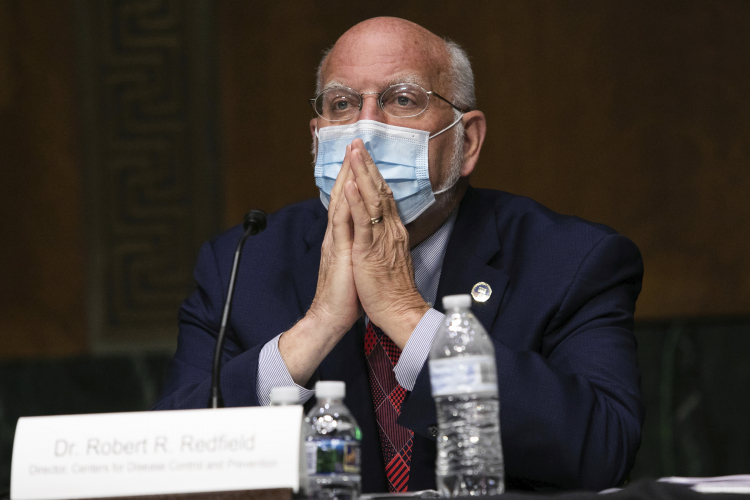
Virologist and former CDC Director Robert Redfield told RCI that Baric was probably misleading Congress in the interview. He believes virologists did the research in the DEFUSE proposal and then submitted the grant for funding because that’s how science advances. “I know enough about these proposals,” he said. “About 50% of the work you propose in a grant is already done.”
Baric appears to have a habit of forgetting details of virus research when disclosure and transparency might cast a bad light on the scientific field. After giving a private briefing in January 2020 to intelligence officials, where he discussed a possible lab accident in Wuhan, he gave a public talk to congressional staff a month later that omitted the possibility of a lab accident and failed to note that the pandemic virus had a unique furin cleavage site that made it deadly to humans.
Missing Slide
In January 2020 – when the COVID-19 virus began circulating in the U.S. – an official inside the intelligence community emailed Baric about “the current coronavirus situation,” asking him to give a presentation. “Very timely and appropriate,” Baric wrote back. “I was going to email this suggestion to you when I finally shed myself of reporters today.” Although the exact date of his talk is not disclosed, Baric emailed a slide presentation to his intel contact on January 29.
On one of the slides, Baric detailed the possibility that the pandemic started from an accidental release at the Wuhan Institute of Virology, which he noted studies bat viruses closely related to the new coronavirus.
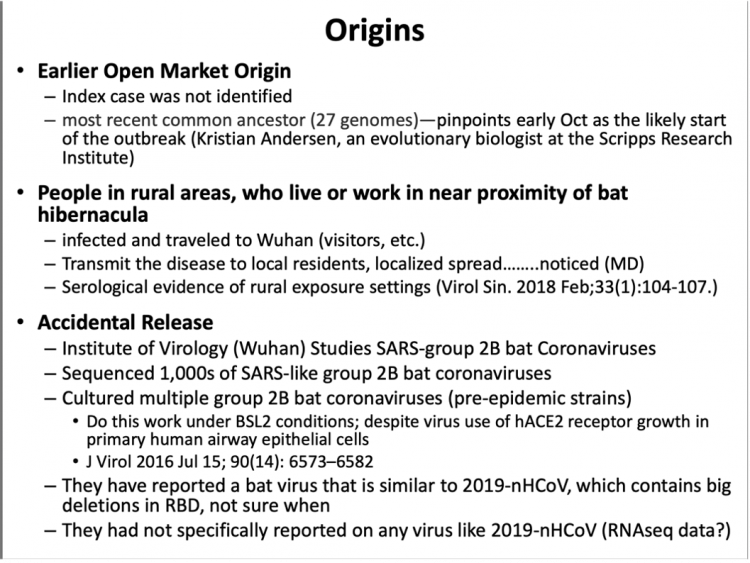
That same month, NIH officials and Baric’s academic colleagues began an intensive campaign to discredit as a “conspiracy theory” any question that the pandemic started in a Wuhan lab.
A week after Baric’s private presentation, Fauci appeared on a podcast hosted by former Speaker of the House Newt Gingrich, who asked if the COVID virus could have leaked from a Wuhan lab. “I’ve heard these conspiracy theories,” Fauci said, “And like all conspiracy theories, Newt, they’re just conspiracy theories.”
The following day, virologist Vincent Racaniello at Columbia sent Baric and an NIH colleague a disturbing email, recounting rumors that the new virus had a furin cleavage site “that might have been engineered.”
“If true this is very bad for all of virology research,” wrote Racaniello, in an email made public only last year.
Wain-Hobson said the intent of this email was not transparency. “What Racaniello has in mind is to shut down the discussion,” he said.
By mid-February 2020, suggestions that the pandemic could have been unleashed by a lab accident in Wuhan were attacked in the media. “[Arkansas Sen.] Tom Cotton keeps repeating a coronavirus fringe theory that scientists have disputed,” reads a Washington Post headline. The Post quoted an MIT professor castigating Cotton for spreading a “conspiracy theory” and said he should focus more on funding virologists.
After the New York Post published a column arguing that the virus may have leaked from a lab, one of Baric’s colleagues on the DEFUSE proposal, virologist Danielle Anderson, called the claim “appalling” in a supposed fact-check on the piece. Like Baric, Anderson remained mum about the experiments in the DEFUSE proposal. Two days later, Facebook began blocking the New York Post article for promoting “false information.”
At the end of February, Baric gave a public talk to congressional staffers about the virus and presented many of the same slides he used to brief intelligence officials a month prior. However, the slide discussing a possible lab accident in Wuhan did not appear, and Baric made no mention of the DEFUSE experiments. Nor did Baric bring up the virus’s furin cleavage site, which makes it uniquely adapted and deadly to humans.
Baric did not respond to requests for comment about why his public talk to congressional staff did not contain the slide discussing a possible lab accident at the Wuhan Institute of Virology.
Former CDC Director Redfield told RCI that in the first month of the pandemic, he was given classified material that highlighted the COVID virus’s furin cleavage site. He then briefed Secretary of State Mike Pompeo in a SCIF, a secure room that holds secret government documents.
“I said, ‘Mike, this is the smoking gun. This virus came from a lab.’” Redfield added that he believes NIH and allied virologists began a full-court press in February 2020 to smear people as conspiracy theorists about a possible lab accident, because they needed to protect their money and reputations.
Emails make it hard to believe Baric did not understand that his colleagues were mounting a push to smear people questioning the bat-in-the-wild origin story as “conspiracy theorists.” In fact, Baric himself participated in this campaign.
Choreographed Censorship
The effort to shut down debate about the pandemic’s origins gained steam as the death toll mounted rapidly in 2020 and draconian lockdown policies kicked in. During the first few months of the pandemic, virologists published three scientific papers that labeled the possibility of a lab accident a “conspiracy theory.” These papers shut down chatter about a Wuhan accident during the pandemic’s first year.
In what many see as a sign of Baric’s singular connection to the unfolding health catastrophe, the ramifications of his signature on these papers were weighed strategically by his close associates.
The first example was a widely reported February letter in The Lancet, signed by 27 scientists, that cast a Wuhan lab accident as a “conspiracy theory.” Emails show the letter had been orchestrated by Baric’s ally, Peter Daszak of EcoHealth Alliance.
While gathering signatures, Daszak wrote to Baric saying he should not sign the letter “so it has some distance from us and therefore doesn’t work in a counterproductive way.”
“We’ll then put it out in a way that doesn’t link it back to our collaboration so we maximize an independent voice,” Daszak added in his email to Baric. The Lancet later added a lengthy disclosure to this letter. Like Baric, Daszak had extensive financial ties to the Wuhan Institute of Virology, but he had hidden them from the Lancet editors.
When congressional investigators questioned Baric about the Lancet statement, he testified that he had a conflict of interest due to his collaborations with the Wuhan Institute of Virology. “So I didn’t think it was appropriate to sign it,” Baric said.
Baric’s close ties to the Wuhan Institute of Virology were such a problem that his fellow virologists excluded him from the Nature Medicine “Proximal Origins” of SARS-CoV-2 paper published in March 2020. “We decided not to invite Ralph Baric,” said one of the paper’s authors in a podcast. “Just because we thought he was too close to the WIV.”
This became the most highly cited paper published in the scientific literature for all of 2020. But like the Lancet Letter, the Nature Medicine Proximal Origins paper is widely seen as discredited. Republicans later charged that Fauci had helped orchestrate the paper. House Democrats released a report making the same accusations against Jeremy Farrar, a funder of virologists, then at the Wellcome Trust and now at the World Health Organization.
Despite his documented, even self-professed, conflict of interest with the Wuhan Institute of Virology, evidence shows that Baric directly influenced the third paper that helped stifle talk about a virus accident in Wuhan.
The commentary, titled “No credible evidence supporting claims of the laboratory engineering of SARS-CoV-2,” appeared in the journal Emerging Microbes & Infections, and became one of the most widely read papers published by Taylor and Francis in 2020. Media outlets such as The Week, Buzzfeed, and Baric’s local newspaper, the Raleigh News & Observer, cited the article in passages that downplayed a possible lab accident.
However, emails show that both Baric and his Wuhan colleague Shi Zhengli provided secret edits to the manuscript. After one of the paper’s authors sent Baric a draft, asking for his input, he responded, “Sure, but don’t want to be cited in as having commented prior to submission.” After then submitting alterations to the text in track changes, Baric added, “I think the community needs to write these editorials and I thank you for your efforts.”
Although failing to disclose authors on a paper is considered a form of research misconduct, the journal failed to take action. Five years after publication, the journal added a disclosure in January 2025 that acknowledged Ralph Baric’s contribution to the commentary.
Congressional Cover
Democrats never showed much interest in demanding answers from virologists or the NIH about a possible lab accident once Fauci set the tone that asking such questions was a “conspiracy theory.” But in late 2022, Republicans on the Senate Committee on Health Education, Labor and Pensions (HELP) began to finalize a report on the pandemic’s origin.
Yet that investigation also seems to have been designed to distract from dangerous research and to insulate Baric, in particular.
To give the report more traction among liberals, Republican committee investigators worked very closely with journalist Katherine Eban, whose exclusive on the report’s details ran in Vanity Fair and ProPublica. “A new Senate report concludes that SARS-CoV-2 – the virus that causes COVID-19 – likely resulted from ‘a research-related incident,’” ProPublica posted on social media, announcing Eban’s investigative exclusive. “The report includes evidence of alarming biosecurity issues at the Wuhan Institute of Virology.”
The Senate report, however, omitted any mention of dangerous gain-of-function research funded by the NIH, and gave no notice of virus studies conducted in the United States, even though Baric is the top researcher in the field. The report pointed the finger only at China as the sole problem with dangerous virus research.
“It was a complete whitewash and really screwed over the other senators,” explained a former congressional investigator. Instead of uncovering these flaws, Eban’s story for ProPublica and Vanity Fair parroted the report’s findings in a 9,000-word puff piece for the HELP committee, with a highly colorful and flattering account of the staff who wrote it and gave her insider access.
Richard Ebright, a microbiologist at Rutgers University and long-time critic of gain-of-function studies, said he “was surprised the released report omitted discussion of U.S. actions, including the role of USAID, NIH, and EcoHealth Alliance in funding research on SARS-related coronaviruses in Wuhan.” Ebright said Senate staff interviewed him several times about NIH’s funding for gain-of-function research and NIH funding for Wuhan.
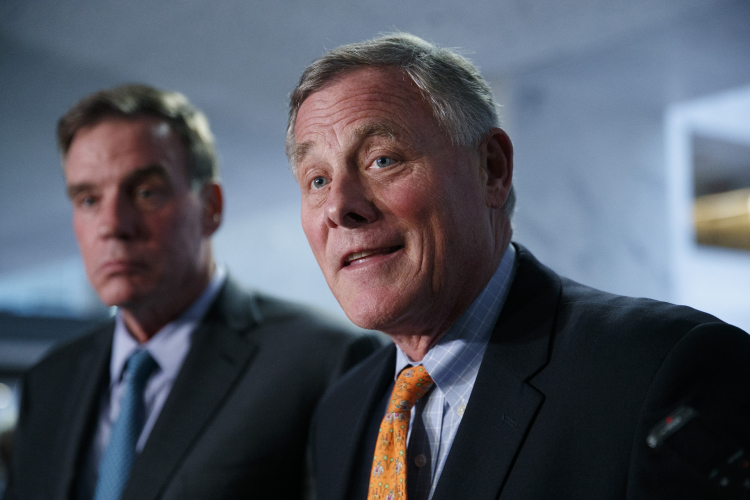
One expert interviewed by the Senate said that staff stripped out any mention of NIH funding for gain-of-function research in the United States, while another pointed the finger at the Republican who ran the committee: Sen. Richard Burr of North Carolina, who was months from retirement.
During his decades in Congress, Burr was a strong supporter of pandemic preparedness and virus research, ushering through legislation that turned on the spigot for biodefense spending, such as the 2006 legislation that created the Biomedical Advanced Research and Development Authority (BARDA).
In Burr’s final year in the Senate, President Biden’s 2022 budget asked for an historic $88.2 billion for pandemic and biodefense funding spread across five years. Working to finalize the report, Burr then introduced legislation that established ARPA-H within the NIH to support billions more in taxpayer spending for companies to manage pandemic preparedness.
“One of the greatest successes to come out of the pandemic was the federal government’s partnership with the private sector to deliver life-saving vaccines, therapeutics, and diagnostics with unprecedented speed,” Burr said in a statement when introducing the ARPA-H bill.
A few months after Burr sponsored the bill, the NIH awarded a $65 million grant to develop antivirals to a North Carolina biotechnology company called READDI that was co-founded by none other than Ralph Baric.
After retiring, Burr became a lobbyist for DLA Piper on biodefense and biomedicine, taking with him two of his staffers who worked on the committee. Burr also joined Baric’s company, READDI, as a member of the board.
When asked to comment on this matter, former Senator Burr told RCI that UNC is a client of DLA Piper. “Accordingly, I am unable to comment or provide information, on or off the record.”
House investigators later deposed Baric in 2024, but critics say it was a softball interview in which Baric was not pressed for answers. Democratic investigators spent much of Baric’s deposition trying to defend him, while Republican investigators got tied in knots by Baric’s responses, drowned in technical scientific details.
As with Senate staff, House investigators gave Vanity Fair’s Katherine Eban exclusive access to the deposition, which she broadcast in a story before the transcript was even released. Vanity Fair’s exclusive portrayed Baric in a positive light as a hard-nosed, objective researcher who remained undecided yet committed to finding out how the pandemic began. Instead of dismissing the lab-leak theory as a conspiracy theory, Baric testified that he had warned his Chinese colleagues that the Wuhan Institute’s safety protocols were insufficient.
And like Senator Burr, Baric pointed the finger at China as the source for any answers to explain if the virus came from a lab.
A month after deposing Baric, House investigators sent a letter to the director of the FBI demanding to interview one of their agents who they had caught communicating with Baric. The House redacted the name of the agent but wrote that he had been discussing “the substance of the origin debate and how UNC was responding to numerous North Carolina Freedom of Information Act requests.”
House investigators never made anything public afterward about this matter, and the committee investigating the pandemic’s origin has since been disbanded. A source close to the House investigation told RCI that emails show the FBI agent was discussing with Baric how to withhold emails requested by the nonprofit U.S. Right to Know under the Freedom of Information Act.
The FBI did not respond to RCI’s repeated requests for comment.
Accountability at Last?
Once hailed as “the big cheese” of coronavirus research, Baric’s scientific career now seems imperiled with the NIH’s decision to remove him from all grants because of that very same work. “There’s a real possibility that the virus’s birthplace was Chapel Hill,” said former CDC Director Redfield on a 2024 podcast.
Redfield told RCI that virologists went ahead with dangerous virus experiments for money and fame. “This is a real big source of grant money. It’s a big source of fame. A big source of science prizes,” he said. “They’re not thinking about whether there’s a downside. But there’s a huge downside. And I think we experienced it. It was called the COVID pandemic.”
Redfield is not alone in assigning some blame for the pandemic to Baric. Columbia University economics professor Jeffrey Sachs published a 2022 essay in PNAS that called for an open inquiry into COVID origins and full transparency by U.S. labs for “independent analysis” of collaborations with Wuhan scientists. At the time, Sachs led a task force commissioned by The Lancet into the origins of the coronavirus pandemic.
Last month, Sachs pointed to Baric as the likely creator of the COVID virus.
The hits to Baric’s reputation are not likely to end. Ruskin has spent over $100,000 in staff time and attorney fees filing over a dozen freedom of information requests, while UNC has never released all its documents. For the year prior to the COVID outbreak, UNC has released only six pages of Baric’s documents that Ruskin has asked to review.
“This is obviously the most important time, because it’s the time when the pandemic started, but only six pages?” Ruskin said. “Why is that? UNC has never explained.”
A senior official inside the Department of Health and Human Services told RCI that the answer is obvious. After reviewing the government’s classified material, the official said that UNC is terrified that the public will learn that they were complicit in starting the pandemic.
“Baric designed the gun,” he said. “But the Chinese built it, and then they pulled the trigger.”
