


Waste of the Day: TBT — PepsiCo’s Greek Yogurt

Topline: PepsiCo’s odd attempt at being associated with health foods ended in failure in 2015, when its Greek yogurt factory closed due to poor sales.
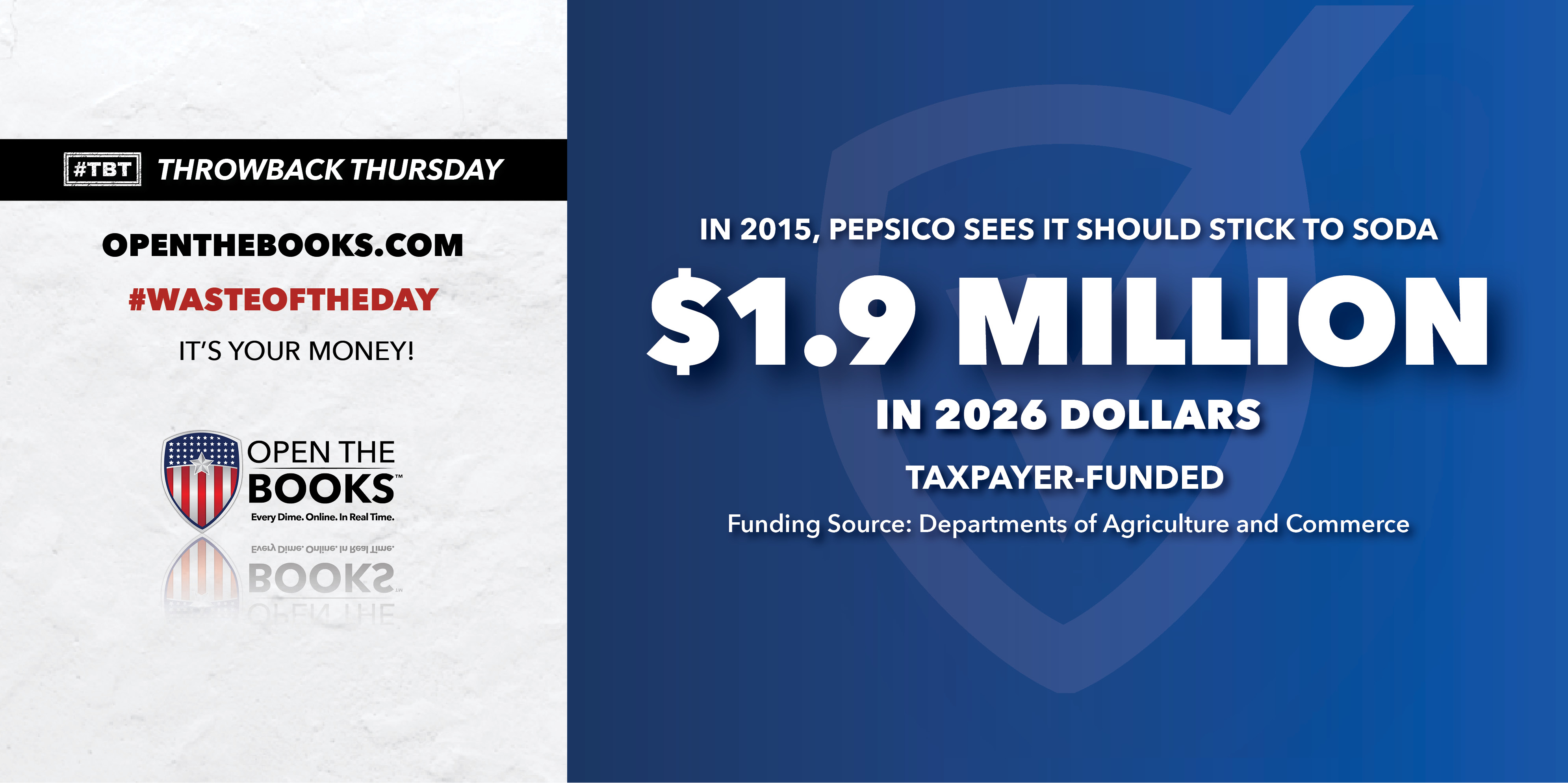
The government tried its best to help PepsiCo succeed, at taxpayer expense. The Departments of Agriculture and Commerce spent $1.3 million to pave the road to the factory and upgrade its water supply. The money would be worth $1.9 million today.
The factory was also promised a combined $26.3 million in tax credits from New York State and Genesee County.
That’s according to the “Wastebook” reporting published by the late U.S. Senator Dr. Tom Coburn. For years, these reports shined a white-hot spotlight on federal frauds and taxpayer abuses.
Coburn, the legendary U.S. Senator from Oklahoma, earned the nickname "Dr. No" by stopping thousands of pork-barrel projects using the Senate rules. Projects that he couldn't stop, Coburn included in his oversight reports.
Coburn's Wastebook 2012 included 100 examples of outrageous spending worth more than $18 billion, including yogurt-based incentives.
Search all federal, state and local salaries and vendor spending with the world’s largest government spending database at OpenTheBooks.com.
Key facts: Coburn called out the subsidies as soon as they were announced in 2012. PepsiCo was one of the world’s most profitable snack companies, and there was already a strong demand for Greek yogurt in America. There was seemingly no need for government assistance.
The money also gave PepsiCo an unfair advantage over its competitors. New York already had 29 Greek yogurt plants, most of which did not receive government handouts.
The state government jumped on the bandwagon anyway. Then-Gov. Andrew Cuomo gave PepsiCo a special shoutout at the “yogurt summit” he hosted in 2012, which sought to establish New York as the “yogurt capital” of the U.S.
The factory opened in April 2013 but underperformed. Unsurprisingly, Americans were willing to rely on PepsiCo for soda and chips, but not dairy products.
PepsiCo could not compete with established yogurt brands like Chobani, and the factory closed in December 2015. Theo Müller Group — a giant German dairy company that operated the factory together with PepsiCo — ended its U.S. investments and never returned.
Summary: Certain activities do not require government involvement, and shopping for yogurt is one of them.
The #WasteOfTheDay is brought to you by the forensic auditors at OpenTheBooks.com
