


Waste of the Day: Texas Taxes Fund Lobbyists

Topline: Texas taxpayers spent an estimated $42.3 million to $111.5 million to help local governments lobby the state legislature in 2025, even though 83% of voters oppose the practice.
A new report from the Texas Public Policy Foundation found that 570 lobbyists in Texas have at least one taxpayer-funded entity as a client, such as a city, school district or community college.
Key facts: Taxpayer-funded lobbyists have registered with the state to influence legislation involving emissions regulations, gun control, school vouchers, transgender students competing in college sports, legalized marijuana, abortion and more, according to the Policy Foundation.
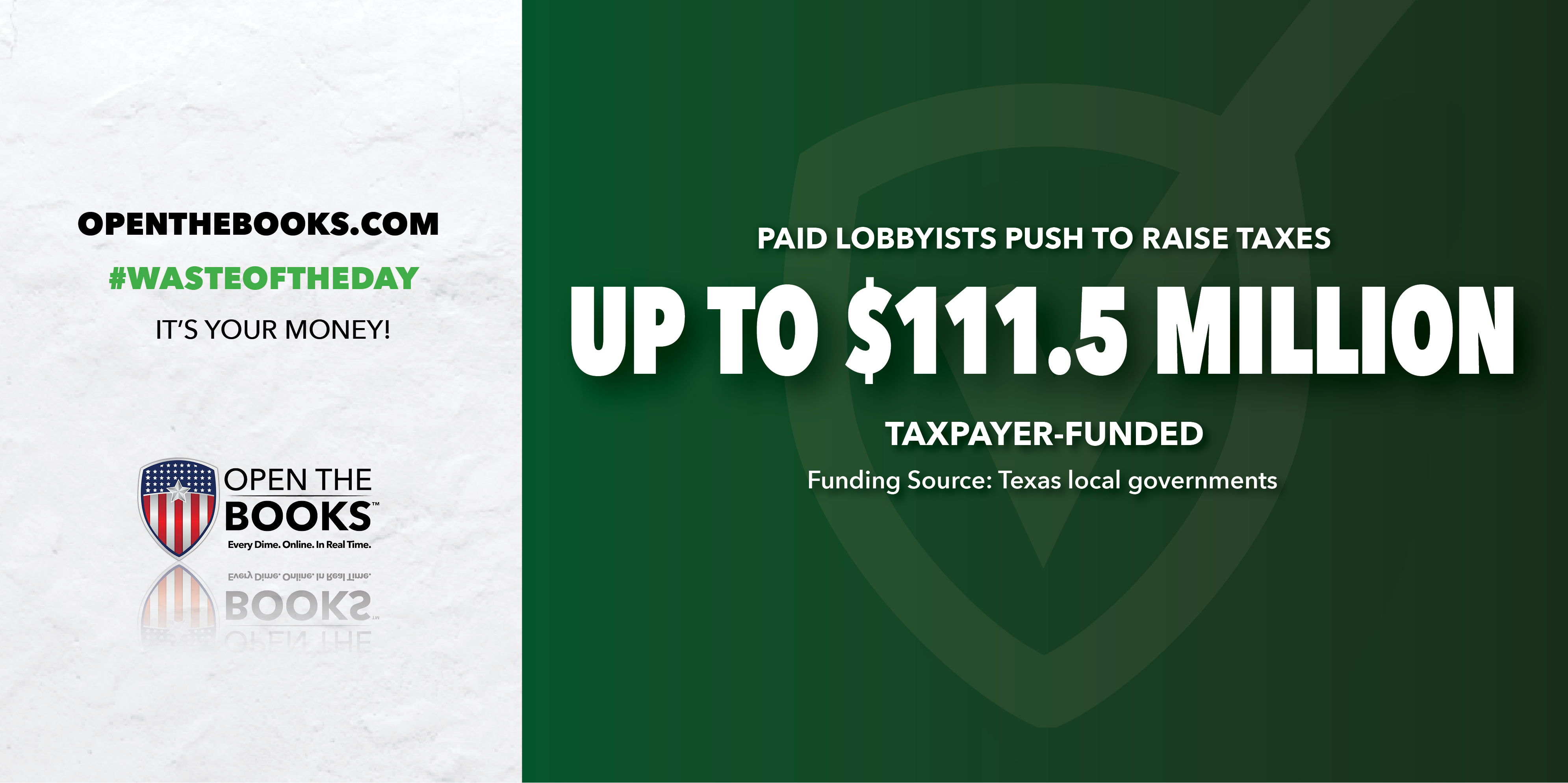
Lobbyists have also opposed past attempts to limit increases to local property taxes. In other words, Texas taxpayers are paying lobbyists to increase their tax bills.
The dollar cost of lobbying was higher than ever last year and has more than doubled since 2020.
Gov. Greg Abbott and Lt. Gov. Dan Patrick have voiced support for a ban on taxpayer-funded lobbying, but legislative efforts have stalled. A 2023 bill passed the state Senate but was never voted on in the House. Fifteen different taxpayer-funded lobbyists worked to oppose the bill, according to the Texas Public Policy Foundation.
Search all federal, state and local salaries and vendor spending with the world’s largest government spending database at OpenTheBooks.com.
Critical quote: “The evidence shows that taxpayer-funded lobbying efforts have been especially concentrated against bills dealing with property tax reform, local regulatory preemption, education finance and parental choice, and even legislation intended to restrict the practice of taxpayer-funded lobbying itself,” the Policy Foundation wrote. “Government entities have utilized tax dollars to protect and expand their own authority, frequently at odds with policies championed as taxpayer interests.”
Supporting quote: The Texas Association of School Boards argues that a ban on taxpayer-funded lobbying would be a form of “community censorship.”
“All industries, issues, and causes have people at the Capitol to make sure their voices are heard,” the association wrote. “In fact, the state government hires lobbyists to represent Texas’ interests at the federal level. Local governments, including public schools, should not be treated differently.”
Summary: Even though a vast majority of Texans oppose using their tax dollars to hire lobbyists, the practice continues to expand every year.
The #WasteOfTheDay is brought to you by the forensic auditors at OpenTheBooks.com
