


Waste of the Day: Pittsburgh Has OT Crisis

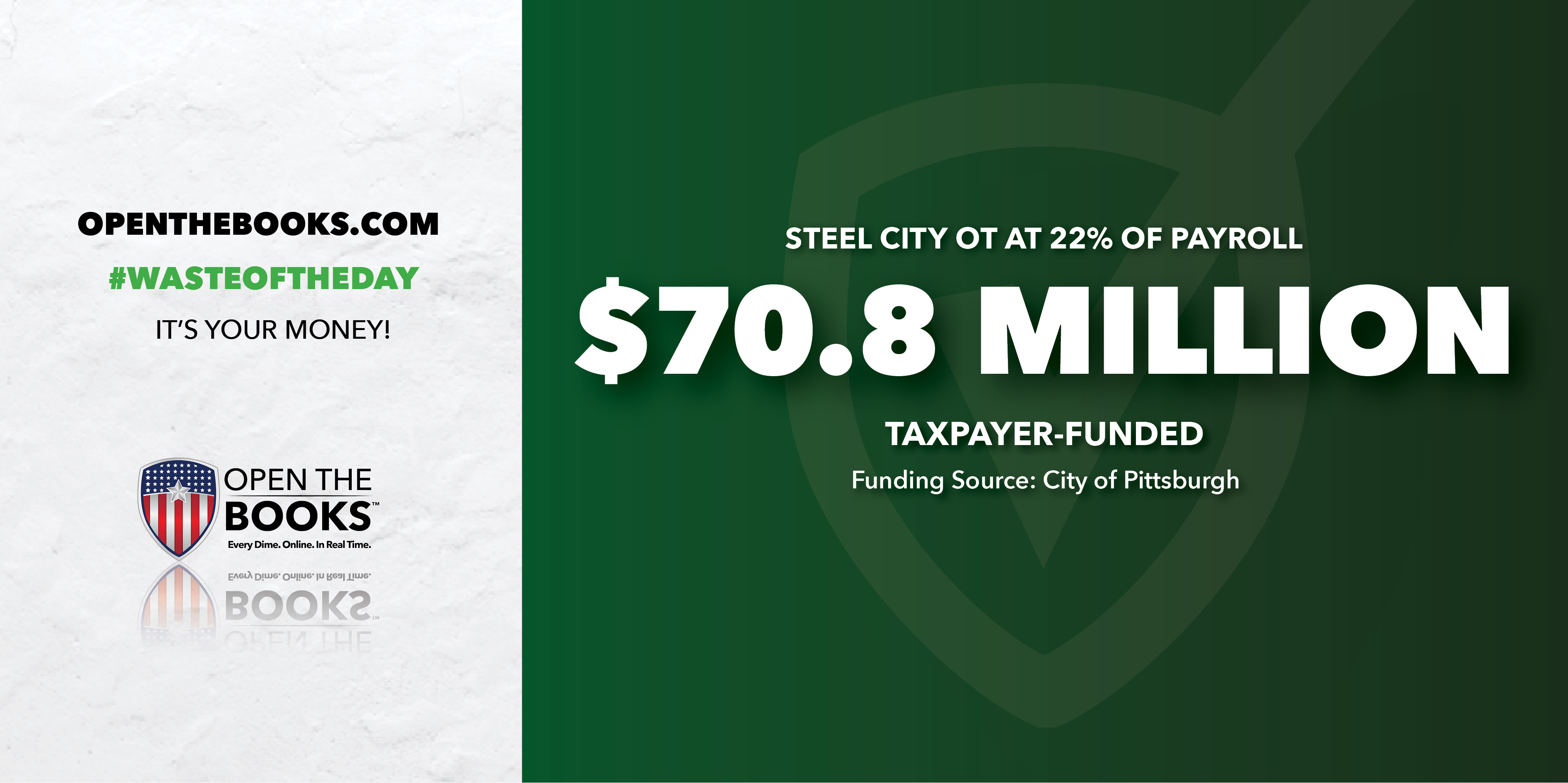
Topline: The City of Pittsburgh’s staffing shortage continued to drain the city’s budget in 2025. Payroll records obtained by Open the Books show the city spent $70.8 million on overtime last year.
Key facts: Overtime made up 21.6% of Pittsburgh’s $327.8 million payroll, a crisis-level rate that exceeds most major cities in America.
Nearby Philadelphia spent less than 5% of its payroll on overtime. Even Los Angeles — which has one of the nation’s worst staffing shortages — typically has an overtime rate below 15%.
Pittsburgh has overspent its overtime budget every year since at least 2019, according to the Pittsburgh Tribune-Review. This time, spending exceeded projections by more than $30 million.
More than a quarter of Pittsburgh’s employees earned at least $20,000 of overtime last year, including part-time workers. Two emergency medical services workers got more than $250,000. Police officers collected almost half of the total overtime pay, including 58 who got more than $100,000.
Search all federal, state and local salaries and vendor spending with the world’s largest government spending database at OpenTheBooks.com.
Background: Pittsburgh spent $70.9 million on overtime in 2024. The city had never spent more than $21 million before then, payroll records show. The increase of roughly $50 million accounts for the city’s entire budget deficit.
Police staffing was at a 20-year low as of August 2025 after 25% of the department retired or resigned in a two-year period, according to the Tribune-Review. There were only 269 officers on patrol beats for the entire city of more than 300,000 residents.
In 2024, WPXI reported the city had only one plumber on its payroll, with the Department of Public Works saying they have “been working for years to fill and keep plumbers on staff.” There are only two people with the job title “plumber” listed on the payroll records from 2025.
Some critics say the city’s requirement that its employees also live in Pittsburgh is driving the staff shortage. Studies have also found that many skilled workers are leaving the city for higher-paying jobs in other states.
Summary: Pittsburgh raised property taxes by 20% last year, but its budget is still not balanced. Rather than hike taxes again, the city should resolve the inefficiencies in its own payroll
The #WasteOfTheDay is brought to you by the forensic auditors at OpenTheBooks.com
