


In the wee hours of Sunday, March 1, a Senegalese immigrant clad in a sweatshirt bearing the words “Property of Allah” opened fire outside an Austin, Texas beer garden, killing three and leaving 14 others wounded.
On March 12, at Old Dominion University, a former Virginia National Guard member from Sierra Leone – released early from an 11-year prison sentence for attempting to provide material support to the ISIL – yelled “Allahu Akbar” before shooting and killing a beloved college professor and wounding two other people.
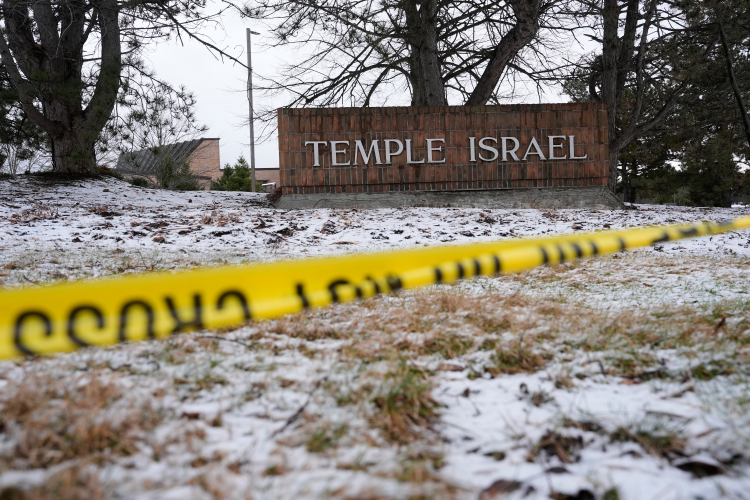
That same day, a Lebanese immigrant plowed a pickup truck filled with fireworks and gasoline into a large synagogue in West Bloomfield, Michigan. After exchanging gunfire with security staff, he killed himself. His brother, it turned out, was a recently eliminated Hezbollah commander in Lebanon.
Amidst the emerging threat environment of the Iran war, these and other attacks on U.S. soil have reignited questions about the U.S. immigration system’s vetting and screening standards. Republican leaders are increasingly asking how, for example, foreign nationals like the Afghan evacuee who shot two National Guard members in Washington, D.C. – killing one of them – or the Egyptian national overstaying his tourism visa who firebombed pro-Israel demonstrators in Colorado last year were able to come here and commit such acts. They are also asking how close relatives of top Iranian officials, including avowed supporters of that country’s regime, have been allowed to live and work in the United States.
Earlier this month, Secretary of State Marco Rubio announced that he had terminated the legal status of the niece of Iranian Major General Qasem Soleimani, who was killed by the U.S. in a targeted attack in 2020, and her daughter. Rubio described the niece on X as “an outspoken supporter of the Iranian regime who celebrated attacks on Americans and referred to our country as the ‘Great Satan.’ ”
While the Trump administration has effectively closed the southern border, the U.S. Citizenship and Immigration Services has concluded that “prior screening and vetting measures” of people who cross the border legally “were wholly inadequate,” creating “significant national security and public safety risks [that] compromise the integrity of the immigration system.”
Administration critics argue that fears of foreign-born terrorism are vastly overblown. Alex Nowrasteh of the Cato Institute told RealClearInvestigations that the annual chance of being murdered in a terrorist attack on U.S. soil by a foreign-born attacker is “about one in 165 million per year. All politically motivated violence is a tiny threat,” he said. “Exaggerating the threat does not bring us closer to delivering justice to the victims of every violent or property crime who deserve it.”
RCI’s review of congressional testimony and research, and interviews with immigration and national security experts, uncovered long-standing flaws in the system – some of which were exacerbated by the Biden administration’s lax immigration policies. Challenges run the gamut from incomplete information about applicants to inconsistent enforcement of the law. Even if relatively few immigrants commit deadly attacks, the vetting system has routinely permitted people with obscure backgrounds and hostile views to visit and live in the U.S.
Robust Design
America’s immigration system is complex and multilayered, involving a range of departments and agencies that provide different levels of scrutiny depending on which of the dozens of categories would-be entrants fall into, from tourists to asylum seekers. As with most laws and rules, different administrations vet applicants with varying levels of vigor depending on whether they want to encourage or discourage immigration.
Three agencies lead the vetting process. The State Department issues visas; U.S. Citizenship and Immigration Services reviews petitions for immigrants seeking benefits such as citizenship or permanent residency, refugee and asylum claims, and other protections; Customs and Border Protection provides defense at the point at which aliens attempt to enter the country. Across these processes, sometimes with redundancy, authorities conduct biographic and biometric screenings, run name checks across U.S. security databases to search for red flags such as criminal histories or inclusion on terror watchlists, and interview would-be visitors.
As designed, the immigration system requires nearly all noncitizens seeking to enter the U.S. to obtain a visa. Nonimmigrant visas cover temporary trips for business or tourism, whereas immigrant visas cover permanent stays that may be family-, employment-, or education-based.
Those seeking long-term stays are subject to more rigorous scrutiny. While undergoing detailed background checks, they are generally required to file petitions, secure sponsors, and meet incremental thresholds and standards necessary, for example, to unite with family or work full-time. In 2024, the U.S. issued about 600,000 visas for long-term stay.
The vast majority of visas are issued to tourists and other temporary visitors – nearly 11 million in 2024. They are generally subject to less scrutiny.
In theory, those millions of temporary visitors will leave before their visas expire. In practice, a reported 40% of illegal aliens currently in the U.S. – amounting to millions of people – are visa overstayers, illustrating one of the myriad security-related issues plaguing the U.S. Homeland Security system.
“The vetting system is robust,” former senior INS official and immigration judge Andrew Arthur told RCI. But, he added, it “is only as good as the intelligence that the USG possesses and the access that the individual consular officer or OFO [CBP Office of Field Operations] officer has to that intelligence.”
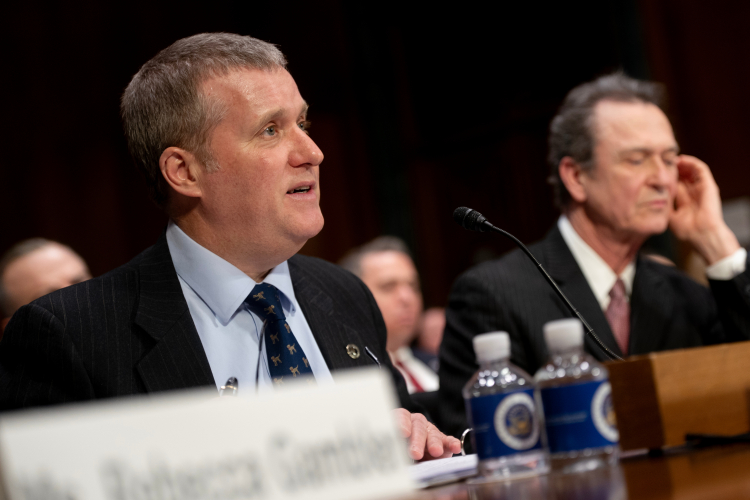
To that end, our “biggest vulnerability,” in the words of the Heritage Foundation’s Simon Hankinson, is that officers often lack access to derogatory information held by foreign countries.
As Hankinson, a longtime former foreign service officer, recently detailed, this problem pervades even the U.S. Visa Waiver Program, where the citizens of several dozen generally safe and friendly countries – including most EU countries and Japan – may visit America visa-free for up to 90 days. Those waivers come in exchange for security cooperation, including sharing their citizens’ criminal records.
Cracks in the System
Critics note that only a few U.S. counterparts automatically check their visiting citizens’ criminal records. The U.S. otherwise must request that home countries run queries. Meanwhile, America lacks information-sharing agreements with many countries altogether.
These problems only grow when other nations lack reliable data, or where their authoritative documents may be easily fabricated – one of the justifications for Trump’s travel bans disproportionately hitting the Middle East and Africa.
“I worked in India, I worked in Ghana, [where] right outside the consulate, there were stores selling fake degrees, fake passports. I mean, they didn’t even hide it,” Hankinson said.
Incomplete data or suspect documents aside, authorities have also highlighted that U.S. databases may not always talk to each other. A June 2024 DHS Inspector General report indicated that “DHS’ biometric system…could not access all data from Federal partners to ensure complete screening and vetting of noncitizens seeking admission into the United States” due to “ongoing technical limitations.” The inspector general also found that border patrol officers lacked the hardware necessary to perform biometric screenings of people arriving by car or truck.
Federal authorities have also not always vigorously enforced their own security protocols. A September 2025 DHS IG report detailed that from March 2020 to March 2024, the State Department issued 12 million nonimmigrant visas without conducting in-person interviews or collecting fingerprints. CBP officers encountering foreign nationals at points of entry were unaware that the State had not fully screened some of them.
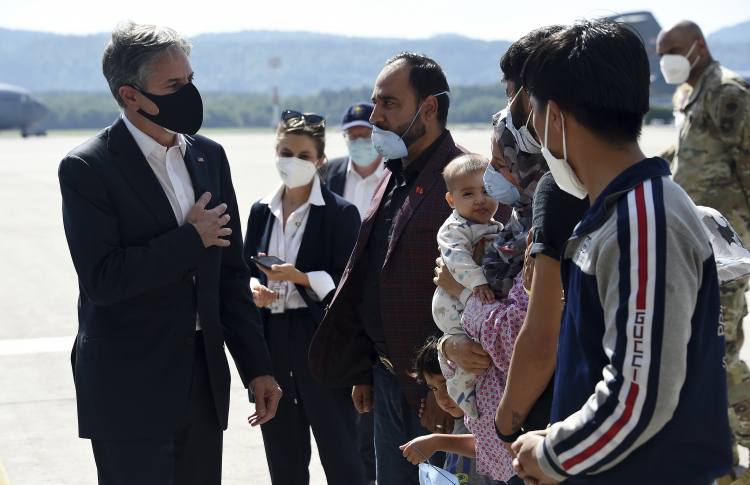
Subpar vetting was common regarding the tens of thousands of Afghans admitted to the U.S. in the wake of the Biden administration’s pullout from the country in 2021. In a January 2026 hearing, DHS Deputy Inspector General for Audits, Craig Adelman, submitted written testimony indicating that under Operation Allies Welcome, in several instances “DHS could not demonstrate that it accurately knew who individuals were, where they were located, whether parole conditions were being met, or whether individuals had unresolved risk indicators.” CBP sometimes lacked “access to critical data to properly screen, vet, or inspect” them.
Adelman’s testimony came following the National Guardsman shooting by evacuee Rahmanullah Lakanwal, and the prosecution of Nasir Ahmed Tawhedi, another evacuee who would plead guilty to plotting a mass-casualty attack on behalf of ISIS around Election Day 2024.
More broadly, the Government Accountability Office has found that the humanitarian parole processes have generally lacked sufficient anti-fraud measures, making it hard to ensure those fleeing warzones or failed states pose no threat to the U.S. homeland.
These findings also come on top of the millions who entered the country illegally during the Biden administration – and related immigrant overstays and backlogs creating security risks all their own. Hundreds of thousands of asylum claimants, for example, have been insufficiently screened historically during prolonged adjudication periods, DHS’ watchdog has found.
Hankinson is adamant that “we have not been enforcing our own rules with anything like the tenacity that we should have been. We’ve been really giving the benefit of the doubt to the alien in every circumstance.”
Ironically, the president’s opponents also agree that the immigration system is broken. But instead of tweaking the current system, many Democrats and their allies have floated the idea of abolishing the Immigration and Customs Enforcement (ICE) agency.
Good Questions, ‘Bad Odor’
Another potential issue that recent security incidents have raised is whether authorities are properly vetting and screening for indicators associated with the actual threats faced.
Federal law, drafted in the shadow of World War II and during the Cold War, generally deemed inadmissible immigrant members or affiliates of totalitarian political parties. Laws later expanded to encompass terrorists and their supporters.
But records may not exist of terrorist activities or support among those hailing from failed states. Despite this potential vulnerability, those with whom RCI spoke indicated that immigration officers do not tailor questions to unearth whether visitors harbor a terrorist worldview that could suggest future trouble or merit further scrutiny.
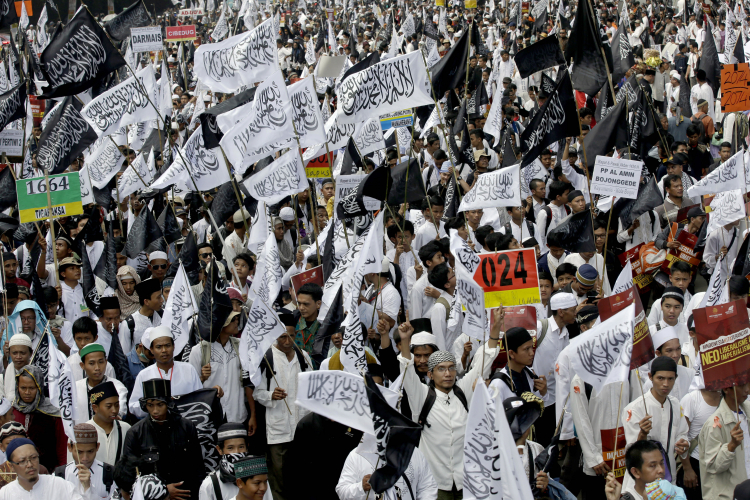
Authorities are “looking for Communists and Nazis,” Hankinson told RCI, not “Islamic fanatics…people who believe in Sharia law, who want to cut the hands off criminals, or have women dressed in burkas.”
Dan Cadman, a retired INS/ICE official now at the Center for Immigration Studies, told RCI that “the vetting procedures have not captured Islamist/ adversarial/ subversive ideologies among family members and close associates.” Were such affiliations known, for example, in the case of the would-be Michigan synagogue attacker Ayman Mohamed Ghazali, whose brother was a Hezbollah commander, immigration authorities likely would have subjected him to heightened scrutiny – and perhaps denied him entry.
Cadman attributes the lack of ideological bar to the “bad odor” to which such tests are held, and the fact that they lead to “thorny questions” about when religiously-based views “cross into the arena of politics” and constitutional rights. Progressive groups and others panned the blanket travel restrictions Trump pursued during his first administration sought to impose on myriad Muslim-majority countries as “Muslim bans.”
Nevertheless, some analysts have proposed bans of those affiliated with Islamist groups analogous to those of totalitarian political parties already on the books to satisfy such concerns. Several members of Congress appear receptive to this idea as well. Legislation is currently pending before the House and Senate to amend the Immigration and Nationality Act to render “advocates for the imposition of Sharia law” inadmissible, and remove Sharia adherents accordingly.
Even if such questions could survive First Amendment challenges, some observers doubt they would provide useful answers. David Bier of the Cato Institute told RCI, “There is no evidence that asking people general questions like whether they support terrorism or Sharia law would be an effective way to prevent attacks in the United States.”
Arthur, Cadman’s colleague at the Center for Immigration Studies, added that “identifying those who hold hostile beliefs is a difficult endeavor, and one that even the best adjudication and screening system will struggle to achieve.”
Whether a change in standards or their implementation might have prevented the recent attacks on U.S. soil by immigrants who became naturalized citizens remains unclear. Arthur says these incidents show “a decline in assimilation on the part of the naturalized citizen and in integration on the part of the United States” – a transcendent problem all its own.
Crackdown and Pushback
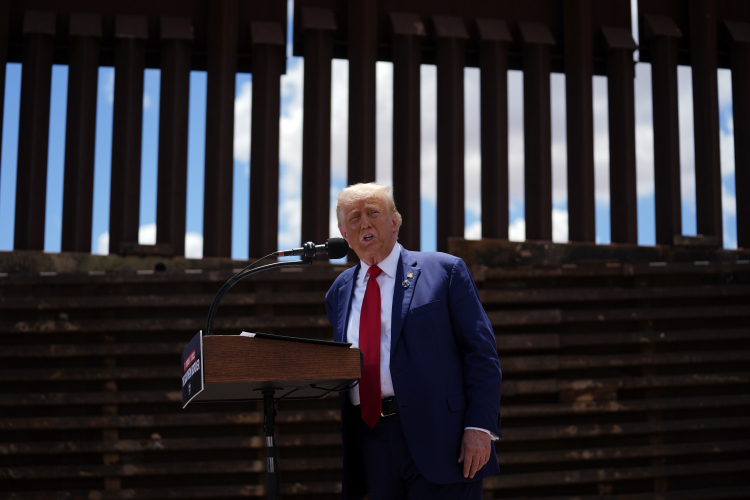 President Trump's push for a border wall is just one of the many policies he has pursued to limit and reform immigration.
 The Trump administration has sought to significantly enhance vetting standards, mitigate risks, and more vigorously enforce the law.
The president kicked off his second term with an executive order directing national security authorities to ensure that all aliens are “vet[ted] and screen[ed] to the maximum degree possible,” including for those threatening national security and bearing “hostile attitudes” toward America, its people, and institutions.
In June, the president fully or partially restricted and limited the entry of nationals from 19 countries it deemed to pose security risks, some Muslim-majority, via executive order – a broad measure to mitigate screening and vetting risks.
Democrats assailed these efforts as “bigoted” and “Islamophobic.”
“This discriminatory policy, which limits legal immigration, not only flies in the face of what our country is supposed to stand for, it will be harmful to our economy and communities that rely on the contributions of people who come to America from this wide range of countries,” Democratic Washington state Rep. Pramila Jayapal has said. “Banning a whole group of people because you disagree with the structure or function of their government not only lays blame in the wrong place, it creates a dangerous precedent.”
Later that year, in August, USCIS updated its policy guidance to ensure that when immigration officers are evaluating immigration benefit requests, aliens’ support or espousal of the views of terrorist groups, including anti-Americanism, and Jew-hatred, ought to weigh heavily against applicants.
Last December, USCIS paused all pending asylum and benefit applications from the 19 “high-risk countries” identified in the June executive order while conducting a “re-review of approved benefit requests” for all aliens from those countries entering the U.S. on or after the first day of the Biden administration. The administration also extended travel restrictions to 20 additional countries.
Among other initiatives, the second Trump administration is also “re-vetting” previously admitted aliens, and engaging in “continuous vetting” of all U.S. visa holders – some 55 million at the time it announced the policy – for violations that could lead to their deportation.
It has reportedly revoked 100,000 visas – a 150% increase versus 2024.
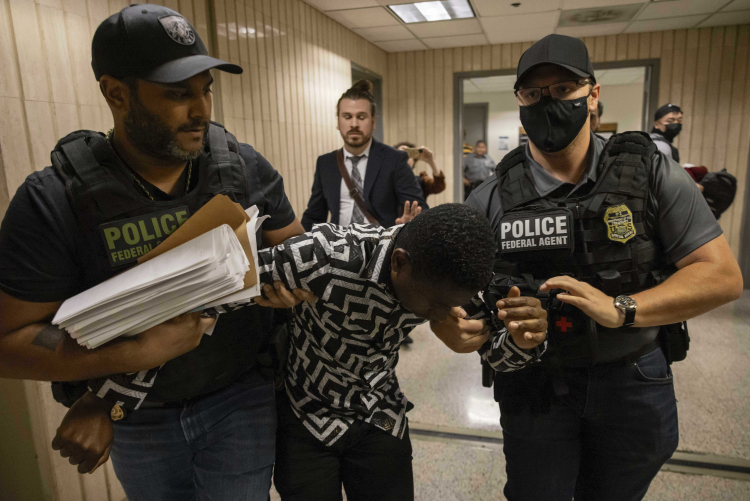
DHS says that ICE has arrested more than 43,000 potential national security risks, including 1,416 known or suspected terrorists, some 1,392 of which have been removed. It did so in announcing the recent arrest of Salah Salem Sarsour, a Jordanian national who the U.S. asserts was convicted decades ago in Israel of throwing a Molotov cocktail at the homes of Israeli military personnel and illegally attempting to possess weapons. DHS claims Sarsour is “suspected of funding terror organizations and lying on immigration forms” to enter the country, after which he became a green card holder back in 1998. The arrest of the Islamic Society of Milwaukee president generated strong pushback from the ACLU and the Council on American-Islamic Relations, with the former suggesting Sarsour may have been targeted for being “outspoken in his support for Palestinian rights” in violation of the First Amendment – a microcosm of the debates simmering over the president’s immigration policies.
Last month, the U.S. Intelligence Community assessed that “increased border security, stricter screening and vetting, and improved international information sharing” have led jihadist groups to focus “more on virtually recruiting U.S.-based aspirants to encourage and enable potential attacks.”
With the Trump administration already planning to significantly ramp up denaturalization efforts in response to revelations of fraud perpetrated by immigrants, this assessment and recent attacks from the naturalized population may only further fuel such efforts.
