


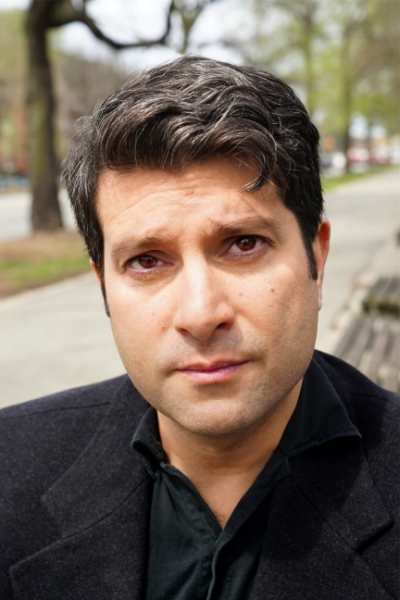
In “The Information State: Politics in the Age of Total Control,” Jacob Siegel traces how we reached the point where anything that contradicts the dominant narrative can be labeled dangerous disinformation. As he charts how the technological infrastructure built to make society safer and more rational has steadily replaced democratic freedoms with systems of digital control, Siegel reports that commercial Internet applications now double as military-grade surveillance and influence tools. In this excerpt, adapted from the book, Siegel describes how the rise of Donald Trump triggered a new era of censorship – by his adversaries.
By Jacob Siegel
In his last days in office, President Barack Obama set America on a new course. On December 23, 2016, he signed into law the Countering Foreign Propaganda and Disinformation Act. Against the backdrop of the extraordinary and false allegations made about Donald Trump’s collusion with Russia, it used the language of defending the homeland to launch an open-ended information war whose primary target would be the American public.
The act directed the State Department to expand the mission of the Global Engagement Center, an office established earlier that year by executive order whose mission was to counter the effects of foreign propaganda and disinformation. Under its new charter, the GEC would lead a whole-of-society campaign to align the most powerful actors in the public and private sectors with the policies of the ruling party. The agency was called to help “train local journalists and provide grants and contracts to NGOs, civil society organizations, think tanks, private sector companies, media organizations, and other experts outside the U.S. government.” Beyond coordinating policy goals, it became the GEC’s mission to ensure that the government and civil society believed the same things. Or, as the bill put it, to “proactively advance fact-based narratives that support U.S. allies and interests.”
By creating a mechanism to enforce a party line on matters related to fighting disinformation and defending “US interests,” the agency effectively created an official government office for coordinating the resistance to Trump who, after all, stood accused of being the primary beneficiary and spreader of disinformation. Thus countering disinformation, while nominally concerned with foreign threats, marshalled the federal bureaucracies against the incoming administration. The government was not only divided but at war with itself.
Leading the whole-of-society campaign, the GEC was technically not an office of the State Department but an interagency organization housed under State, where it coordinated across the FBI, the Department of Homeland Security, the National Security Agency, the CIA, DARPA, the military’s Special Operations Command, and whoever else it deemed relevant to its mission. The office evolved out of and replaced the Center for Strategic Counterterrorism Communications, an agency founded during the war on terror to counter the messaging coming from Islamist terrorist groups. Highlighting the continuities connecting counterterrorism and the ascendant counter-disinformation establishment, the person picked to head the GEC was a former Navy SEAL with a counterterrorism background named Michael Lumpkin.
A December 2016 article in the industry journal Defense One celebrated the GEC’s expansion as a sign that the US was “finally getting serious about disinformation.” The article quoted Lumpkin and a former program manager for DARPA named Rand Waltzman arguing that laws written to protect US citizens from state spying jeopardized national security. According to Waltzman, an information warfare specialist, America’s adversaries enjoyed a “significant advantage” as a result of “legal and organizational constraints that we are subject to and they are not.”
Lumpkin echoed that point. The new head of the GEC singled out the Privacy Act of 1974, which protected US citizens from having their data collected by the government, as an obstacle: “The 1974 act was created to make sure that we aren’t collecting data on U.S. citizens. Well . . . by definition the World Wide Web is worldwide. There is no passport that goes with it. If it’s a Tunisian citizen in the United States or a U.S. citizen in Tunisia, I don’t have the ability to discern that. … If I had more ability to work with that [personally identifiable information] and had access … I could do more targeting, more definitively, to make sure I could hit the right message to the right audience at the right time.” Here was the familiar informational consensus that called for collecting all the world’s data but presented with new urgency. Instead of searching for terrorist needles hiding in haystacks, national security officials now confronted continuous waves of disinformation hordes streaming through America’s screens and colonizing the minds of its citizens on social media. Old-fashioned concepts of privacy and congressional oversight impeded one’s ability to wage the existential conflict taking place in cyberspace. Winning required the US to dispense with outdated legal distinctions between foreign terrorists and American citizens.
Fourteen days after the GEC announcement, the Obama administration released a declassified version of an intelligence community assessment (ICA), on “Assessing Russian Activities and Intentions in Recent US Elections,” which asserted that “Putin and the Russian government developed a clear preference for President-elect Trump.” In the Columbia Journalism Review, the veteran journalist Jeff Gerth would later note how the heavily politicized ICA received “massive, and largely uncritical coverage” in the press. It was presented as the consensus view reached by the entire intelligence community, free of any particular agency’s biases. In fact, the ICA was just the opposite: a selectively curated political document that deliberately omitted contrary evidence to create the false impression that the Russian collusion narrative was an objective fact. Later disclosures would reveal that Obama had personally ordered the ICA on December 6, 2016, when he had only six weeks left in office.
A classified report by the House Permanent Select Committee on Intelligence on the creation of the ICA detailed how unusual and nakedly partisan it was. “It wasn’t 17 agencies, and it wasn’t even a dozen analysts from the three agencies who wrote the assessment,” said one senior intelligence official who read a draft version of the House report. “It was just five officers of the CIA who wrote it, and Brennan handpicked all five. And the lead writer was a good friend of Brennan’s.”
Derek Harvey, a former army intelligence officer who worked as a senior investigator for Devin Nunes, the Republican chair of the House intelligence committee, researched the origins of the ICA and drew similar conclusions. He found that Brennan “kept senior Russia analysts at the CIA out of it” while using a small, carefully selected group whom he trusted to produce the conclusions he was looking for. The document itself was remarkably thin on evidence given the extraordinary seriousness of its allegations about the incoming president’s ties to Vladimir Putin. The evidentiary bar was so low that the ICA included a summary of the rumor-filled Steele dossier, though that was initially kept a secret because the dossier was attached as a top-secret appendix. The dossier was a political weapon paid for by the Clinton campaign and funded for the specific purpose of damaging Trump’s electoral chances. The first step in legitimizing Steele’s shoddy research took place when the FBI drew on it in the agency’s official investigation into Trump-Russia collusion. Now, the dossier’s inclusion in the ICA marked the second time that an instrument of brazen partisan warfare was committed into the official US government record.
But the ICA was only part of a much larger political maneuver. On the same day that the declassified intelligence report was released, Obama’s Department of Homeland Security head, Jeh Johnson, moved to unilaterally designate US election systems as “critical national infrastructure” in response to what he called Russian “orchestrated cyber-attacks.” Without any chance for debate or review, Johnson placed eight thousand election jurisdictions across the country under the control of the federal government. It was a coup he had been angling to accomplish for months while running into resistance from local stakeholders. Johnson recounted how local officials objected “that running elections in this country was the sovereign and exclusive responsibility of the states, and they did not want federal intrusion, a federal takeover, or federal regulation of that process.”
The grounds for the electoral takeover had been prepared by a rash of unsubstantiated scare stories in the media. Just two weeks before Johnson’s move, The Washington Post published a breathless article attributed to anonymous government officials claiming that Russia had hacked the US power grid. In fact, nothing like that had occurred. Almost immediately, the utility company at the center of the claim debunked the Post’s story. Far from being hacked in a critical breach of national security, the company detected malware on a single laptop that was not connected to the US electrical grid. The Post eventually issued a correction, but the fear and outrage stoked by the initial story helped justify Johnson’s seizure of the election system. “The question remains,” Georgia secretary of state and future governor Brian Kemp told reporters at the time, “whether the federal government will subvert the Constitution to achieve the goal of federalizing elections under the guise of security.”
With three days until Trump’s inauguration, Obama called a huddle with the press. A declassified record of the meeting describes the president addressing a hand-selected group of what the White House transcript calls “progressive journalists.” On four separate occasions during the meeting, Obama endorsed the false Russia collusion narrative. He chided the journalists for not having done enough to raise alarms about Trump’s Russia ties. Intimating that Putin had “ex parte influence over the President of the United States,” Obama told the journalists, “I’ll let you speculate on where that could go.”
With those parting words, Obama implored the journalists to do more. The press had fallen down on the job and shared responsibility for allowing a tacky fascist from Queens, who also happened to be a Russian asset, into the White House. Most members of the media required little convincing.
“If you’re a working journalist and you believe that Donald J. Trump is a demagogue playing to the nation’s worst racist and nationalistic tendencies, that he cozies up to anti-American dictators and that he would be dangerous with control of the United States nuclear codes, how the heck are you supposed to cover him?” New York Times media reporter Jim Rutenberg had asked during the 2016 campaign. It was a rhetorical question. The only way to cover such a figure was in opprobrium. To do otherwise would be to sanction a great moral ill. The journalist’s job, Rutenberg insisted, was not to report mere facts about the world but to cover events in a way that would “stand up to history’s judgment.”
“We were invaded,” declared Keith Olbermann, a former MSNBC host and figurehead for the anti-Trump “Resistance” movement, in January 2017. “Just because there was not blood on the streets. If the Russians had come in with cossacks and put him in, I think we would have had a different kind of reaction. That’s the reaction we need now.”
The liberal news channel MSNBC devoted its entire prime-time network to covering the minutiae of the Trump-Russia conspiracy as an unfolding soap opera. The channel’s top anchor, onetime Olbermann protégé Rachel Maddow, was arguably the most reckless and dogged of all the Russiagate obsessives and covered every new claim in the lurid, paranoid style of a grocery store gossip rag. One analysis found that in a six-week period in early 2017, she devoted over half her program’s time to Russia, more than to every other issue combined. Feeding Maddow the tidbits and blind items that fueled the drama were officials like Congressman Adam Schiff, who continually promised the imminent disclosure of a smoking gun that would put Trump in jail. Like a television soap opera, the episodes frequently ended in cliffhangers. The smoking gun never materialized, but millions of people tuned in to see what would happen next. The Rachel Maddow Show briefly became the most popular cable news show in the country.
Older ideals about reporters doggedly following leads and holding the powerful to account were out. Any publication that wanted to be on the right side of history and avoid being condemned as racist or pro-Putin would have to declare their loyalties by amplifying the anti-Trump stories spread by anonymous CIA sources. As journalists embraced their role as the megaphone for the “Resistance,” something else became evident. Measuring themselves against history’s judgment did not make journalists braver or more moral. It made them meeker and more conformist.
***
Claude Shannon became one of the most influential scientific minds of the last thousand years by upending the standard meaning of information. During the second world war, Shannon had worked on top secret US Army projects related to electronic communications and this led him to a new “mathematical theory of communication.” At the heart of that theory was a striking thesis: Information, according to Shannon, is not a measure of facts or of meaning, but rather of surprise. In effect, it meant that the higher the level of novel or surprising content in a given message or phenomenon, the more information it contained. Shannon’s paradoxical insight spawned the modern field of information theory and the digital revolution that continues to this day.
Measured by its level of surprise, the 2016 election contained more information than any other political event in modern history. Every pollster, pundit, academic expert, and respectable political figure confidently called the election for Clinton. Trump was not supposed to have a chance. In response, the Democratic party and its global affiliates who had come to see themselves as a permanent ruling party, immediately began reorganizing to prevent such a shock from ever happening again. Under the auspices of countering disinformation, they waged a war to lock down the Internet and reassert centralized control over popular narratives. The digital was inherently political. By controlling the flows of information, they presumed to prevent further eruptions of surprise. Facebook, the world’s largest social media platform, became the first front in this battle.
Trump had used Facebook to host live events where his campaign raised the bulk of its online contributions, totaling some $250 million. That allowed him to bypass his party’s elites and connect directly with supporters. His success was reminiscent of Obama’s winning digital campaigns in 2008 and 2012, but with an important difference. When Obama won by running what were touted as the first “Facebook campaigns,” it showed that digital technology was a force for good, while Trump’s victory was offered as proof that the same technology was dangerous and out of control.
For Clinton and Obama in particular, the 2016 election result pointed to a profound betrayal. Through the 2000s and early 2010s, they had both evangelized for Silicon Valley while turning a blind eye to its flagrantly monopolistic business practices and ties to China. In return, they had expected the tech platforms to censor pro-Trump messaging under the guise of purging fake news. Instead, the social media companies partially resisted that pressure in 2015 and 2016. While agreeing to stricter moderation of content, Facebook and others insisted that they were neutral platforms and should not be policing protected speech. But like the ideological activists of the same era who dismissed free speech as a tool of white supremacy, leading Democrats attacked the platforms’ neutrality as a moral crime.
The irony, if one could appreciate it, was that Clinton lost by relying on informational strategies at the expense of traditional politicking. Timothy Shenk, editor of the left-wing magazine Dissent, describes the Clinton team’s approach in his book Left Adrift. “The campaign’s most influential strategist wasn’t a person at all. It was an algorithm, code-named Ada, that generated 400,000 simulations of the race per day.” Ada was Clinton’s secret weapon. Her team planned to trot it out for a victory lap after beating Trump, to show off the sleek efficiency that had defeated his low-rent efforts. Ada’s electoral simulation had assured Clinton’s top advisers that the key battleground states Michigan and Wisconsin, which both broke for Trump, were “safely in their column.”
Rather than taking stock of their errors, senior Democrats blamed Facebook. “Many of us are beginning to talk about what a big problem this is,” Clinton’s chief digital strategist Teddy Goff told Politico the week after the election, referring to Facebook’s alleged role in boosting Russian disinformation that helped Trump. “Both from the campaign and from the administration, and just sort of broader Obama orbit . . . this is one of the things we would like to take on post-election,” Goff said. The party message was then cycled through the press echo chamber, where it was repeated so often it took on the appearance of an objective fact.
Rapidly, a new narrative consensus took shape. “Donald Trump Won Because of Facebook” announced a headline in New York Magazine on November 9. “Facebook, in Cross Hairs After Election, Is Said to Question Its Influence” in The New York Times on November 12. “Russian Propaganda Effort Helped Spread ‘Fake News’ During Election, Experts Say” in The Washington Post on November 24. “Disinformation, Not Fake News, Got Trump Elected, and It Is Not Stopping,” The Intercept reported on December 6.
And so on, in thousands of similar articles that appeared almost daily for the next two years. At first, Facebook’s CEO Mark Zuckerberg dismissed as “pretty crazy” the charge that fake news posted on his platform influenced the outcome of the election, insisting that “more than 99% of what people see is authentic.” But Zuckerberg faced an intense pressure campaign in which every sector of the American ruling class, including his own employees, blamed him for putting Trump in the White House. And he faced Obama himself. At a press conference on November 17, Obama singled out Facebook in a speech addressing the danger posed by misinformation. Two days later, Obama confronted Zuckerberg in person at a meeting of world leaders in Peru. Hours after that meeting, Zuckerberg folded. “Facebook announces new push against fake news after Obama comments,” read the headline of a Guardian article published that day.
Conveniently, on the same day Obama accused Zuckerberg of allowing misinformation to run rampant on his platform, an organization called the International Fact-Checking Network published an open letter to the beleaguered CEO in which it made this generous offer: “We would be glad to engage with you about how your editors could spot and debunk fake claims.” The IFCN’s mission, according to its website, was “to bring together the growing community of fact-checkers around the world and advocates of factual information in the global fight against misinformation.” The following month, Facebook announced that the IFCN would become its main partner in a new fact-checking initiative that would vet information on the world’s largest and most influential social media platform.
The new arrangement seemed to offer Zuckerberg a way out. He could mollify the angry elites blaming him for Trump’s election while outsourcing the treacherous work of determining what counted as facts to an independent third party. Only, IFCN was not actually the independent civic initiative it claimed to be. In reality, it functioned as a private regulatory body, enacting ruling party policies from within the nonprofit wing of the information state.
The IFCN was launched in 2015 as a division of the Poynter Institute, a media nonprofit closely aligned with the Democratic Party. Poynter’s money came from the triumvirate that undergirds the US nonprofit sector: Silicon Valley tech companies, philanthropic foundations with political agendas, and the US government. Initial funders included the State Department–backed National Endowment for Democracy, the Omidyar Network, Google, Facebook, the Bill & Melinda Gates Foun-dation, and George Soros’s Open Society Foundations.
Unconstrained by congressional oversight or the Constitution, the IFCN did not require any statutory authority to pressure a company like Facebook into accepting its edicts. Rather, the large tech platforms sought to inoculate themselves from government regulatory pressure that would affect their profits and from the threat of lawsuits from the NGO sector by accepting the authority of the fact-checkers. It was a concession to the not-so-subtle threat that if the tech giants didn’t start censoring themselves, they might get their windows, or their monopolies, broken by the state.
In its letter to Zuckerberg, the IFCN sold the idea that an army of professional fact-checkers stood ready to enter the fray and battle disinformation on behalf of the public good. The pitch rested on the false premise that a recognized hierarchy of “prominent fact-checkers” was a real thing. No such profession existed. In the American media landscape, fact-checking had long been an apprentice-level job mostly reserved for recent college graduates who ensured that busy reporters correctly reported the date of Moldova’s first democratic election after the fall of the Soviet Union. What the IFCN offered was not fact-checkers in the traditional sense, but a cadre of compliance officers who would scour the Internet, flagging anything that threatened the interests of the ruling party.
This emerging public-truth infrastructure made up of party aligned fact-checkers and counter-disinformation agencies recalled policies implemented a century earlier during the first world war by the progressive president Woodrow Wilson. It was Wilson who created the country’s first propaganda office, the Committee on Public Information, in response to the public backlash he faced for bringing the US into that conflict. Aside from the historical analogies, a more immediate precedent for the post-2016 construction of public truth bureaucracies could be found in Europe.
In the same period the IFCN was founded, the United States and NATO were steadily building up a constellation of fact-checking bodies in eastern Europe to counter the threat of Russian hybrid warfare. This development was chronicled in a book by a researcher and national security official named Nina Jankowicz. A few years later, Jankowicz attained notoriety when she was picked to head a short-lived Disinformation Governance Board.
As Jankowicz tells the story, she arrived in Ukraine’s capital, Kyiv, in September 2016 on a Fulbright Public Policy Fellowship. Working as a strategic communications adviser in Ukraine’s Ministry of Foreign Affairs, she gained an intimate view of the information apparatus being constructed there. “Ukraine was home to the first fact-checking operation founded in response to Russian disinformation, created not long after Russia illegally annexed Crimea. Other elements of civil society joined in, using the power of social media to push back about Russian claims of peace.”
The rapidly expanding network of civil society organizations turned Ukraine’s capital into a NATO messaging shop. “Western governments had peppered the city with countless other communications advisers like me and funded technical assistance programs,” writes Jankowicz. “In Kyiv alone, there were no fewer than three major fact-checking initiatives, all funded by multiple Western governments.” The effort encompassed the whole region. “The number ballooned if the post-communist space was considered holistically, including countries beyond the former borders of the Soviet Union to the former communist bloc, such as the Czech Republic.”
To her credit, Jankowicz also spoke with Czech journalists and intellectuals who had the experience of living under a Soviet police state in recent memory and were critical of the new narrative bureaucracy. She recalls them being most alarmed by the Centre Against Terrorism and Hybrid Threat, an institution established by the Czech government at the end of 2016 with “the far-reaching mandate of countering terrorism, hybrid threats, and disinformation of all stripes.” An open letter written by eight Czech academics argued that the center had “flood[ed] the public debate with a vast number of ‘expert studies’ characterized by interpretations strictly based on (neo-conservative) ideology.”
“We are absolutely not disputing that Russia is [conducting] some influence operations,” a pair of Czech defense intellectuals told Jankowicz. “But we are really uneasy with all the framing of these things in terms of hybrid warfare. Basically, you lump up intelligence operations and disinformation and put it all together in one package.”
As Jankowicz recounts, the two Czechs “described the buzz that built around hybrid warfare within the policy community throughout 2015, likening the growing anti-Russian coalition to a networking party that people attend out of obligation but stay when they realize there’s something in it for them.” Without using the term, the Czech intellectuals described the implementation of a whole-of-society approach—the same framework pioneered by the Obama administration to carry out sweeping social and political changes in the US, while bypassing the concerns of the electorate. The Czechs described how the networking party turned into “a veritable ‘party bus,’ with actors across Czech society—civil society, the media, the government—working in concert to create a comprehensive narrative and vocal political backing for countering the Russian hybrid threat.”
Back in the US, in fall 2017, the FBI opened its Foreign Influence Task Force “to identify and counteract malign foreign influence operations” through “strategic engagement with US technology companies.” The office included representatives from the FBI, the CIA, the Department of Homeland Security, and the Office of the Director of National Intelligence.
A dedicated Slack channel allowed security officials to communicate directly with social media executives about accounts they wanted to flag or take down.
Censorship became a routine and informal agreement between the various parties who had been brought together in the fight against disinformation. Fact-checkers, content moderators, nonprofit anti–hate speech representatives from groups like the Anti-Defamation League, counterterrorism veterans, trust and safety officials, countering violent extremism experts, social scientists, political operatives, FBI agents, millennial journalists, and CIA officers all rubbed shoulders on the counter-disinformation party bus housed inside the social media companies.
This excerpt is reprinted with the permission of Henry Holt & Co.
