


Waste of the Day: Maryland Replaces Stolen SNAP Benefits

Topline: A new federal audit revealed that “human errors” and “system issues” in Maryland’s Supplemental Nutrition Assistance Program caused the state to improperly reimburse 212 recipients who claimed their benefits were stolen.
Key facts: The 2023 federal budget authorized states to reimburse food stamp recipients for stolen benefits using funds from the Department of Agriculture. The system expired in December 2024 and has not been renewed.
Maryland was the first state to have its reimbursement plan approved by the USDA, and is now the first state to have its payments audited by the USDA inspector general. In total, Maryland replaced 53,084 stolen SNAP benefits. The state also denied over 10,000 requests for reimbursement.
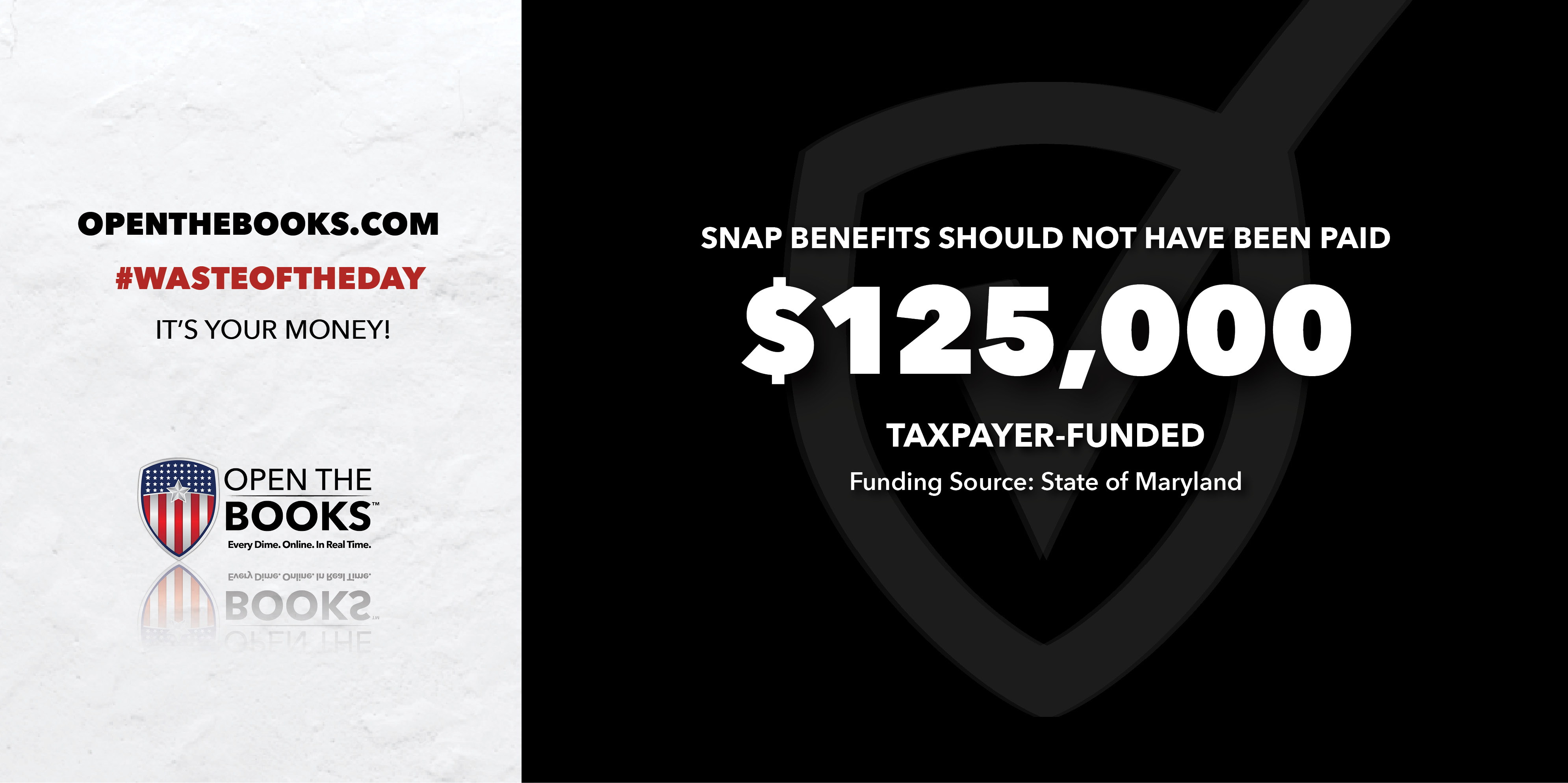
The inspector general found that Maryland had a “reasonably adequate” system to make sure it was properly replacing stolen SNAP benefits, but there were $125,000 of reimbursements that should not have been paid out.
SNAP recipients were only allowed to be reimbursed for stolen benefits up to twice per year, but Maryland ignored that rule 45 times. No more than two months of benefits could be replaced, but 33 people received more than the maximum amount. Only stolen benefits from October 2022 to December 2024 should have been replaced, but Maryland reimbursed 134 people who made claims outside that timeframe.
Maryland has reimbursed the USDA $17,715 so far, according to the audit.
Background: While $125,000 represents less than 1% of the reimbursement for stolen funds, it underscores the larger issues within Maryland’s SNAP program.
Around the country, a total of $322.6 million was spent replacing stolen SNAP benefits for nearly 679,000 households in 2023 and 2024. Maryland spent $22.5 million, more than any state except New York and California. Maryland is only the 18th-most populous state.
That contributed to a 14% payment error rate within Maryland’s SNAP program — well above the 6% federal benchmark.
SNAP recipients get their benefits through debit cards that usually do not have microchips that most credit card companies use to help prevent fraud, according to the Government Accountability Office. That makes it easier for thieves to duplicate the cards using stolen personal info.
The SNAP program made $10.5 billion in total improper payments in 2024, an error rate of nearly 12%. Improper payments include mistakes and human error, not just fraud.
Search all federal, state and local salaries and vendor spending with the world’s largest government spending database at OpenTheBooks.com.
Summary: Continued theft will not make it easier for Americans to pay for their groceries, and systemic issues within SNAP will not end without a significant overhaul.
The #WasteOfTheDay is brought to you by the forensic auditors at OpenTheBooks.com
