


Gov. Gavin Newsom has made reducing the homelessness crisis in California a top priority, saying the scale of the state’s efforts is “unprecedented” and calling for the continued expansion of his signature effort – Project Homekey – that has already cost $3.75 billion.
But in a state with more than 181,000 homeless individuals, or about one-third of the U.S. total, Homekey has been marred by failures and scandals, including a lack of government oversight and accountability as well as a federal investigation into allegations of fraud in Los Angeles.
Newsom, who appears to be preparing for a presidential bid in 2028, could make Homekey, which he calls a “national model,” a talking point in his campaign. The state claims the program has created almost 16,000 permanent housing units that will serve over 175,000 people. But since the state doesn’t track outcomes – whether people placed in housing saw their lives improve or if they returned to the streets – the program’s effectiveness is unclear, according to a critical 2024 state auditor’s report.
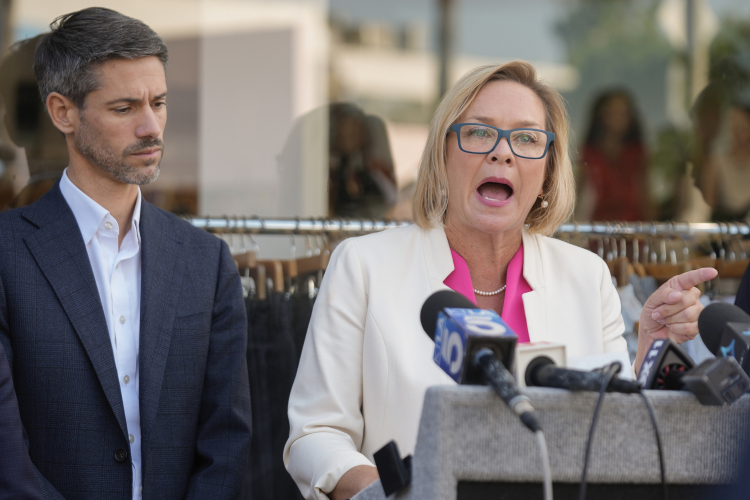
“[Our budget] is bloated with homeless spending, a bottomless pit and taxpayer boondoggle that doubles down on failure year after year,” the Republican-turned-Democrat Los Angeles Councilwoman Traci Park said at a meeting in May. “Hundreds of millions of dollars on bridge homes and Homekeys and interim housing sites, and no one can even tell us which ones are operational.”
What is clear is that homelessness in California has skyrocketed in the five years Homekey has been in place, growing by more than 20%, according to the Public Policy Institute of California. That’s an increase of some 36,000 people between 2019 and 2024.
Homekey has been touted by officials as a more cost-effective way to house the homeless. By hiring developers to convert excess motel and hotel rooms and other existing structures into permanent housing, the costs are two to three times lower than building new units, according to the auditor’s report.
But with huge contracts available to developers and very little oversight of their activities, some of that cost savings was lost to fraud, according to federal prosecutors. First Assistant U.S. Attorney Bill Essayli for the Central District of California launched a fraud and corruption task force to find out where the money went, and in October filed criminal charges involving two developers who allegedly defrauded the system.
In one case, Cody Holmes, the former CFO of developer Shangri-La Industries, allegedly falsified bank records to obtain $26 million in Homekey funds, only to siphon off more than $2 million to pay his own credit card bill, Essayli told the media.
“Accountability begins today,” Essayli said. “Too often, this money has been wasted, mismanaged or outright stolen.”
A COVID Baby
Homekey began in 2020 as a FEMA-funded program to provide temporary housing in response to the COVID-19 emergency. Hotel rooms were rented to get homeless people out of encampments and shelters where the virus could spread rapidly. The high rental costs were justified to avoid mass casualties from infection. In San Francisco, City Journal reported that rooms were rented at $6,000 a month, nearly double the average cost of a one-bedroom apartment.
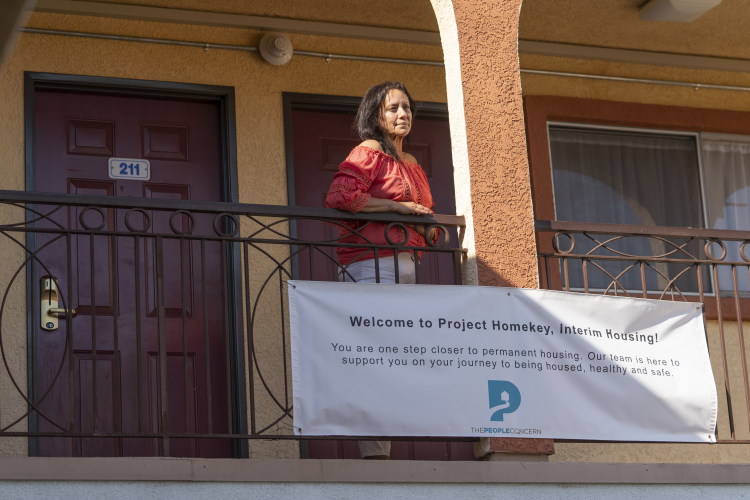
Before the emergency measure ended in late 2020, Newsom announced that the program would morph into a provider of permanent housing for the homeless. “We’ve long dreamed about scooping up thousands of motel rooms and converting them into housing for our homeless neighbors,” Newsom said at the time. “The terrible pandemic we’re facing has given us a once-in-a-lifetime opportunity to buy all these vacant properties, and we’re using federal stimulus money to do it.”
Under Homekey, the California Department of Housing and Community Development (HCD) began administering grants to local governments to help fund the purchase of commercial buildings to be converted into housing units. The money came from federal and state sources, including the American Rescue Plan and California’s general fund. Critics say one problem with Homekey is that it didn’t pay for the mental health and drug treatment services that most homeless people desperately need to truly benefit from housing and get back on their feet.
A 2023 study found that 66% of California’s homeless population suffers from mental illnesses. Twelve percent reported experiencing hallucinations. And 31% reported regular use of methamphetamines and 11% non-prescribed opioids. Sixteen percent reported heavy episodic drinking.
Rather than helping the homeless, Homekey units have allowed people to privately take drugs and overdose. Drug overdose was the cause of death in seven out of eight cases at the Airtel Plaza Hotel in Van Nuys from April 2020 through June 2021, according to L.A. agencies.
“I think local leaders knew that there was a risk in placing people addicted to hard drugs like heroin or fentanyl or meth into private rooms where no one is around to act in case of an overdose,” a former Homekey service provider from Oakland said on the condition of anonymity. “Think about how stupid it is to place an addict in a room alone where no one can administer Narcan,” a medicine that can prevent overdose death.

Homekey relied on local governments to provide mental health services, although they have a severe shortage of treatment spots, according to an L.A.-based mental health professional whose office provides services at several Homekey buildings. Social workers and therapists meet with clients assigned to Homekey units and sign them up for Medicaid, but most of them haven’t received the treatment they need, the professional said.
State officials didn’t return calls seeking comment about Homekey.
The latest version of Homekey aims to bolster mental health services. Newsom recently announced Homekey+, made possible by a $6.4 billion Behavioral Health Bond approved by voters. Half of the money is for projects that serve homeless veterans, and some of the resources will help fund other mental health services within Homekey.
Overpaying and Underperforming
Homekey’s main pitch was that it would save taxpayers money by rehabbing existing buildings rather than constructing new housing. But those calculations are based on developers charging market rates and units being occupied, which hasn’t always been the case.
L.A. County received $550 million in Homekey funds between 2021-2024, which was used to acquire 32 buildings with 2,157 rooms. An investigation by Westside Current found that 71% of units remained vacant as of May 2025 due to construction delays.
In the city of L.A., the housing authority used $48.9 million in Homekey money to acquire and complete a building that was under construction. Developer Haroni Investments was chosen to construct a 75,105-square-foot building with 127 housing units. A similar project in the area would typically cost roughly $18.8 million, according to experts who spoke to local reporters. HACLA’s purchase price of $48.9 million represents a 165% profit at taxpayer expense, the story noted.
A June 2025 memo from L.A. Mayor Karen Bass’ office estimated that the building would be completed later that month. In August, city officials held a ribbon-cutting ceremony even though the building was not yet finished. As of December, the LA Housing Department’s website says the building “is not yet built,” and there are no listings for available units. Requests for comment from Bass’ office have not been returned.
In addition to overspending and delays, there are allegations of fraud. One case involves homeless service provider Weingart Center Association using $27.3 million in Homekey grants to purchase a 76-unit senior living complex in L.A., which it planned to convert into housing units with additional funding from the city.
But federal prosecutors say the deal was shady and shrouded in secrecy. Steven Taylor, the real estate developer who sold the property to the Weingart Center, used fake bank statements to obtain loans and credit to buy the property for $11.2 million, just months before flipping it for a $16.1 million markup. Taylor made no improvements or renovations to the building. A contract clause ensured that his involvement would be kept secret.

While the property was in escrow, the Weingart Center submitted an application for additional Homekey funds. The application, according to prosecutors, made no mention of the pending sale involving Taylor. Bass allocated $20 million in city dollars toward the project.
Bass and Newsom celebrated the purchase as a critical tool in solving homelessness. A spokesperson with the Weingart Center said the property isn’t expected to open until next year, even though the grant agreement required it to be fully occupied by February 2025.
In August, federal authorities arrested Taylor, who is facing nine felony counts of bank fraud and money laundering. Taylor maintains his innocence and is free on a $3.6 million bond. Bass is cooperating with the ongoing federal investigation.
The case highlights the lack of oversight into Homekey-related grants to the Weingart Center, which has been out of compliance with federally required annual audits. The most recent audit, submitted in July 2025 for fiscal year 2023, did not disclose over $50 million in federally funded Homekey grants. A 2023 fiscal audit of the Weingart Center found that it has repeatedly failed to properly document cash flows into the organization.
Calls for comment to the Weingart Center were not immediately returned. In November, the homeless service provider placed its CEO, Kevin Murray, who was previously a state senator, on leave as an independent law firm investigates the valuation of its homeless housing projects.
Homekey ran into other problems with L.A.-based developer Shangri-La Industries, which was hired to purchase and convert properties across the state. Federal prosecutors allege that the developer defrauded the HCD by misrepresenting its financial assets in order to qualify for a $26 million Homekey grant related to a housing project in Thousand Oaks. After securing the money, Holmes, the CFO, allegedly spent lavishly on himself and his girlfriend. Prosecutors say that Holmes rented a sprawling $46,000-a-month mansion in Beverly Hills, where Holmes was ultimately arrested.
Overall, the HCD awarded the Shangri-La a total of $117 million in grants for seven housing projects. The only two projects that Shangri-La managed to complete amount to 174 homeless housing units, costing the state $672,000 a pop. Holmes pleaded not guilty in November, and a trial is set for Jan. 5.
Essayli says his investigation into Shangri-La is “just the beginning” in the Justice Department’s quest to recoup billions in misused public funds for the homeless.
Essayli says his investigation into Shangri-La is “just the beginning” in the Justice Department’s quest to recoup billions in misused public funds for the homeless.
HCD rejects the suggestion it has been asleep at the wheel. "HCD brought action against Shangri-La in January 2024, alleging fraud and other claims, long before the federal criminal charges were announced,” a spokesperson told RCI after this article was published. “HCD’s civil action is focused on preserving its investments and these affordable housing projects, and we will continue to pursue that recourse."
Newsom Rejects Accountability

By the summer of 2024, the lack of progress in reducing homelessness in California spurred Newsom to issue a threat to local leaders across the state. The governor gathered a group of reporters at a homeless encampment in the Pacoima neighborhood of L.A. so cameras could capture him picking up piles of trash.
“If we don’t see demonstrable results [in reducing homelessness], I’ll start to redirect money,” Newsom said.
But today, Californians continue to see headlines revealing more alleged fraud within the state’s prolific homeless housing programs, most of which involve the misuse of Homekey funds.
The latest example involves the nonprofit Urban Alchemy, which was awarded a $2.3 million Project Homekey contract to provide 88 designated tent spaces in a parking lot so homeless individuals can legally set up tents and access meals, bathrooms, and other services. A city inspection revealed that the lot was operating at half capacity, with only 44 bare wooden platforms on site.
One of the state audit’s main critiques centered on how officials weren’t tracking the progress of its homeless programs. California is not ensuring “that it collects accurate, complete, and comparable financial and outcome information from homelessness programs,” according to the report.
Following the audit, California’s lawmakers unanimously passed legislation requiring the Newsom administration to submit annual evaluations of the homeless programs that receive public grants. But Newsom vetoed the bill, saying it “creates an unnecessary ongoing workload for the Department without providing additional accountability or transparency to taxpayers.”
“Our state has spent billions of taxpayer dollars in recent years only to see homelessness get worse,” Republican Assemblyman Josh Hoover said in a September 2024 statement. “We will not solve this crisis and get people the help they need until we get serious about accountability.”
One year later, Newsom hasn’t lost faith in Homekey. He announced the allocation of $106.2 million toward six Homekey+ awards to pay for the development of 321 permanent supportive homes.
“No more excuses,” Newsom declared in a press release announcing the grants. “Everyone must step up to address this crisis.”
