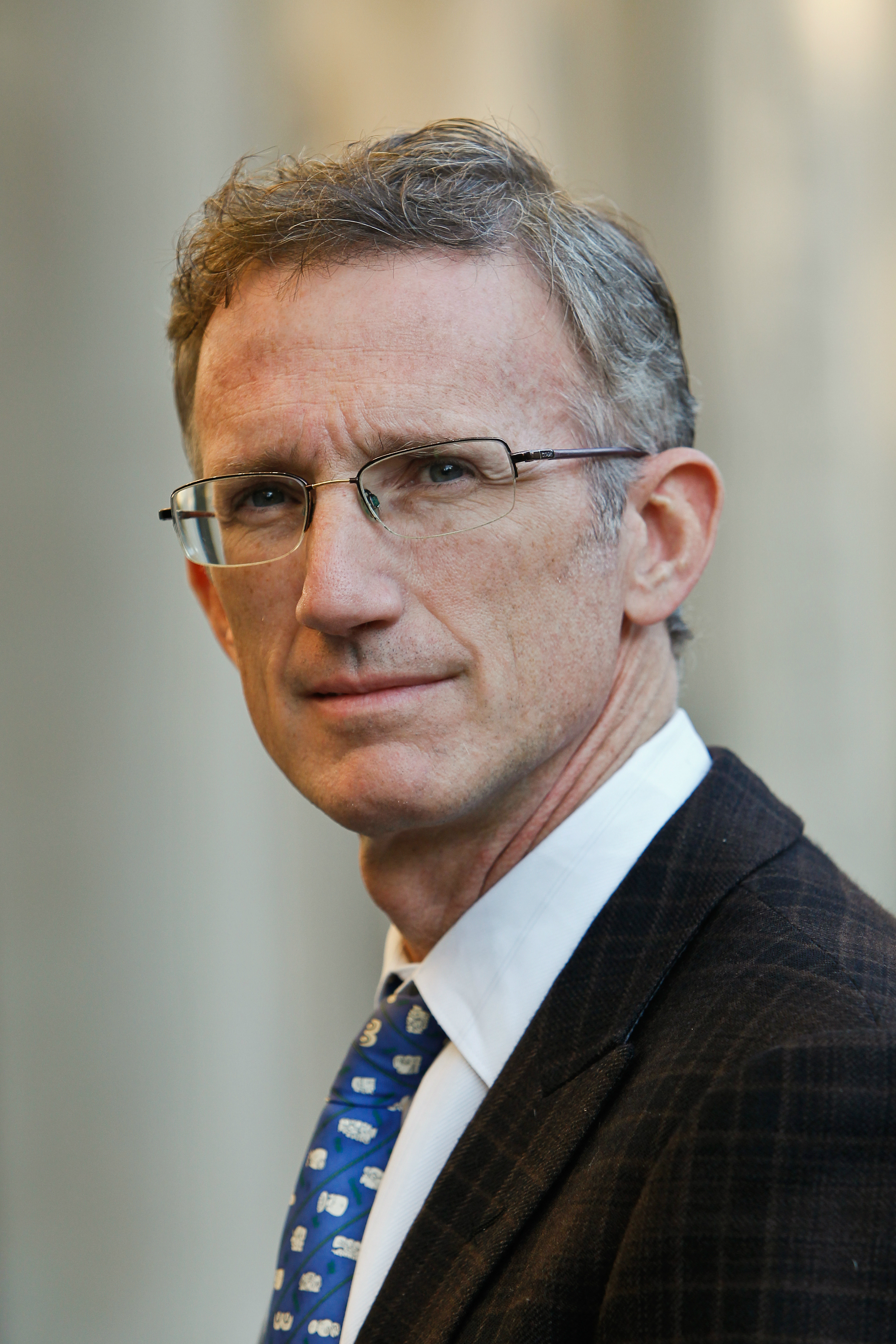
The scene had a sinister familiarity: a defendant in a Chinese courtroom surrounded by police guards (all of them in face masks) listening grimly as he was sentenced to 15 years for “picking quarrels and provoking trouble” – in other words, for posting criticism of the Chinese Communist Party on social media platforms.
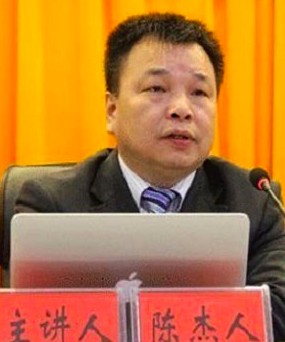
The trial and sentencing of Chen Jieren on May 1 showed that on the human rights front, at least, it's business as usual in China during the global pandemic. A few days before Chen's trial and sentencing, 15 people were arrested in Hong Kong for their alleged support of the pro-democracy protests there. Meanwhile, as the coronavirus epidemic has unfolded, citizen journalists who made videos of conditions in Wuhan's hospitals have been taken away by police and not heard from since.
The familiar violations of human rights have been protested, at least in pro-forma fashion, by the U.S. and other countries.
But if the past is any guide, China's behavior will not come up for formal scrutiny at the main international organization, the United Nations Human Rights Council, created explicitly to investigate abuses exactly like the ones China has been committing. The coronavirus crisis has put the problem in stark focus: China’s co-opting of global governance.
In recent years Beijing has worked assiduously to gain influence in international organizations and reshape their agendas to suit its authoritarian ways, and the pandemic has unveiled some of the ways it's succeeding.
One sign was the deference paid to China by the World Health Organization, which praised Beijing for its “transparency” in handling the epidemic, gliding past China's early efforts to withhold information about the lethal pathogen, even to the point of punishing doctors who were trying to save lives by warning the scientific world.
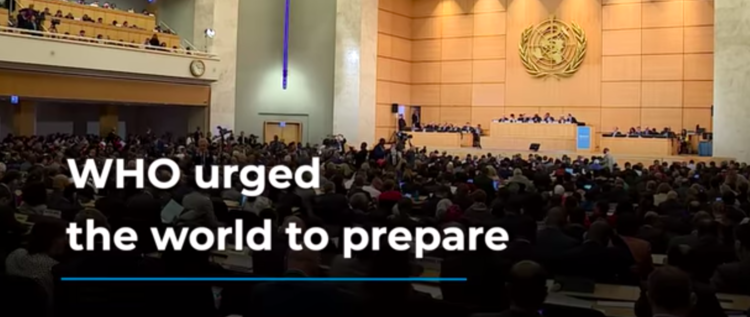
Much of China's influence comes from the fact that it is now the world's second largest contributor to the U.N., after the United States. China provides about 12% of the organization's total budget of $50 billion, compared with America’s 22%. It has also moved in just the past few years from being a largely passive observer of the U.N. scene to a very active participant. Chinese bureaucrats now head four of the main U.N. organizations; it has more troops in the U.N.'s peacekeeping operations, about 2,500 of them, than any other country; and it is not shy about exerting its influence when it comes to its ideological battles with Western democracies.
But none of the U.N. organizations has felt the effects of China's effort to advance its authoritarian ideology more than the Human Rights Council. China’s representatives push back hard against efforts by democratic countries to investigate China's own record. In recent years it has also devoted itself to crafting new definitions of human rights aimed at undermining the organization's very purpose.
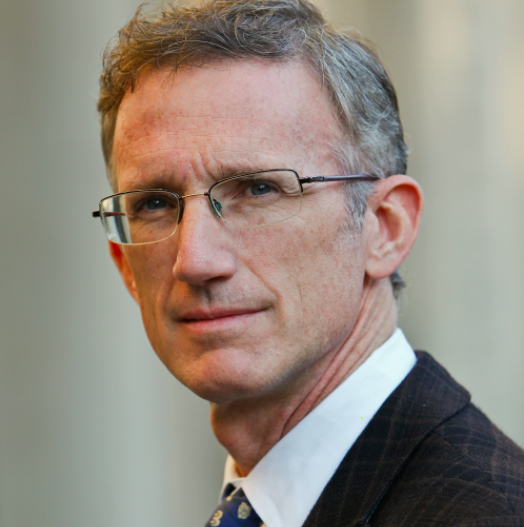
China's goal is not entirely new, notes Ted Piccone, a former National Security Council adviser now with the Brookings Institution. In a detailed study of China’s actions at the Human Rights Council, he writes that these proactive methods Chinese officials are using under President Xi Jinping are indicative “of a more wholesale campaign to reshape the rules and instruments of the international human rights system.”
A significant step took place in March, when the HRC named Chinese diplomat Jing Duan to its Consultative Group, the committee that chooses the experts who monitor abuses such as arbitrary detention, disappearances, and suppression of freedom of speech or religion. The appointment of an official from a major human rights violator to a key position at the organization tasked with promoting and defending human rights around the globe wasn't widely noted, even though its likely effect would be to further reduce the power of the Western democracies to serve as a buffer to China's authoritarianism.
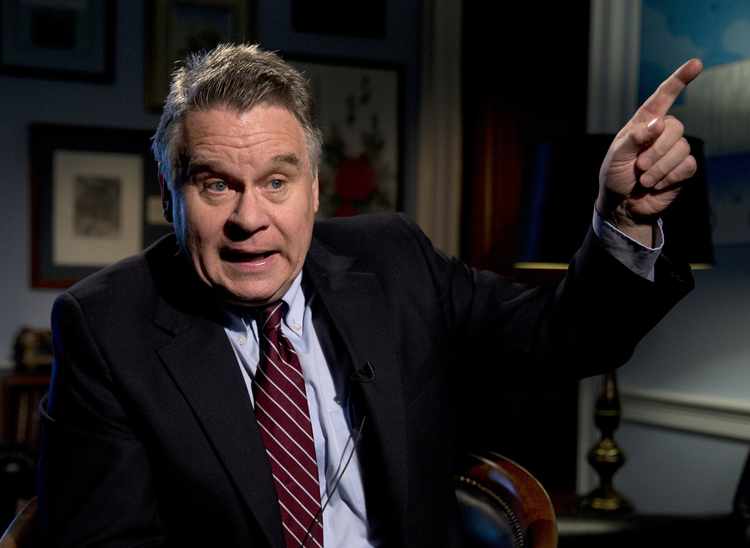
It is “appalling and ironic,” said Rep. Chris Smith, a New Jersey Republican who chairs the House's Tom Lantos Human Rights Commission. “Jing Duan will play a key role in appointing at least 17 human rights investigators examining such issues as media freedom, torture, extra-judicial killings, and state-sanctioned disappearances.”
Calling it a “hypocritical and self-serving organization that makes a mockery of human rights,” the Trump administration withdrew entirely from the Human Rights Council in 2018, prompting criticism from rights advocates and allied countries who warned that it would weaken the strength of democracies to counter China's moves.
That withdrawal underscores another pivotal point: Beijing attaches far more importance to the U.N. in general and the Human Rights Council in particular than Washington. Where U.S. officials see an organization that has betrayed its mission, China sees an important arena to advance its interests.
Despite America’s concerns, the Human Rights Council still serves as a legitimating institution in the international community, setting norms of decent behavior that governments are supposed to respect. Civil society and dissenting individuals can cite these norms while opposing oppression that takes place around the world, including in China. At times, the U.N. body does apply those standards, as it did in the past couple of years when it issued blistering reports on human rights abuses by Myanmar and Venezuela. Over the years, it has dispatched investigators to other countries, including Iran, Myanmar, and Cambodia.
Active involvement in the Human Rights Council not only gives China cover to assert its commitment to international rules, but allows it to try to shape them.
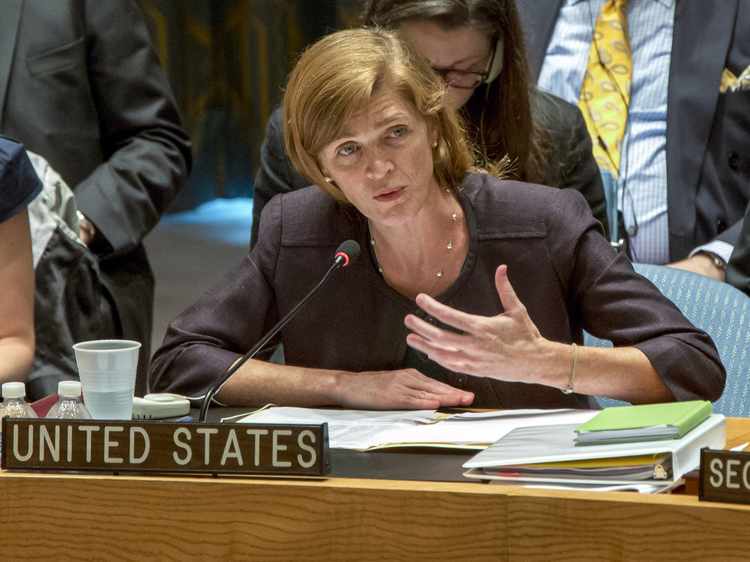
Samantha Power, American ambassador to the U.N. during the Obama presidency, said in a phone interview that “doing away with those norms would accelerate a further race to the bottom in practice.”
“By watering down the standards,' she added, China "believes it can more easily justify its behavior, not just to the rest of the world but more important to its own citizens.”
China has not enjoyed complete success in this effort, thanks largely to the insistence of democratic members of the Human Rights Council that it not be immune to scrutiny. But it has usually found ways to blunt the criticism. It makes diplomatic overtures to countries that already agree with it on human rights and pressures countries with which it has cultivated strong ties or created a situation of economic dependence.
Last year, for example, the ambassadors from 22 countries, most of them Western democracies, submitted a letter to the council condemning China’s mass detentions of more than 1 million members of the Uighur minority in Xinjiang province. Two days later, the ambassadors of 37 other countries, many of them recipients of Chinese aid and investment, wrote a countervailing letter in which they praised China for its “remarkable achievements in human rights” and for bringing about “the return of safety and security to Xinjiang.”
To a Western ear, that phrase “remarkable achievements in human rights” has an Orwellian feel to it. How can locking up 1 million people with not even a nod to due process, separating them from their families, and forcing them to undergo “patriotic” indoctrination, be seriously labeled as a “remarkable achievement in human rights”?
The answer reflects the ideological goal that has been a major part of China's foreign affairs strategy, especially since Xi Jinping became its paramount leader in 2013. It is to redefine the very concept of human rights. As analysts like Samantha Power and Ted Piccone put it, Xi has sought to change the rules by offering an authoritarian definition of human rights and then working to see that it be given at least equal place alongside the traditional Western concept.
The Chinese and their allies advance three main arguments: one is that traditional human rights are a Western invention, exploited by countries like the United States as an excuse to interfere in the internal affairs of developing countries. Two, China rejects the idea that human rights are “universal”; instead, they need to be considered in the light of local circumstances and customs. Third, what China calls the “right to development” should be given priority over individual rights and protections from state power. “The right to development is the top priority for China when it comes to the human rights cause, because its fulfillment makes possible a higher level of development in human rights,” as one Chinese “expert” put it in the China Daily.
Piccone’s Brookings report, “China's Long Game on Human Rights at the U.N.,” cites seven resolutions presented by China to the Human Rights Council over the last couple of years. One resolution, which failed, would have removed language in the HRC rules that disqualify countries for membership if they fail to cooperate with the council in investigating their own countries' records. But another seemingly inoffensive resolution calling for “mutually beneficial cooperation in the field of human rights” was adopted by the council by a vote of 28-1 with 17 abstentions. Although the language sounded anodyne, Piccone pointed out its true intent: “China's desire to avoid international scrutiny or condemnation, instead promoting cooperation, always with the permission of the relevant state, as the most effective way of addressing human rights violations.”
Often allied with Russia in this respect, China uses other ways to undermine those who call attention to nations that violate their own citizens' rights. Of the 12 vetoes China has exercised in the Security Council, four were to prevent U.N. action against countries on human rights grounds – Myanmar, Zimbabwe, Syria, and Venezuela.
Not surprisingly, all four countries are members of a U.N. voting bloc, known as the Like-Minded Group of roughly 50 developing nations, that has supported China in its lavishly produced effort to promote its authoritarian theory of human rights. In December, illustrating one of the means used by China to advance its agenda, it hosted a “South-South Human Rights Forum,” bringing together some 300 human rights “experts” from more than 70 countries, many of them members of the Like-Minded Group. Two years earlier at its inaugural meeting, the group formally adopted “a Beijing Declaration,” which laid out China's effort to alter the old international norms, explicitly rejecting the idea of that there are certain universal rights and protections that should apply to all people.
“Human rights must take into account regional and national contexts,” the text ran. “Each state should ... choose a human rights path ... that suits its specific conditions or guarantees development.”
Like much of what China proposes, the words sound not merely innocuous but reasonable -- even laudable. Freedom of speech, after all, doesn't mean much under conditions of starvation. But if there's a kernel of truth there, the concept loses its credibility when it is advanced, as it was at the December meeting in Beijing, by dictatorships like Syria. Its representative called on member states to “chart a new concept of human rights,” one that, presumably, would not be critical of the Syrian government for using poison gas on its own people.
Striking a similar tone, the representative of Pakistan chastised the U.S. for criticizing China's “anti-terrorist policies in Xinjiang.” The delegate from Togo urged the participants to read President Xi's book, “Let Us Build a Community of Destiny for Humanity.”
As always, the verbiage at such meetings is full of phrases like the need to “uphold the highest standards in the promotion and protection of human rights,” but, as Western human rights advocates argue, the terms promoted by China are code words for the supremacy of state power over individual rights. That enables a country to put dissidents like Chen Xiejen in prison on vague, unspecific charges like “picking quarrels and provoking trouble,” even as it claims credit for its “remarkable achievements” in human rights.
“China is deftly using all the tools in its toolbox, and it has the growing support of countries in the global South, not to mention authoritarian governments across the globe,” Andrea Worden, an expert on Chinese human rights currently at Johns Hopkins University, wrote in a report on the Beijing meeting.
For obvious reasons, authoritarian countries prefer China's idea of human rights to the Western idea, so China has some natural allies here, but it's also no coincidence that many members of the Like-Minded Group are major trading partners of China and recipients of substantial Chinese loans and investments.
Among the 37 countries whose ambassadors supported China last year on the detention of the Uighurs, for example, were dictatorships like Syria, North Korea, and Saudi Arabia, which share China's goal of thwarting human rights investigations generally. Among the others were Algeria, Bolivia, and Zimbabwe. Algeria recently received a commitment from China of $3.2 billion for a new port; Bolivia has received promises of $4.6 billion from China to develop infrastructure; last year, the Chinese ambassador to Zimbabwe toured the country's new parliament building, financed by a $140 million grant from China, which has also shielded Zimbabwe from Western efforts to sanction it for corruption and human rights abuses.
Overall, according to a study of Chinese loans by the Kiel Institute for the World Economy in Germany, China is now the largest official creditor to the world's developing countries. Its total direct loans of about $1.8 trillion amount to a quarter of global lending to them -- and China has never been shy about using economic pressure as one of its diplomatic tools.
“Official Chinese lending has always had a strategic element,” the Kiel report says.
Samantha Power agrees. “China's greatest leverage comes from the fact that it’s the largest trading partner of a lot of the U.N.,” she says. “It increasingly draws on those bilateral dealings to build support in the U.N.”
This and all other original articles created by RealClearInvestigations may be republished for free with attribution. (These terms do not apply to outside articles linked on the site, nor to any photos or images that appear with articles.)
We provide our stories for free but they are expensive to produce. Help us continue to publish distinctive journalism by making a contribution today to RealClearInvestigations.
Support RealClearInvestigations →